Chapter 14 / 19
Umrah Step by Step, and the Conditional Intention
A complete walk-through of Umrah as taught in Tabung Haji's basic Umrah course (Kursus Asas Umrah): its pillars and obligations, ihram, the miqat, tawaf, sa'i and the hair, Umrah from Tan'im for pilgrims already in Makkah, the conditional intention (niat bersyarat), and the farewell tawaf.
What Umrah is
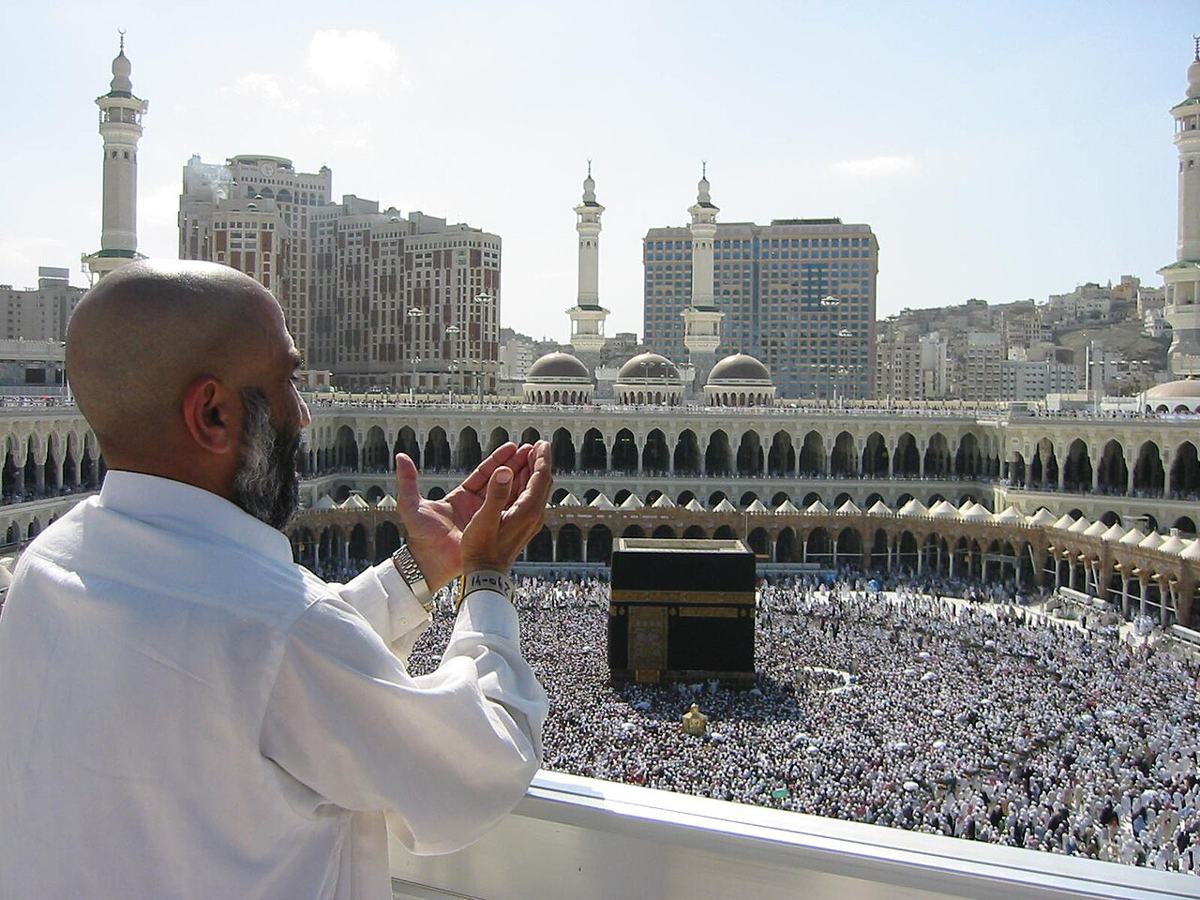
Umrah is visiting Baitullah al-Haram (the Ka'bah) in Makkah at any time to perform particular acts of worship according to their conditions.
The evidence that Umrah is obligatory
وَقَالَ ابْنُ عُمَرَ رَضِيَ اللّٰهُ عَنْهُمَا: لَيْسَ أَحَدٌ إِلَّا وَعَلَيْهِ حَجَّةٌ وَعُمْرَةٌ. وَقَالَ ابْنُ عَبَّاسٍ رَضِيَ اللّٰهُ عَنْهُمَا: إِنَّهَا لَقَرِينَتُهَا فِي كِتَابِ اللّٰهِ: وَأَتِمُّوا الْحَجَّ وَالْعُمْرَةَ لِلّٰهِ
Meaning Ibn 'Umar said: "There is no one except that a Hajj and an Umrah are due from him." Ibn 'Abbas said: "It is paired with it (Hajj) in the Book of Allah: And complete the Hajj and the Umrah for Allah (al-Baqarah 2:196)." Because Umrah is mentioned together with Hajj in a command, and a command indicates obligation, Umrah is obligatory once, like Hajj.
Reported by Imam al-Bukhari, in the chapters on Umrah
Pillars and obligations of Umrah
| Pillars (rukun) | Obligations (wajib) |
|---|---|
| 1. Intention of ihram for Umrah | 1. Making the intention of ihram at the miqat (it may also be made before reaching it) |
| 2. Tawaf of Umrah | 2. Avoiding the prohibitions of ihram once the intention has been made |
| 3. Sa'i of Umrah | |
| 4. Shaving or cutting the hair | |
| 5. Order (tertib) in all the pillars |
Order is valid when the pillars of Umrah are done in their set sequence, what comes first is done first, and what comes later is done later.
How Umrah is performed
| Step | Ruling | Where | When |
|---|---|---|---|
| Ritual bath for ihram | Sunnah | Anywhere | Before the intention |
| Putting on ihram clothing | Obligatory | Anywhere | Before the intention |
| Two rak'ahs of the sunnah prayer of ihram | Sunnah | Anywhere | Before the intention |
| Intention of Umrah | Pillar | At the miqat | |
| Making the intention at the miqat | Obligation | At the miqat | |
| Avoiding the prohibitions of ihram | Obligation | Everywhere | From the intention until the hair is cut |
| Talbiah | Sunnah | Everywhere | From the intention until tawaf begins |
| Tawaf | Pillar | Around the Ka'bah | |
| Sa'i | Pillar | In the Mas'a | After tawaf |
| Shaving or cutting the hair | Pillar | At Marwah, or anywhere | After tawaf and sa'i are complete |
| Order in all the pillars | Pillar |
Ihram
Clothing
- Men: two unjoined, unstitched sheets, one covering the 'awrah between the navel and the knee, the other worn over the shoulders. White is sunnah.
- Women: clothing that covers the whole body except the face and the hands up to the wrists. There is no special garment as there is for men.
The course's reminders for women: avoid make-up without need (it invites fitnah and showing off); make sure the 'awrah is properly covered; wear a suitable telekung that does not show the 'awrah; and wear socks that are not thin, thick, long socks are recommended.
Men's sandals must leave all five toes (and the heel) uncovered.
Uncovering the right shoulder (idtiba') is sunnah only during a tawaf that is followed by sa'i, or during that sa'i. It is not sunnah anywhere else, at the departure station and so on, and in prayer it is disliked.
The sunnahs of ihram
Before the intention
- Cutting the nails.
- Tidying the beard, moustache and hair.
- Removing armpit and pubic hair.
- The ritual bath for ihram.
- Taking wudu.
- Applying perfume to the body (not to the ihram cloth).
- Oiling the hair.
- Wearing white ihram cloths.
- The sunnah prayer of ihram.
While making the intention
- Facing the qiblah.
- Being in a state of wudu.
After the intention
- The talbiah, du'a, reading the Qur'an and dhikr.
- Avoiding idle talk (lagha).
The intention
The intention is made, made present, in the heart. Its words in Malay are: "Sahaja aku mengerjakan umrah dan berihram dengannya kerana Allah Ta'ala."
نَوَيْتُ الْعُمْرَةَ وَأَحْرَمْتُ بِهَا لِلّٰهِ تَعَالَى
Reading Nawaitul-ʿumrata wa aḥramtu bihā lillāhi taʿālā.
Meaning I intend to perform Umrah and I enter ihram for it, for the sake of Allah the Most High.
لَبَّيْكَ اللّٰهُمَّ لَبَّيْكَ، لَبَّيْكَ لَا شَرِيكَ لَكَ لَبَّيْكَ، إِنَّ الْحَمْدَ وَالنِّعْمَةَ لَكَ وَالْمُلْكَ، لَا شَرِيكَ لَكَ
Reading Labbaik Allāhumma labbaik, labbaika lā sharīka laka labbaik, innal-ḥamda wan-niʿmata laka wal-mulk, lā sharīka lak.
Meaning Here I am, O Allah, here I am. Here I am, You have no partner, here I am. All praise, all blessings and all sovereignty belong to You. You have no partner.
The miqat for Umrah
For people coming from outside Makkah
- Yalamlam: for those coming from the direction of Yemen.
- Bir Ali (Dhul Hulayfah), from the direction of Madinah.
- Al-Juhfah: from the direction of Syria (al-Sham).
- Qarn al-Manazil: for those coming from the direction of Asia.
- Dhat 'Irq: from the direction of Iraq.
For pilgrims and residents already in Makkah
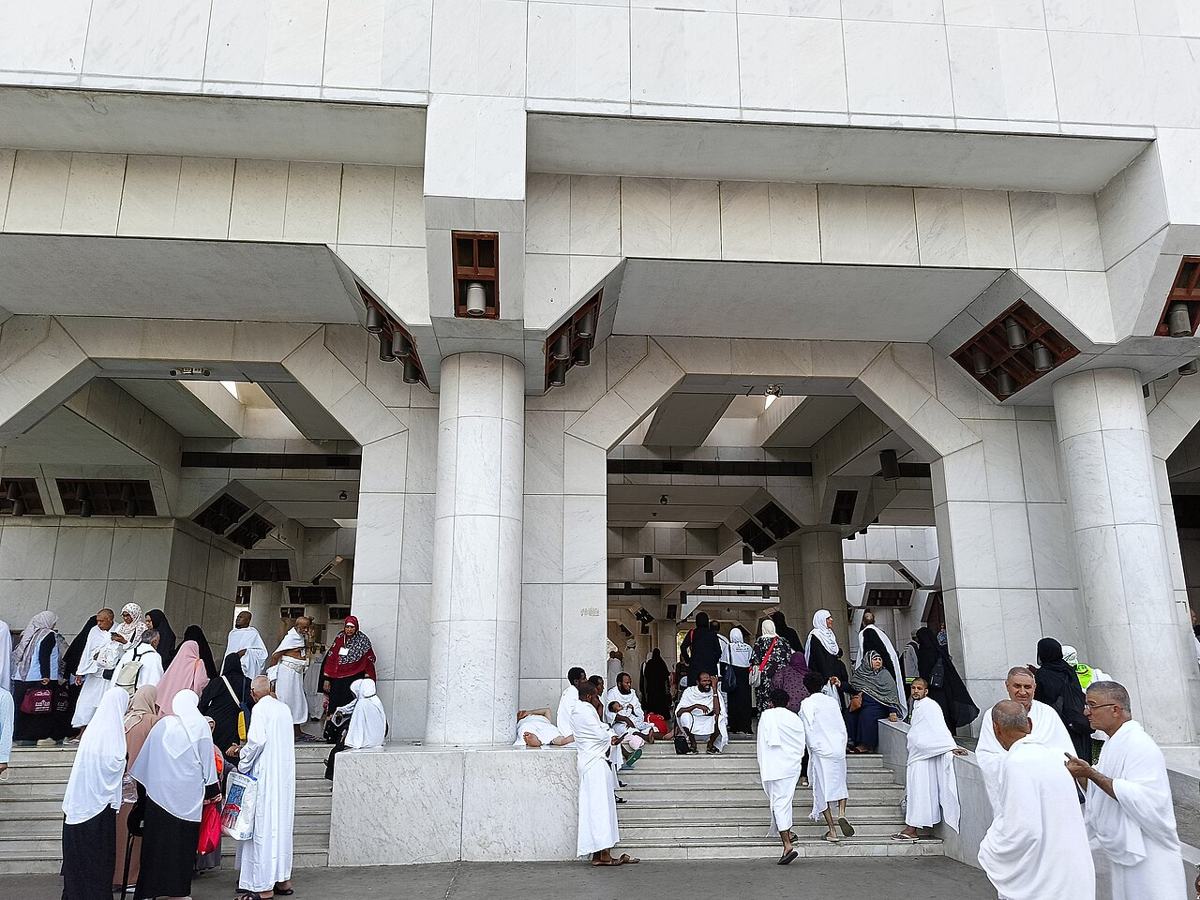
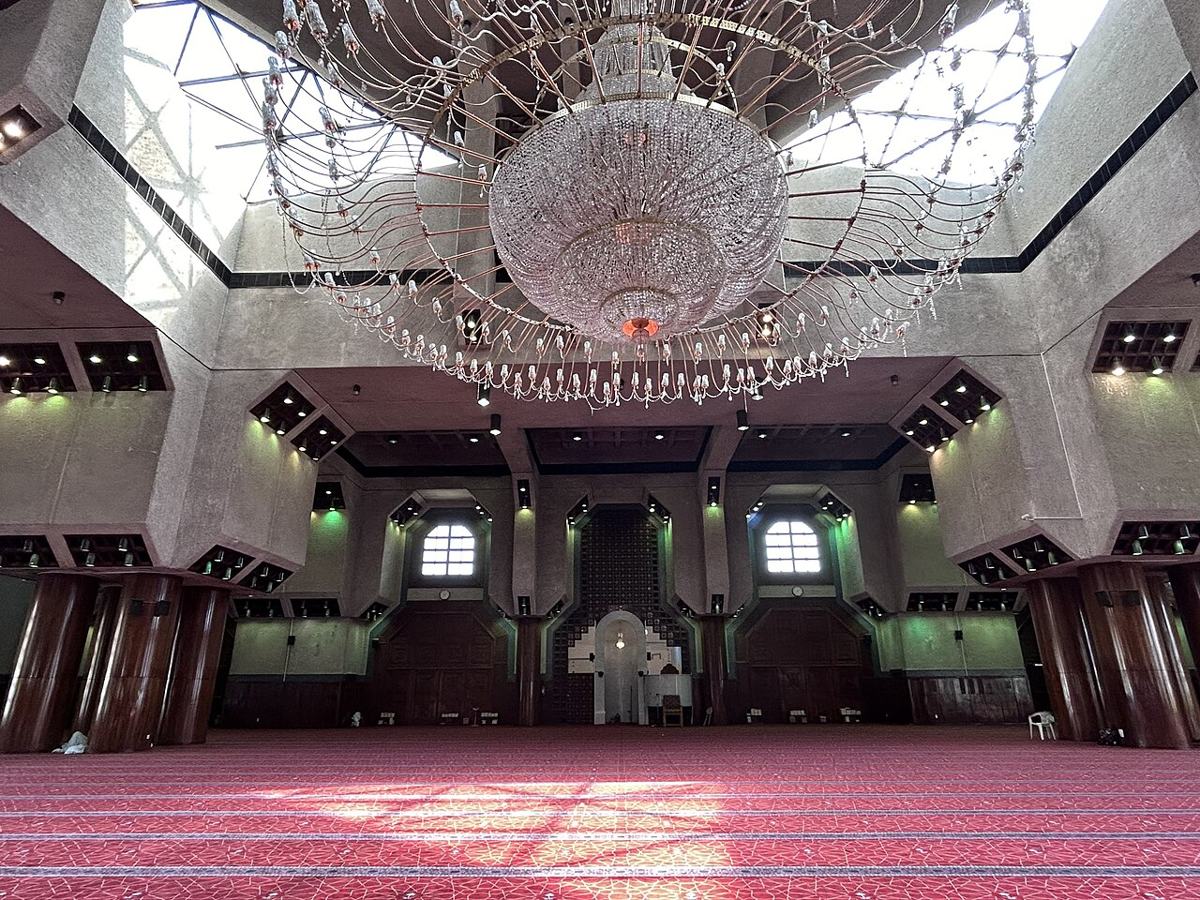
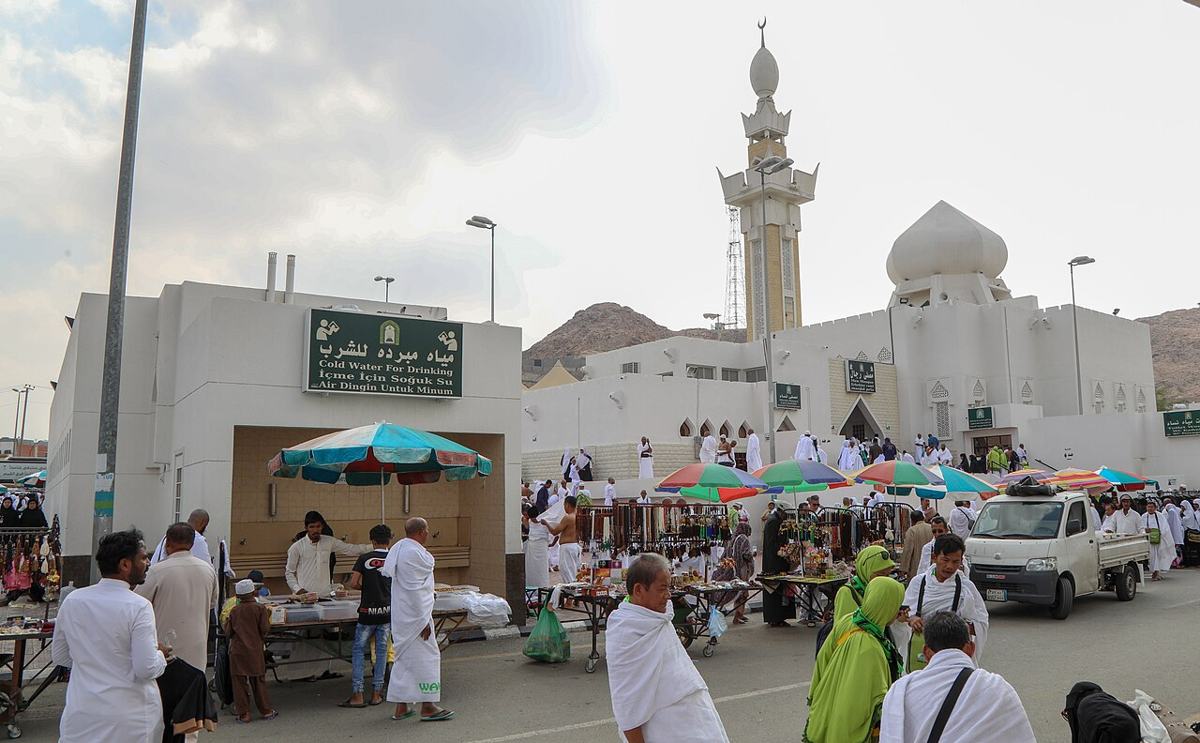
They must go out to the tanah halal, land outside the Haram, such as:
- Ji'ranah: about 22 km from Masjid al-Haram.
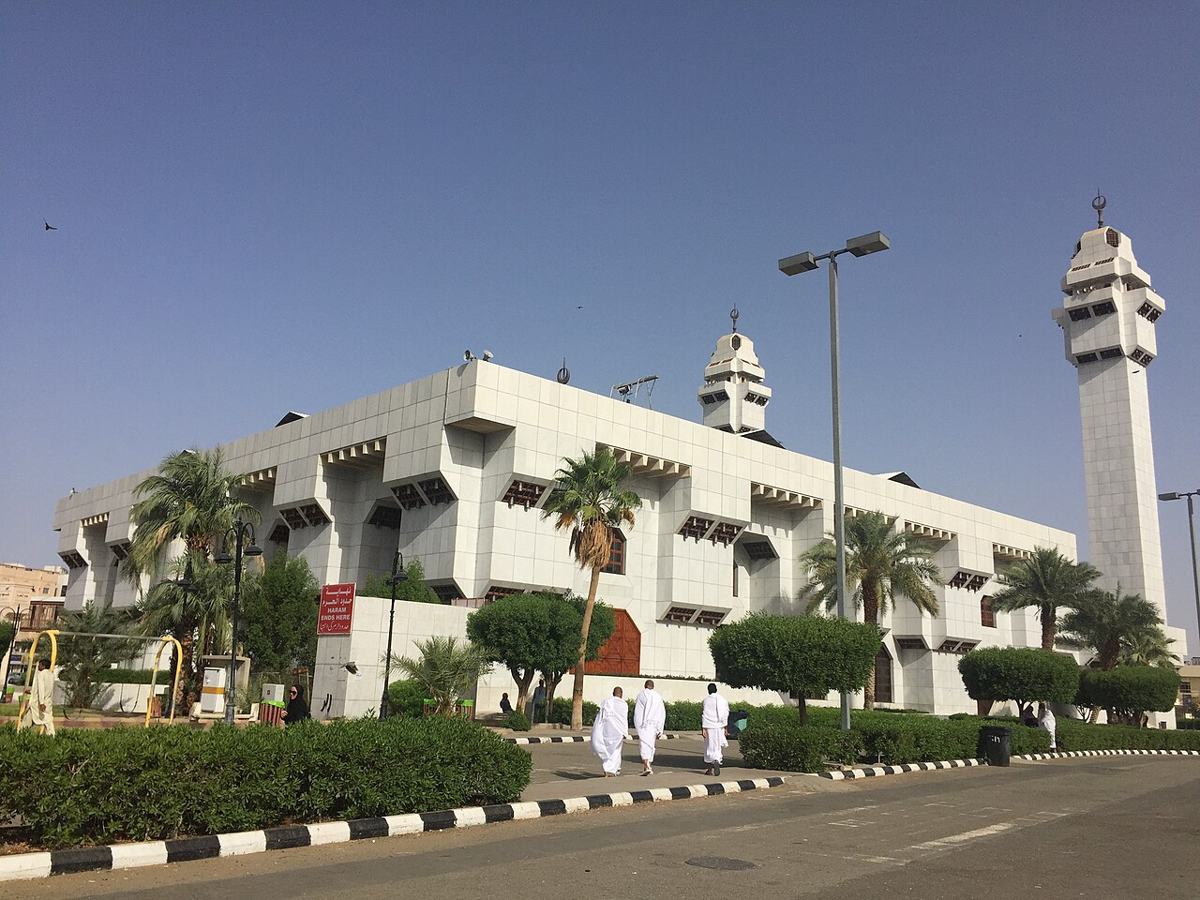
- Tan'im: about 5 km; Masjid 'A'ishah (Masjid Tan'im), the one most pilgrims use.
- Hudaybiyah: also known as Shumaisi, about 29 km.
The prohibitions of ihram
Once the intention is made, these thirteen things are forbidden until the hair is cut:
- Wearing stitched or fitted clothing that encloses the body (men).
- Covering the head or any part of it (men).
- Covering the face (women).
- Wearing gloves (men and women).
- Using perfume, on the body, clothing, food or drink, or sniffing it.
- Cutting, felling or uprooting trees and plants in the Haram.
- Oiling the hair of the head or beard, or facial hair other than what grows on the cheeks and forehead.
- Removing hair or body hair.
- Hunting game.
- Cutting or trimming the nails.
- Getting married, marrying someone off, or acting as a representative in a marriage.
- Foreplay.
- Sexual intercourse.
The details, and the dam due for each, are in Chapter 7.
Tawaf
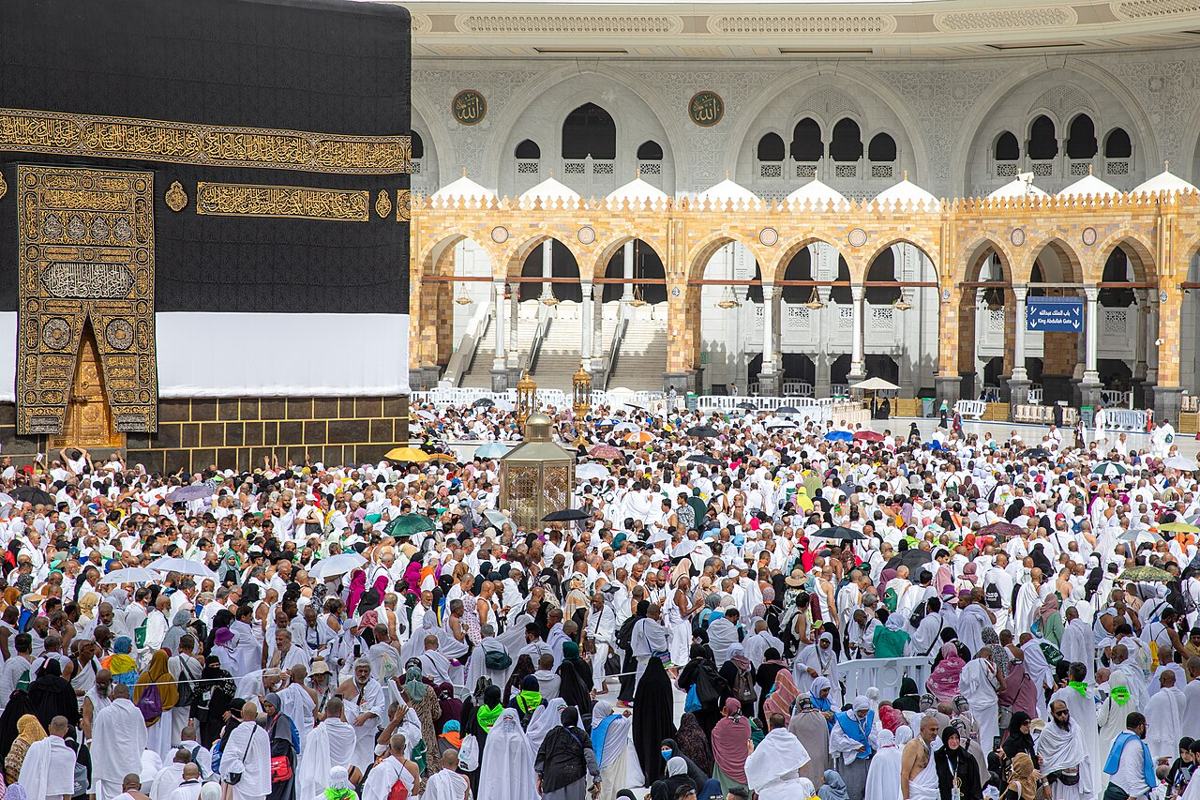
Tawaf is circling the Ka'bah according to its conditions. The full rules are in Chapter 8; the points the Umrah course stresses are:
- No separate intention is needed for the tawaf of Umrah, it is part of the ihram you are already in. (An intention is required for a voluntary tawaf, a vowed tawaf, Tawaf al-Wada' and the tawaf greeting the House: "O Allah, I intend to circle Your Sacred House seven times as a [voluntary / farewell…] tawaf; make it easy for me and accept it from me, for the sake of Allah.")
- Start and end at the green light on the wall, which is in line with the Black Stone. The upper floors have their own start line.
- Beware of najis: sandals carried with you, small children in nappies, soiled clothing, and bird droppings during tawaf.
- The concession on touching (Muzakarah Haji 21 and 22) applies from leaving your building until you are inside Masjid al-Haram or Masjid Nabawi, and in hardship such as on planes and buses, but anything else that breaks wudu, such as passing wind, still breaks it.
The 'awrah in tawaf
Men:
- The 'awrah is from the navel to the knee.
- As a matter of courtesy, men should also cover the upper body.
- Idtiba' is only for a tawaf followed by sa'i, and begins only when you are about to start the tawaf.
Women: know the limits of your 'awrah, and take particular care with: under the chin, the wrists, hair at the forehead, thick socks, and hair around the ears, especially if you wear glasses. Outside tawaf, the ordinary rules apply.
After tawaf, make sure you:
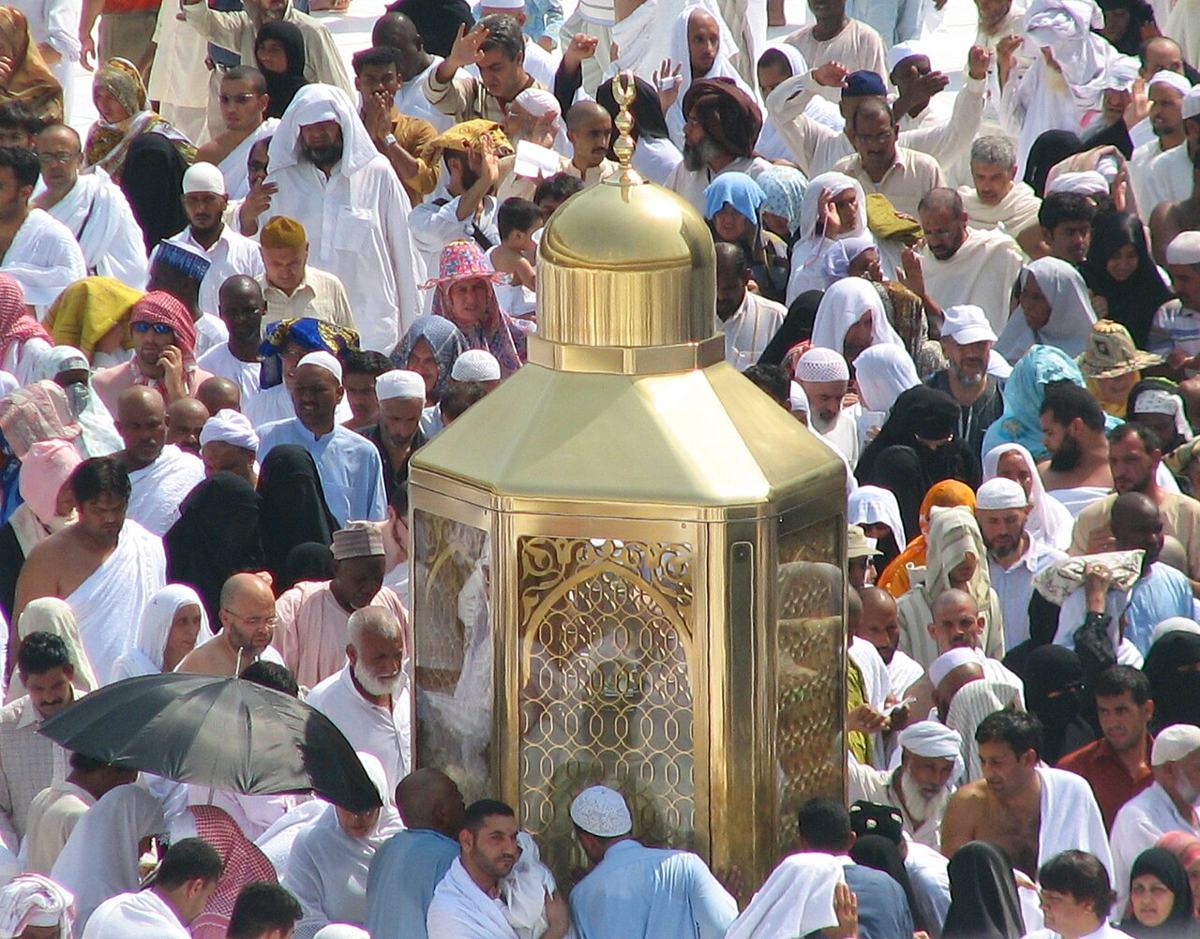
- Pray the two rak'ahs of tawaf at Maqam Ibrahim;
- make du'a at the Multazam;
- drink Zamzam;
and then go to sa'i between Safa and Marwah.
Sa'i
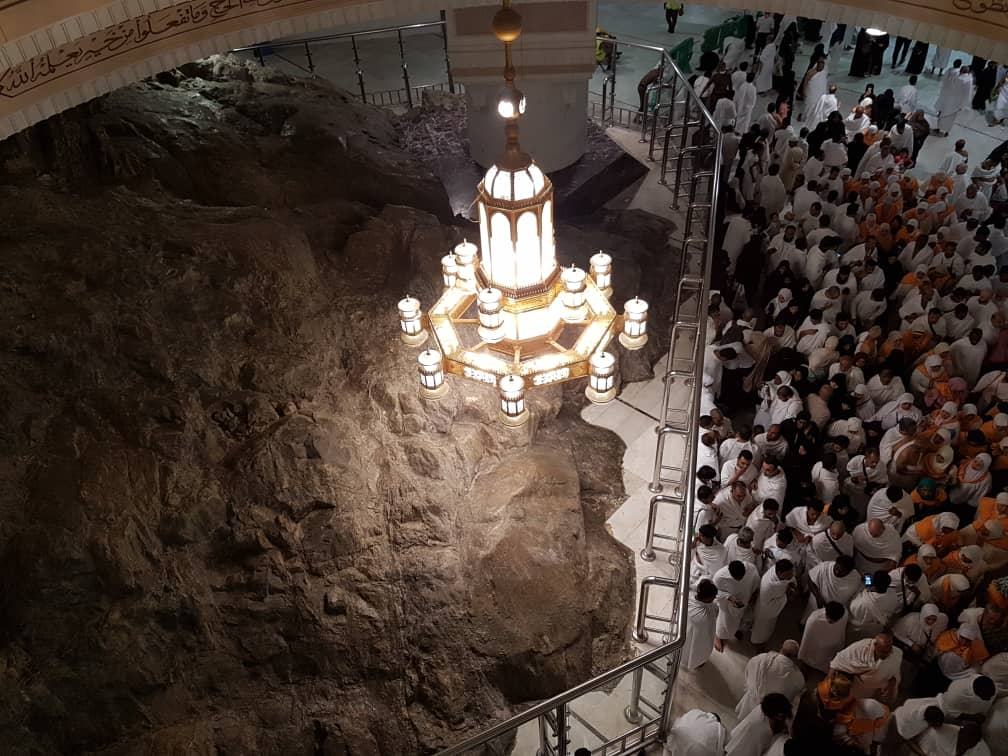
Sa'i is walking back and forth between Safa and Marwah according to its conditions. It begins at Safa and ends at Marwah: Safa to Marwah counts as one, and Marwah to Safa as two. The building of the Mas'a is about 420 metres long. See Chapter 9 for the du'a.
Conditions of a valid sa'i
- Performed after a tawaf, the tawaf of Hajj, Tawaf al-Qudum (for Ifrad or Qiran), or the tawaf of Umrah.
- Beginning at Safa and ending at Marwah.
- Seven complete laps, with certainty.
- Reaching the end of the course at the foot of Safa and the foot of Marwah (there are signs).
- Within the established route of the Mas'a (batn al-wadi).
- Keeping the intention of sa'i.
Sunnahs of sa'i
- Being in wudu.
- Performing it straight after tawaf.
- Going to the Mas'a through the Safa gate (Bab al-Safa).
- Climbing Safa and Marwah, men only.
- Facing the Ka'bah (qiblah) and saying takbir.
- Doing the laps continuously.
- Ramal, walking briskly between the green lights, men only.
- Idtiba' in all the laps, men.
- Du'a.
- Walking.
Points to watch
- The wheelchair lanes turn round at the foot of Safa and Marwah: turning there counts as reaching the foot of the hill, you do not have to climb to the raised area.
- If you stop to drink Zamzam during sa'i, step back a little from where you stopped before you continue.
- Beware of groups who cut pilgrims' hair and charge high fees.
- The Mas'a is not mosque area: there is no intention of i'tikaf or prayer greeting the mosque there. A menstruating woman may be in the Mas'a.
- There is no such thing as a voluntary sa'i.
- On the lower ground floor, take care with the start and end at Safa and Marwah, the end of the course at Marwah is right up against the glass wall.
Shaving or cutting the hair
Shaving or cutting means removing at least three hairs of the head, on three conditions: its time has begun, the hair is on the head, and it is not fewer than three hairs.
- It is best for men to shave. For women, cutting the hair the length of one finger joint is enough.
- Time (Umrah): after tawaf and sa'i have been completed.
The course's reminders:
- Once the time has begun, you may shave or cut your own hair or someone else's.
- It is better to have your own done first, before doing it for someone else.
- Women must keep their 'awrah covered while their hair is cut.
- Cutting the ends of the hair is valid.
- You may do it at your building.
- A man who is completely bald should pass a razor over his head (sunnah).
With this, the Umrah is complete and every prohibition of ihram is lifted.
Umrah for pilgrims already in the Holy Land
A pilgrim in Makkah who wishes to perform Umrah goes out to Masjid Tan'im, about 5 km away, and then:
- Makes the intention of ihram for Umrah,
- at the miqat (Tan'im);
- avoids the prohibitions of ihram;
- returns to Masjid al-Haram and performs tawaf,
- then sa'i,
- then shaves or cuts the hair (tahallul),
- keeping order in all the pillars.
The conditional intention (niat bersyarat)
A conditional intention of ihram for Umrah is an intention linked to something: if that thing happens, the pilgrim is released from the prohibitions of ihram.
An example:
Meaning "I intend to perform Umrah and enter ihram for it, for the sake of Allah SWT. If I am prevented by anything, at that point I become released (halal)."
It is not only for menstruation: illness or any other obstacle may also be made the condition.
The evidence
عَنْ عَائِشَةَ رَضِيَ اللّٰهُ عَنْهَا قَالَتْ: دَخَلَ النَّبِيُّ صَلَّى اللّٰهُ عَلَيْهِ وَسَلَّمَ عَلَى ضُبَاعَةَ بِنْتِ الزُّبَيْرِ بْنِ عَبْدِ الْمُطَّلِبِ، فَقَالَتْ: يَا رَسُولَ اللّٰهِ، إِنِّي أُرِيدُ الْحَجَّ وَأَنَا شَاكِيَةٌ، فَقَالَ النَّبِيُّ صَلَّى اللّٰهُ عَلَيْهِ وَسَلَّمَ: حُجِّي وَاشْتَرِطِي أَنَّ مَحِلِّي حَيْثُ حَبَسْتَنِي
Meaning 'A'ishah reported that the Prophet ﷺ came to Duba'ah bint al-Zubayr ibn 'Abd al-Muttalib, and she said: "O Messenger of Allah, I want to perform Hajj but I am unwell." The Prophet ﷺ said: "Perform Hajj, and make the condition that my place of release is wherever You hold me back."
Reported by Muslim
Examples for a woman concerned about menstruation
- Not menstruating, she makes her intention of ihram for Umrah with this condition: "If my period comes and continues until my date of return, then I become halal."
- Already menstruating, she makes her intention of ihram for Umrah with this condition: "If my period continues until my date of return, then I become halal."
- Not menstruating, she makes a plain intention for Umrah; then, when her period comes, she says: "If my period continues until my date of return, then I become halal."
Tawaf al-Wada' (the farewell tawaf)
Tawaf al-Wada' is the farewell tawaf, out of honour and respect for the Ka'bah. It is obligatory for anyone leaving Makkah for a distance of two marhalah (about 56 miles, or 91 km) or more, including a pilgrim leaving after Umrah.
| Situation | Dam | Sin |
|---|---|---|
| Excused (see the list below) | No | No |
| Left it through ignorance or forgetfulness | Yes | No |
| Left it deliberately, without a valid excuse | Yes | Yes |
| Left it deliberately, knowing it was obligatory, then turned back before reaching two marhalah and performed it | No, returning removes the dam | Yes, the sin remains |
| Someone who has not yet completed any of the pillars | Not required yet, the pillars must be completed first | No |
Valid excuses (uzur syar'i)
- A woman in her period, post-natal bleeding, or istihadah within the days of her period.
- Urinary incontinence (salasul baul).
- Wounds, pus or blood that could soil the mosque.
- Being forced to leave without tawaf.
- Fear of being wronged.
- Fear of being left behind by your travelling companions.
- Fear for your own safety or property.
- Having no water, dust or earth with which to purify yourself.
More on what you may and may not do after Tawaf al-Wada' is in Chapter 18.