
Chapter 5 / 19
Pillars, Obligations and the Three Ways of Performing Hajj
The six pillars (rukun) and six obligations (wajib) of Hajj, how Umrah differs, and the three ways of combining Hajj and Umrah, Tamattu', Ifrad and Qiran, with the intention for each and the order in which pilgrims usually perform the rites.
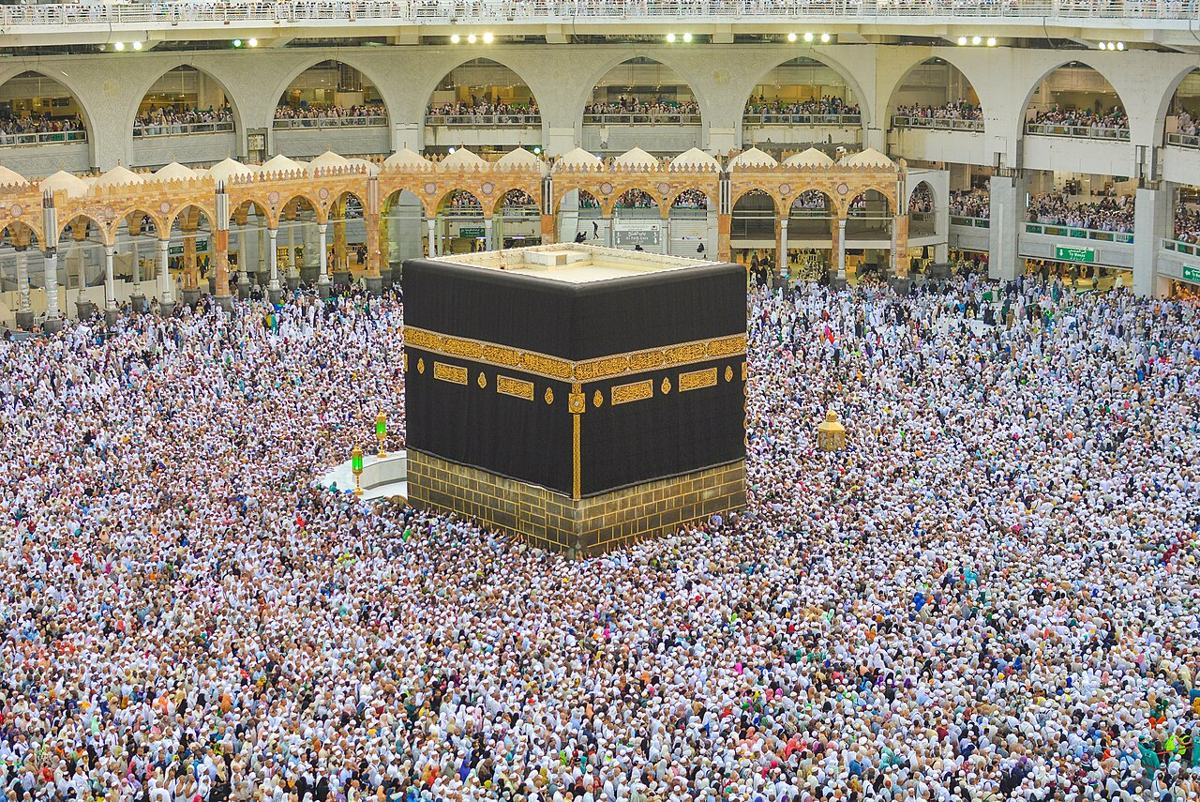
The pillars of Hajj
A pillar (rukun) is an act that must be performed for Hajj to be valid. If one is missing, the Hajj is incomplete, "suspended", and the pilgrim remains bound by the prohibitions of ihram until it is done. No dam can replace a pillar.
The six pillars of Hajj in the Shafi'i school are:
- The intention of ihram for Hajj (niat ihram haji).
- Wuquf at Arafah: being present in Arafah between midday on 9 Dhul Hijjah and dawn on the 10th.
- Tawaf: the pillar tawaf of Hajj, called Tawaf al-Ifadah or Tawaf al-Rukn.
- Sa'i: seven laps between Safa and Marwah.
- Shaving or cutting the hair (bercukur or bergunting).
- Order in most of the pillars (tertib): the intention comes before everything else, wuquf before Tawaf al-Ifadah, and tawaf before sa'i.
The obligations of Hajj
An obligation (wajib) is an act that must be performed, but if it is missed the Hajj remains valid: the pilgrim must pay a dam, and is sinful if it was left deliberately without a valid excuse.
The six obligations of Hajj are:
- Making the intention of ihram at the miqat (or before it).
- Avoiding the prohibitions of ihram.
- Spending the night (mabit) in Muzdalifah on the night of the 10th.
- Stoning Jamrah al-Kubra ('Aqabah) on 10 Dhul Hijjah.
- Spending the nights in Mina on the 11th, 12th and 13th (the 13th only if you stay for it).
- Stoning all three Jamarat on the Days of Tashriq.
Tawaf al-Wada' (the farewell tawaf) is also obligatory, in the Shafi'i school, for anyone leaving Makkah after Hajj, see Chapter 18.
How Umrah differs
| Hajj | Umrah | |
|---|---|---|
| Pillars | 1. Intention of ihram for Hajj · 2. Wuquf · 3. Tawaf · 4. Sa'i · 5. Shaving or cutting · 6. Order in most pillars | 1. Intention of ihram for Umrah · 2. Tawaf · 3. Sa'i · 4. Shaving or cutting · 5. Order in all pillars |
| Obligations | Intention at the miqat · avoiding the prohibitions · Muzdalifah · stoning on the 10th · nights in Mina · stoning on the Days of Tashriq | Intention at the miqat · avoiding the prohibitions, nothing else |
| Time | Only in the months of Hajj, with wuquf on 9 Dhul Hijjah | Any time of the year |
The months of Hajj
The intention of ihram for Hajj can only be made in the months of Hajj: from the beginning of Shawwal until just before dawn on 10 Dhul Hijjah. This is the miqat zamani, the "time boundary", of Hajj. An intention for Hajj made outside this period does not become Hajj; it becomes ihram for Umrah.
The three ways of performing Hajj
1. Haji Tamattu', Umrah first, then Hajj
Perform Umrah during the months of Hajj, come out of ihram, then make a new intention for Hajj in the same year, normally on 8 Dhul Hijjah from your building in Makkah.
This is the method most Malaysian pilgrims use, because it allows them to live out of ihram during the weeks of waiting before Hajj.
A dam is due for Tamattu', on these conditions: the pilgrim is not a resident of the Haram; the Umrah was performed in the months of Hajj of the same year; and they did not travel back to a miqat (or as far as one) to make the intention for Hajj. The dam is a sheep or goat (or a seventh share of a cow or camel); someone who cannot afford it fasts ten days, three during Hajj and seven after returning home (Chapter 7).
نَوَيْتُ الْعُمْرَةَ وَأَحْرَمْتُ بِهَا لِلّٰهِ تَعَالَى
Reading Nawaitul-ʿumrata wa aḥramtu bihā lillāhi taʿālā.
Meaning I intend to perform Umrah and I enter ihram for it, for the sake of Allah the Most High.
نَوَيْتُ الْحَجَّ وَأَحْرَمْتُ بِهِ لِلّٰهِ تَعَالَى
Reading Nawaitul-ḥajja wa aḥramtu bihī lillāhi taʿālā.
Meaning I intend to perform Hajj and I enter ihram for it, for the sake of Allah the Most High.
2. Haji Ifrad, Hajj first, then Umrah
Make the intention for Hajj alone at the miqat, perform Hajj, and then perform Umrah afterwards (for example from Tan'im or Ji'ranah). The Shafi'i school regards Ifrad as the best (afdhal) method when Umrah is performed in the same year. No dam is due. It is still counted as Ifrad if the Umrah was performed before the months of Hajj.
An Ifrad pilgrim stays in ihram from the miqat until the tahallul of Hajj, which may be weeks. They perform Tawaf al-Qudum (the arrival tawaf) on reaching Makkah and may do the sa'i of Hajj after it.
3. Haji Qiran, Hajj and Umrah together
Way 1: make the intention for Hajj and Umrah together at the miqat. Perform all the pillars and obligations of Hajj; the Umrah is completed along with it, "two in one". A dam is due, as for Tamattu'.
نَوَيْتُ الْحَجَّ وَالْعُمْرَةَ وَأَحْرَمْتُ بِهِمَا لِلّٰهِ تَعَالَى
Reading Nawaitul-ḥajja wal-ʿumrata wa aḥramtu bihimā lillāhi taʿālā.
Meaning I intend to perform Hajj and Umrah and I enter ihram for both, for the sake of Allah the Most High.
Way 2: make the intention for Umrah only, but before starting its tawaf, add the intention for Hajj. This becomes Qiran.
The course gives the typical case for Way 2: a woman's period began after she intended Umrah (obligatory or voluntary), and it has not ended by the time the group leaves for Arafah. She cannot perform tawaf, so she cannot finish her Umrah. In the Shafi'i school, as long as she has not begun the tawaf of Umrah, she may add the intention for Hajj before leaving for Arafah; her Hajj becomes Qiran and a Qiran dam is due. If she has already begun the tawaf, she can no longer add Hajj (Hajj cannot be put into an Umrah), and she cannot perform Hajj that year. The same applies to a pilgrim who could not finish Umrah because of illness, an obstacle or a coma. (The Maliki school allows Hajj to be added into the Umrah before leaving for Arafah, as long as she has not ended her tawaf with the two rak'ahs of tawaf.) If she has already paid the Tamattu' dam, she should tell the officer in charge that her intention has changed to Qiran.
Summary of the three methods
| Tamattu' | Ifrad | Qiran | |
|---|---|---|---|
| Intention at the miqat | Umrah | Hajj | Hajj and Umrah |
| Out of ihram before Hajj? | Yes, after Umrah | No | No |
| New intention on 8 Dhul Hijjah? | Yes, for Hajj, from Makkah | No (already in ihram) | No (already in ihram) |
| Tawaf al-Qudum | Not applicable | Sunnah | Sunnah |
| Sa'i of Hajj | After Tawaf al-Ifadah | After Tawaf al-Qudum or after Tawaf al-Ifadah | After Tawaf al-Qudum or after Tawaf al-Ifadah |
| Dam | Yes | No | Yes |
The order of the rites after Arafah
After wuquf, pilgrims do not all follow the same order. The course shows several common sequences, all valid, depending on how a group is organised:
| Sequence | 9th | Night of the 10th | 10th onwards |
|---|---|---|---|
| Typical for pilgrims staying in Mina | Wuquf | Muzdalifah after midnight | Stone 'Aqabah → shave/cut (first tahallul) → nights in Mina and stoning on the 11th–13th → Tawaf al-Ifadah and sa'i in Makkah (second tahallul) |
| Tawaf on the 10th | Wuquf | Muzdalifah after midnight | Stone 'Aqabah → shave/cut (first tahallul) → Tawaf al-Ifadah and sa'i (second tahallul) → back to Mina for the nights and stoning |
| Tawaf straight after Muzdalifah | Wuquf | Muzdalifah after midnight → Tawaf al-Ifadah and sa'i in Makkah | Shave/cut (first tahallul) → stone 'Aqabah (second tahallul) → nights in Mina and stoning |
The rules that stay fixed are: wuquf comes before Tawaf al-Ifadah; tawaf comes before sa'i; and the stoning, the hair and Tawaf al-Ifadah can only begin after midnight on the night of the 10th.
Sunnahs of Hajj
Alongside the pillars and obligations, there are many sunnah acts, including: the ritual bath before ihram, wearing white ihram cloths, two rak'ahs before ihram, the talbiah from the intention until the first stone on the 10th, Tawaf al-Qudum for Ifrad and Qiran pilgrims, collecting pebbles at Muzdalifah, and staying in Mina on the night of the 9th (the Sunnah way). Each chapter that follows points out the sunnahs of each rite.