
Chapter 8 / 19
Tawaf: Circling the Ka'bah
The kinds of tawaf, the conditions that make it valid, how to perform it round by round, its sunnahs and du'a, what breaks it and what is merely disliked, how to resume a broken tawaf, and tawaf in a wheelchair or on the upper floors.
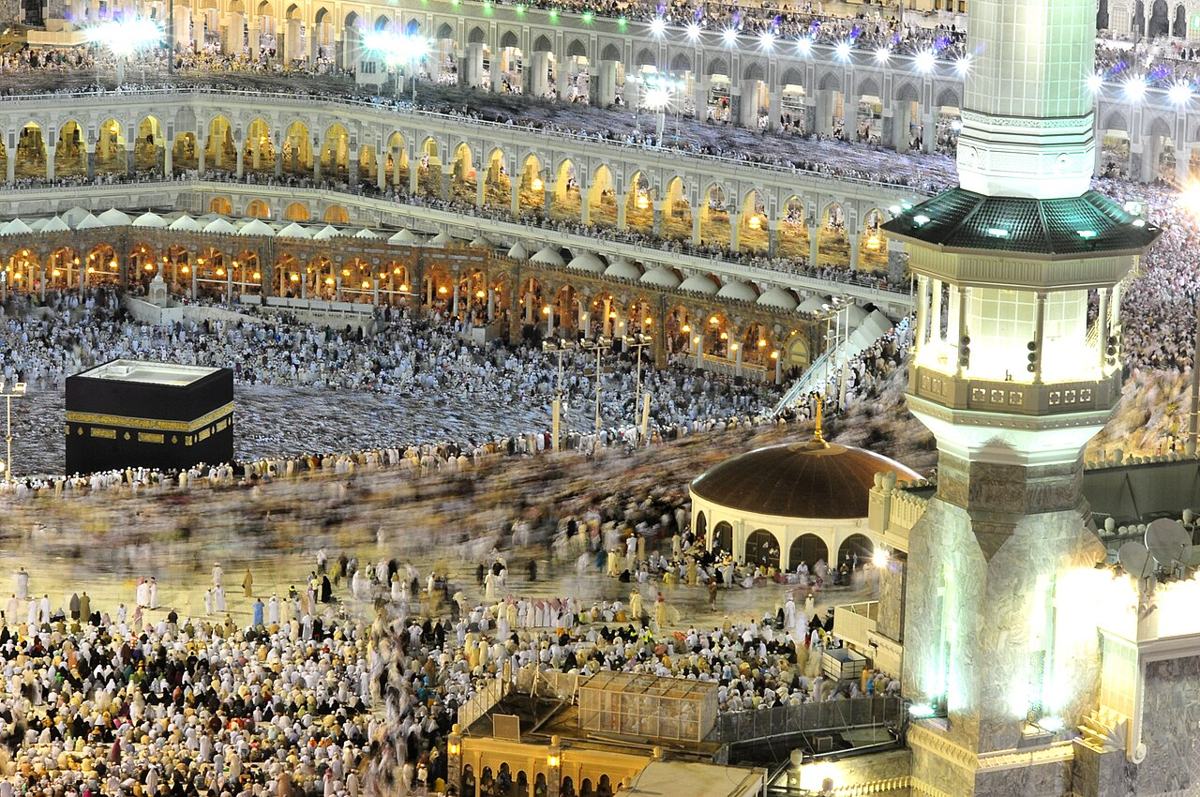
What tawaf is
Tawaf is walking around the Ka'bah seven times according to its conditions. Some kinds of tawaf are pillars, some obligations and some sunnah, but they are all performed in the same way.
The kinds of tawaf
| Tawaf | Ruling | When |
|---|---|---|
| Tawaf al-Rukn: Tawaf al-Ifadah for Hajj, the tawaf of Umrah for Umrah | Pillar | Hajj: from midnight of the 10th onwards. Umrah: on arrival in Makkah. |
| Tawaf al-Qudum (arrival) | Sunnah, for Ifrad and Qiran pilgrims, or a visitor to Makkah not in ihram | On arriving in Makkah |
| Tawaf al-Wada' (farewell) | Obligatory before leaving Makkah | Just before departure (Chapter 18) |
| Tawaf tahiyyat al-Bait (greeting the House) | Sunnah | On entering Masjid al-Haram |
| Tawaf sunat (voluntary) | Sunnah | Any time |
| Tawaf nazar (vowed) | Obligatory on the one who vowed it | As vowed |
Is a spoken intention needed?
- For the tawaf of Umrah, Tawaf al-Ifadah and the Tawaf al-Qudum of an Ifrad or Qiran pilgrim, no separate intention is required: they are part of the ihram you already entered.
- For a voluntary tawaf, a vowed tawaf, Tawaf al-Wada', tawaf greeting the House, and Tawaf al-Qudum of someone simply visiting Makkah, you must make the intention, for example:
Meaning "O Allah, I intend to circle Your Sacred House seven times as a [voluntary / farewell / vowed] tawaf. Make it easy for me and accept it from me, for the sake of Allah."
The conditions of a valid tawaf
- Purity from minor and major ritual impurity (hadas), you must have wudu, and be free of janabah, menstruation and post-natal bleeding.
- Purity of body, clothing and the ground from najis (filth).
- Covering the 'awrah: throughout every round.
- Starting at the Black Stone, with your whole body passing it.
- Keeping the Ka'bah on your left and walking forwards.
- Seven complete rounds, with certainty.
- Inside Masjid al-Haram (any floor), and outside the Hijr Ismail and the Shadharwan.
- Walking for the purpose of tawaf: your intention must not be diverted to something else, such as searching for a friend.
Wudu and the crowds: the ruling on touching
In the main Shafi'i position, skin contact between a man and a woman who are not mahram breaks wudu. In the crushing crowds of the mataf this would make tawaf almost impossible. The Malaysian national Hajj council (Muzakarah Haji, 21st and 22nd sessions) therefore allowed pilgrims, as a concession (rukhsah) in genuine hardship, to follow the weaker opinion within the Shafi'i school: contact without desire, in the crowd, does not break wudu.
This concession applies:
- from the time you leave your building until you are inside Masjid al-Haram or Masjid Nabawi; and
- in situations of genuine hardship during the Hajj or Umrah journey, such as on crowded planes or buses.
It does not cover anything else that breaks wudu. If you pass wind or use the toilet, your wudu is broken and must be renewed.
Be careful of najis
The course warns pilgrims to watch for impurity during tawaf from:
- sandals carried in a bag, wrap them in a plastic bag;
- small children in nappies being carried;
- soiled clothing;
- bird droppings falling in the open mataf.
The 'awrah of men in tawaf
- A man's 'awrah is from the navel to the knee.
- As a matter of courtesy, men should also keep the upper body covered.
- Idtiba' is only for a tawaf followed by sa'i, and is begun only when you are about to start that tawaf.
The details for women are in Chapter 15.
The start line
A green light on a pillar of the mosque, directly opposite the Black Stone, marks the place where tawaf starts and ends. Because of the expansion of Masjid al-Haram and the mataf, the area may look different from older pictures, but the green light is still in line with the Black Stone as the marker for starting tawaf. The upper floor has its own marked place for starting and ending tawaf.
Tawaf, step by step
- Make sure you have wudu, your 'awrah is covered and your clothes are clean. Men performing a tawaf followed by sa'i uncover the right shoulder (idtiba').
- For a tawaf that needs one, make the intention.
- Stand level with the Black Stone, facing it, a little before the green light so your whole body passes the start.
- Touch or kiss the Black Stone if you can do so without hurting anyone. Otherwise, which will be the case for almost everyone, raise your right hand towards it (istilam), say "Bismillah, Allahu Akbar", and kiss your hand. Do not push.
- Turn so the Ka'bah is on your left and begin walking.
- Men performing a tawaf followed by sa'i walk briskly with short steps (ramal) in the first three rounds only, if the crowd allows. Walk normally in rounds four to seven. Women always walk normally.
- Make du'a and dhikr in any language. There is no fixed du'a for each round; booklets are helpful, but understanding what you say matters more.
- At the Rukn Yamani, touch it (istilam) with your right hand if you can do so without pushing, without kissing it.
- Between the Rukn Yamani and the Black Stone, recite "Rabbana atina…".
- When you reach the Black Stone line again, one round is complete. Gesture to the Stone and say "Bismillah, Allahu Akbar" at the start of each new round.
- After the seventh round, cover your right shoulder again.
- Pray two rak'ahs of tawaf at Maqam Ibrahim if possible, but anywhere in the mosque is valid. Do not block people in the mataf to pray right behind the Maqam.
- Make du'a at the Multazam, if you can reach it calmly.
- Drink Zamzam and make du'a.
- If it is a tawaf followed by sa'i, go on to Safa.
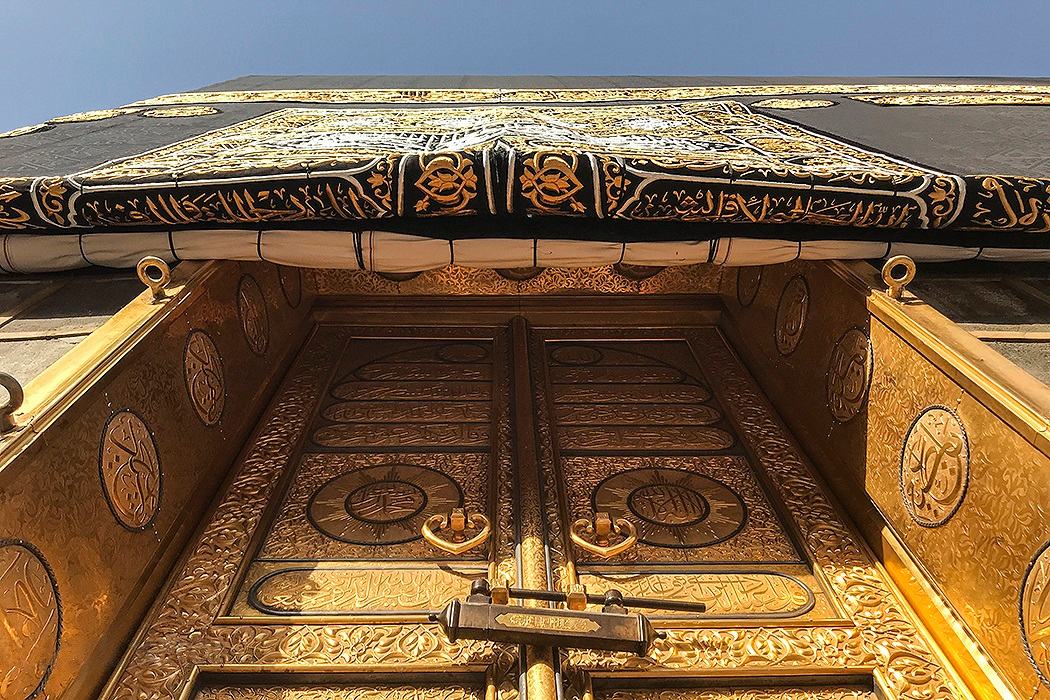
بِسْمِ اللّٰهِ وَاللّٰهُ أَكْبَرُ
Reading Bismillāhi wallāhu akbar.
Meaning In the name of Allah, and Allah is the Greatest.
رَبَّنَا آتِنَا فِي الدُّنْيَا حَسَنَةً وَفِي الْآخِرَةِ حَسَنَةً وَقِنَا عَذَابَ النَّارِ
Reading Rabbanā ātinā fid-dunyā ḥasanah, wa fil-ākhirati ḥasanah, wa qinā ʿadhāban-nār.
Meaning Our Lord, give us good in this world and good in the Hereafter, and protect us from the punishment of the Fire.
Surah al-Baqarah 2:201
وَاتَّخِذُوا مِن مَّقَامِ إِبْرَاهِيمَ مُصَلًّى
Reading Wattakhidhū min maqāmi Ibrāhīma muṣallā.
Meaning And take the station of Ibrahim as a place of prayer.
Surah al-Baqarah 2:125
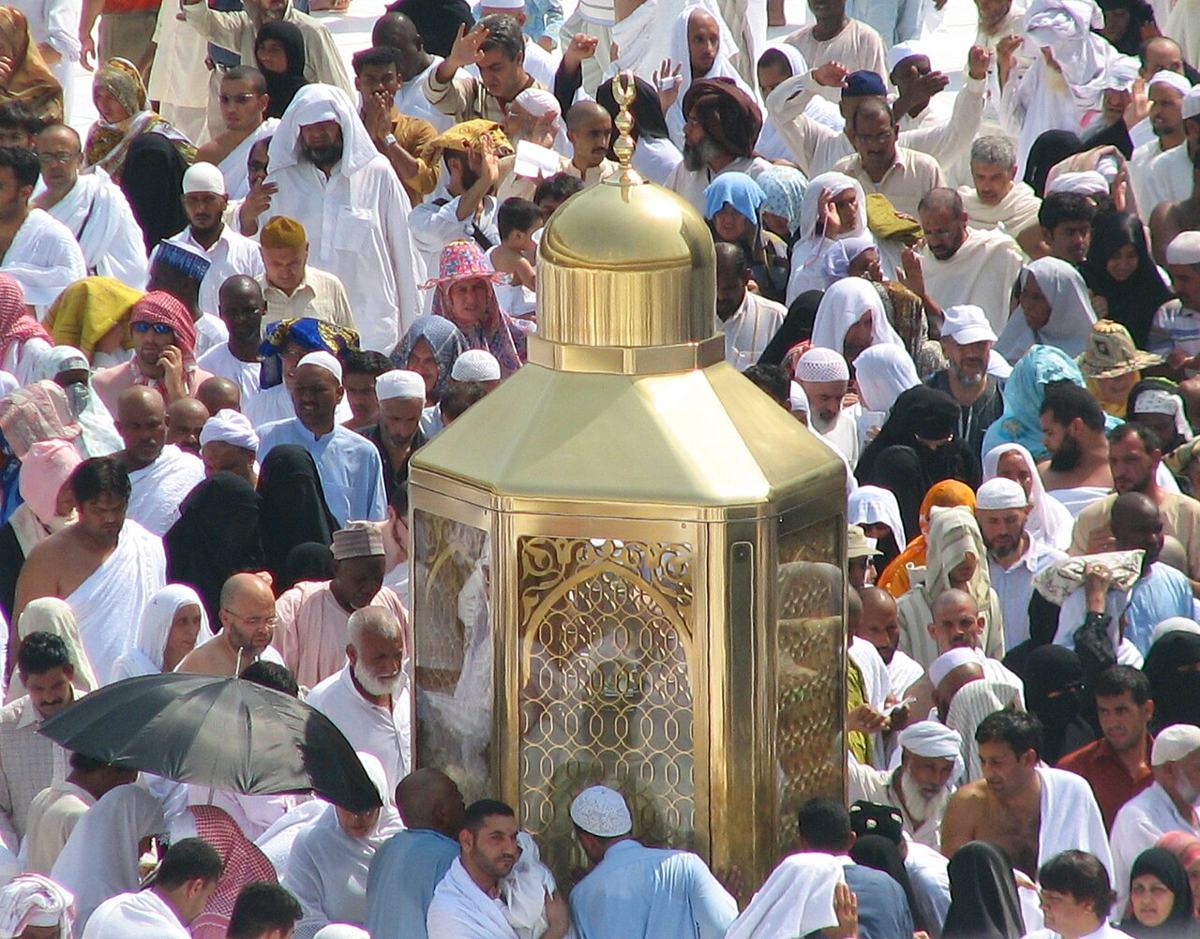
The sunnahs of tawaf
- Idtiba' (men, for a tawaf followed by sa'i).
- Ramal in the first three rounds (men, for a tawaf followed by sa'i).
- Touching and kissing the Black Stone, or gesturing to it.
- Touching the Rukn Yamani without kissing it.
- Dhikr and du'a throughout.
- Performing the seven rounds continuously, one after another.
- Humility (tawadhu') and concentration (khusyuk).
- Walking, if able.
- Two rak'ahs after tawaf.
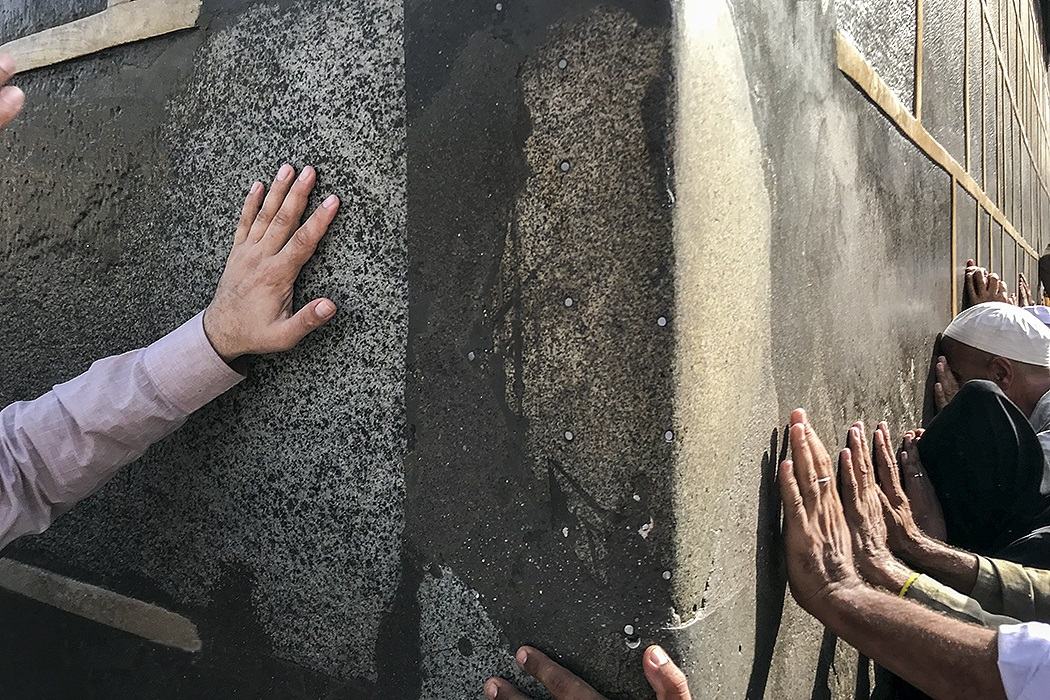
What breaks tawaf
The course lists these as invalidating the round in which they happen:
- Deliberately exposing the 'awrah.
- Touching the Ka'bah or its cloth, including stepping on the Shadharwan.
- Being diverted from the intention of tawaf: for example walking round searching for a friend until you forget you are in tawaf.
- Touching or entering the Hijr Ismail.
- Not being certain of the seven rounds without adding a round to make sure. If you are unsure whether you have done six or seven, add one more round.
Losing your wudu also interrupts tawaf, because purity is one of its conditions.
What is disliked but does not break tawaf
- Eating or drinking during tawaf.
- Unbecoming conversation.
- Reciting du'a loudly in a way that disturbs others.
- Talking on the mobile phone.
- Ramal in all seven rounds (it is only for the first three).
- Holding in wind or the need to urinate or open the bowels, go and relieve yourself, renew wudu and resume.
How to resume a broken tawaf
If your wudu breaks or a round becomes invalid:
- Leave, renew your wudu (or fix the problem) and come back.
- You may continue from the point where the round was broken.
- It is better, though, to repeat that round from the Black Stone.
- The rounds already completed are still counted.
If the call to a congregational prayer (iqamah) is made while you are in tawaf, join the prayer, then continue from where you stopped.
Wheelchairs and the upper floors
- Tawaf on the first floor and roof is valid, they are part of the mosque. The rounds are much longer (the roof round can be over a kilometre), so allow more time.
- There is a dedicated route for wheelchairs on the upper level. Family members are encouraged to push the wheelchair of their own relatives, or to walk beside a hired pusher.
- When one person pushes another in a wheelchair, the tawaf counts for both of them, as long as each has the intention. This is different from carrying someone, where only one person's tawaf counts.
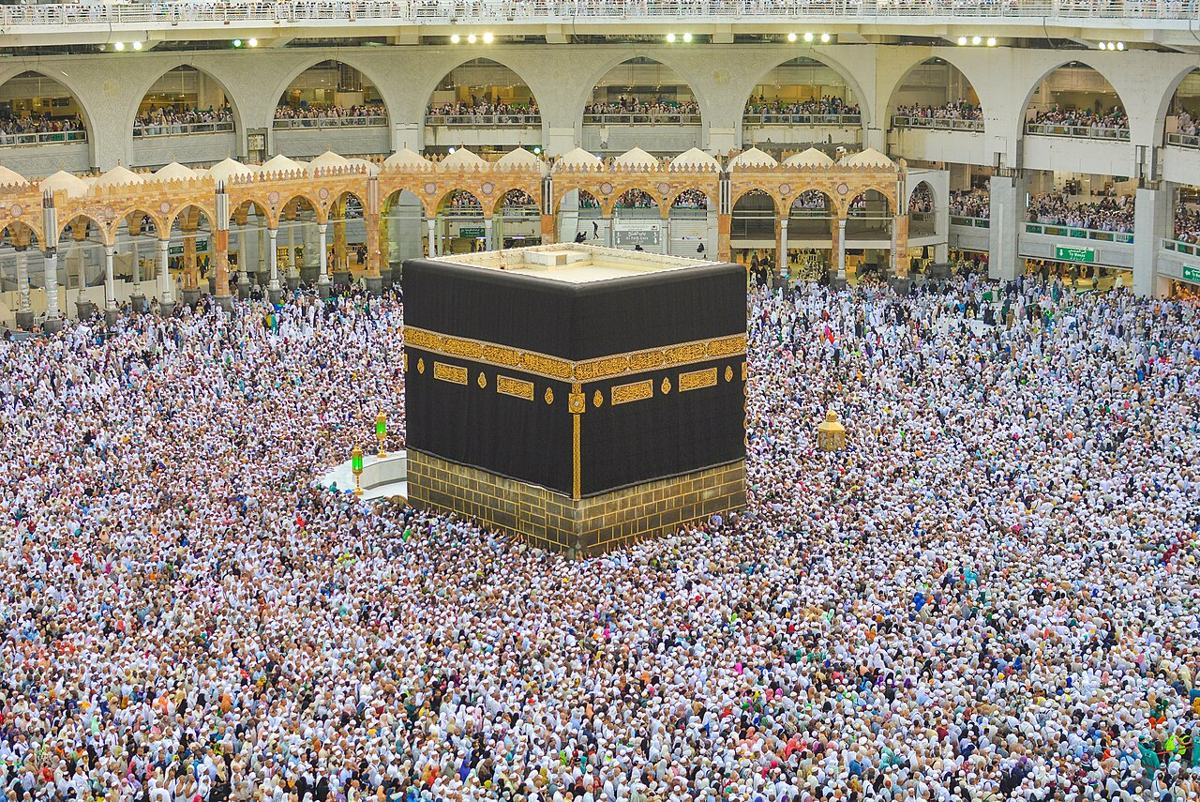
Tawaf tips
- Keep your sandals in a small bag (wrapped) or leave them at the shoe racks near your gate. Note the rack number.
- Agree a meeting point with your companions, for example the green light, or a numbered gate, before you start.
- Avoid the peak times after the obligatory prayers, especially Maghrib and Isha. Late morning is often easier.
- Keep your bag in front of you and your money hidden.
- Use a counter (a ring counter or simply your fingers) if you are worried about losing count.
- Do not stop in the flow of people to take photographs.
- Wider rounds with calm are better than close rounds with a struggle, never push to get near the Ka'bah or the Black Stone.