Chapter 17 / 19
Health and Safety
The basic Hajj course gives a whole session to health, taught by medical officers. This chapter gathers the practical points pilgrims are given, before you go, in the heat and the crowds, and in the masha'ir, so that illness does not stop you completing your worship.
Before you go
- Complete your health screening early, and be honest about every condition you have.
- Treat problems before you travel. The course stresses that conditions such as prolapse, incontinence and menstrual problems should be raised at screening and treated at least three months before departure (Chapter 15).
- Vaccinations: take every vaccination required for your season (the meningococcal vaccine has long been a requirement for Hajj visas) and any others your health authority recommends. Requirements change, so follow your official instructions.
- Get fit. Hajj involves many kilometres of walking every day, in Mina, to the Jamarat, around the Ka'bah and between Safa and Marwah. Start walking daily, in the sandals you will wear, weeks before you leave.
- Medicines: bring enough for your whole stay plus extra, in their original packaging, with a doctor's letter listing them. Keep a few days' supply in your hand luggage.
Keep taking your medicines
The course is clear: Zamzam is a means of healing, but pilgrims who are already ill must keep taking their medicines on schedule and follow the advice of the medical officers. This is part of tawakkal, trusting Allah while using the means He has provided, not a lack of it (Chapter 4).
- Set alarms for your doses: the days of Hajj change every routine.
- If you are diabetic, carry sweets and your glucose meter; meals can be late.
- If you use insulin or other medicines that must be kept cool, ask your group how they will be stored in the masha'ir.
Heat
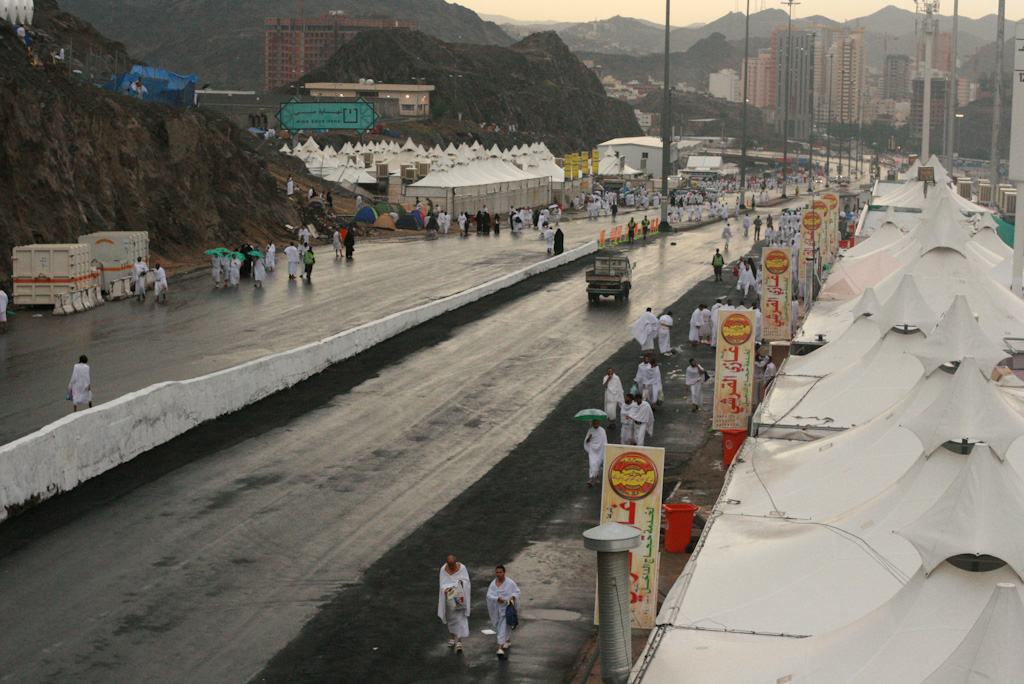
Hajj and Umrah are often performed in great heat, and heat exhaustion and heat stroke are among the most common reasons pilgrims need treatment.
- Drink water little and often: do not wait to feel thirsty.
- Use an umbrella in the sun. (Holding an umbrella is permitted in ihram; strapping it to the head is not, Chapter 7.)
- Stay in the shade at Arafah in the afternoon; your tent is a valid place for wuquf.
- Walk at cooler times when you can, late at night or early in the morning.
- Know the warning signs: headache, dizziness, nausea, confusion, very hot skin, or stopping sweating. Move into shade, cool the body with water and get medical help at once.
Crowds
- Go to tawaf, sa'i and the Jamarat at the times your group sets, and use the assigned routes.
- Never push. Patience in a crowd is part of your worship, and the safest thing you can do.
- Keep your bag in front of you. Do not stop suddenly in a narrow passage.
- If you feel faint in a crowd, signal to those around you and move sideways to the edge, not against the flow.
Feet and walking
- Use sandals you have already broken in. For men in ihram they must leave the toes and heel uncovered.
- Check your feet every day for blisters and cuts, especially if you are diabetic.
- Carry plasters and a small tube of unscented cream.
Infections
- Coughs, colds and flu spread easily in crowded tents, buses and rooms. Wash your hands often and consider wearing a mask in crowds.
- Do not share razors or blades when the hair is cut or shaved: use your own clean, disposable blade (Chapter 10).
- Eat freshly cooked food, and be careful with food that has been left out in the heat.
Wudu, prayer and illness
- If water would harm you, tayammum is permitted; and a person with a dressing or cast wipes over it (jabirah), see Chapter 16.
- A sick person prays in whatever way they are able: sitting, lying on the side, lying on the back, with movements of the head and eyes, or in the heart.
- If you cannot stone because of illness, a proxy may stone for you, after you have consulted the medical officer and your religious guide (Chapter 13).
- Illness is one of the recognised excuses for missing the nights at Muzdalifah and Mina (Chapter 12).
Getting help
- Know where your group's clinic and medical officers are, in Makkah, Madinah and the masha'ir.
- Carry your ID card, wristband and tent or room card at all times, and a note of your medical conditions and medicines.
- If you are separated from your group, go to the nearest guide post, security officer or your country's mission office.