Chapter 4 / 19
The Holy Land: Makkah, the Ka'bah and the Sites of Hajj
The story of Makkah from Adam and Ibrahim to the Prophet ﷺ, the parts of the Ka'bah you will see during tawaf, the virtues of the Haram, the places where du'a is answered, the well of Zamzam, and the geography of Arafah, Muzdalifah and Mina.
Adam and Hawa: the first meeting
The course begins the history of the Holy Land with Adam and Hawa (Eve). Tradition connects their meeting after leaving Paradise with the plain of Arafah, and scholars draw two lessons from it. First, repentance: two people who knew they had sinned turned back to Allah and were forgiven, exactly what the pilgrim seeks at Arafah. Second, the enemy: the whisperings of Iblis can reach a person anywhere, even in the holiest places.
The story of their sons, Qabil and Habil, who each offered a sacrifice, one of grain, one of a ram, is told in Surah al-Ma'idah (5:27–31). It is remembered as the first sacrifice, the root of the qurban that pilgrims and Muslims everywhere offer on Eid al-Adha.
Ibrahim, Hajar and Ismail
Makkah as we know it begins with a family. Prophet Ibrahim (peace be upon him), by Allah's command, left his wife Hajar and their baby son Ismail in a barren valley with no crops and no water, beside the place of Allah's Sacred House. He prayed:
رَبَّنَا إِنِّي أَسْكَنتُ مِن ذُرِّيَّتِي بِوَادٍ غَيْرِ ذِي زَرْعٍ عِندَ بَيْتِكَ الْمُحَرَّمِ رَبَّنَا لِيُقِيمُوا الصَّلَاةَ فَاجْعَلْ أَفْئِدَةً مِّنَ النَّاسِ تَهْوِي إِلَيْهِمْ وَارْزُقْهُم مِّنَ الثَّمَرَاتِ لَعَلَّهُمْ يَشْكُرُونَ
Reading Rabbanā innī askantu min dhurriyyatī bi wādin ghairi dhī zarʿin ʿinda baitikal-muḥarram, rabbanā liyuqīmuṣ-ṣalāta fajʿal af'idatan minan-nāsi tahwī ilaihim warzuqhum minath-thamarāti laʿallahum yashkurūn.
Meaning Our Lord, I have settled some of my offspring in a valley without crops, beside Your Sacred House, our Lord, so that they may establish prayer. So make the hearts of people incline towards them, and provide them with fruits, so that they may be grateful.
Surah Ibrahim 14:37
Every pilgrim is the answer to that prayer: hearts from every corner of the earth still incline towards this valley.
The story continues in the rites of Hajj:
- Sa'i: when the water ran out and Ismail cried with thirst, Hajar ran seven times between the hills of Safa and Marwah, searching and praying. Pilgrims walk the same path today (Chapter 9).
- Zamzam: after the seventh run, water burst from the sand where Ismail kicked it. Hajar built an enclosure around it (tazamzama) so that it would not overflow, hence the name Zamzam, and the well has flowed ever since.
- The sacrifice: when Ismail was 13 years old, Ibrahim came to Makkah and was commanded in a dream to sacrifice him. Father and son both submitted, and Allah ransomed Ismail with a great sacrifice (Surah as-Saffat 37:102–111).
- The stoning: Iblis tried to disturb Ibrahim and turn him away from obeying Allah, and Ibrahim drove him off with stones at the places where the Jamarat now stand (Chapter 13).
- The Ka'bah: Ibrahim and Ismail later raised the foundations of the House together (Surah al-Baqarah 2:127).
From the Jurhum to the Quraysh
- The valley lay on the caravan routes, and the tribe of Jurhum, seeing birds circling over water, asked Hajar's permission to settle. Ismail grew up among them and married into the tribe.
- The Jurhum controlled Makkah for around two centuries before they were defeated by the Khuza'ah from Yemen.
- Qusay ibn Kilab later united the Arab clans into the tribe of Quraysh, who became custodians of the Ka'bah.
- The Prophet Muhammad ﷺ was born in Makkah during the leadership of his grandfather 'Abd al-Muttalib.
- In Ramadan of 8 AH, the Prophet ﷺ entered Makkah, ended the rule of the idolaters over the Sacred House and cleansed it of idols.
The Ka'bah
The course summarises the history of the House:
- It is the first house of worship established on earth (Surah Ali 'Imran 3:96).
- Its building stone is described as coming from five mountains: Jabal Lubnan, Tur Zita, Tur Sina, Jabal Judi and Jabal Hira'.
- Reports also describe earlier buildings before Ibrahim's, by angels, by Adam and by Seth.
- Ibrahim's building is reported to have measured roughly 14 m high, 12 m long and 11 m wide.
- The Quraysh rebuilt it when the Prophet ﷺ was 35 years old; he himself placed the Black Stone in its corner and settled the dispute between the clans.
- The course shows its successive buildings, by Qusay ibn Kilab, by the Quraysh, by 'Abdullah ibn al-Zubayr and by al-Hajjaj, and notes that renewal and conservation have continued from the reign of King Fahd until today.
The parts of the Ka'bah
| Part | What it is |
|---|---|
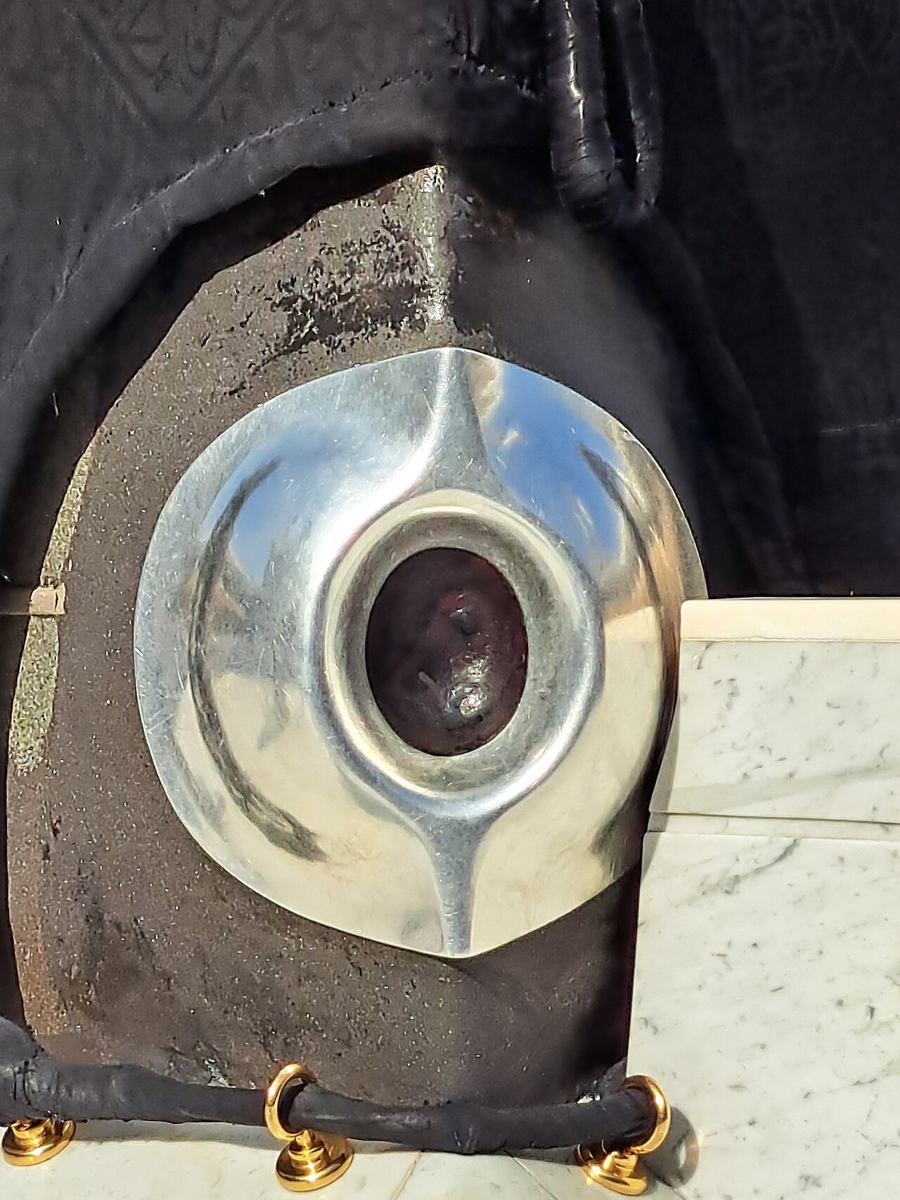
| Hajar al-Aswad (the Black Stone) | Set in a silver frame in the eastern corner. Tawaf starts and ends in line with it. |
| Rukn Iraqi | The northern corner, facing Iraq. |
| Rukn Shami | The western corner, facing Syria (al-Sham). |
| Rukn Yamani | The southern corner, facing Yemen. It is sunnah to touch it with the hand during tawaf, if you can do so without pushing. |
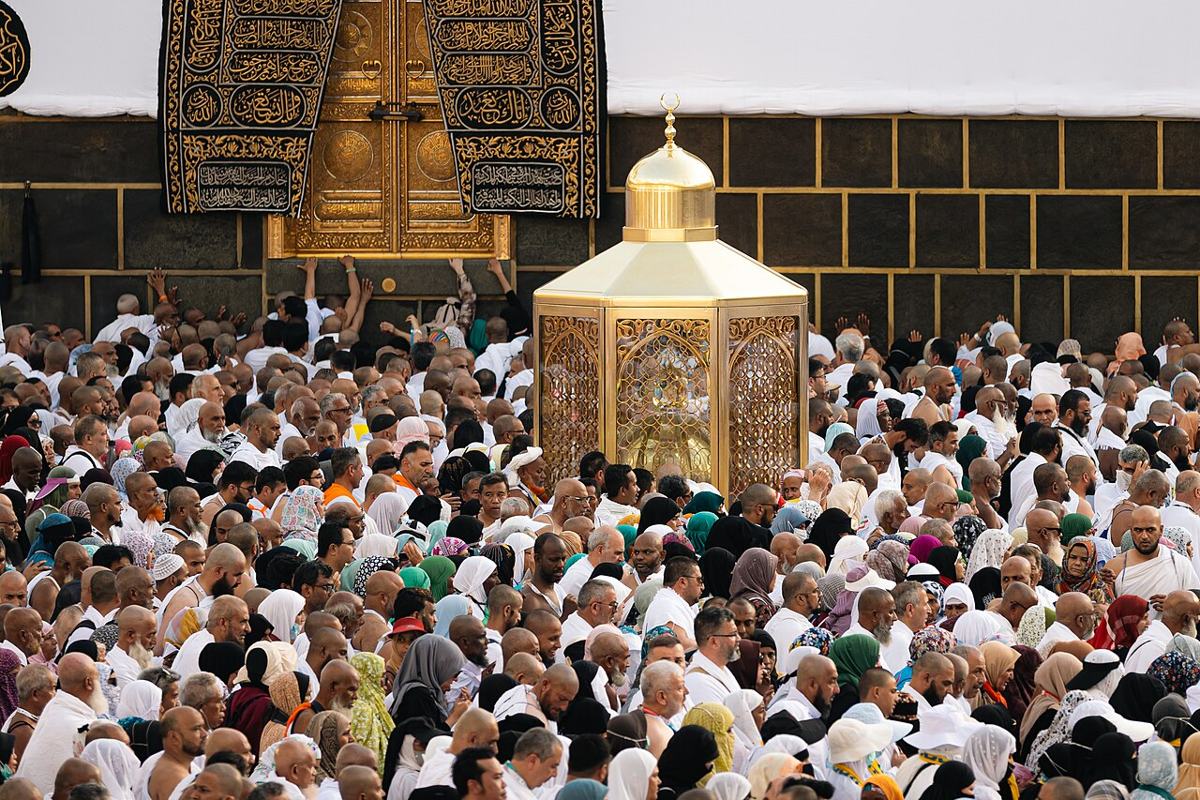
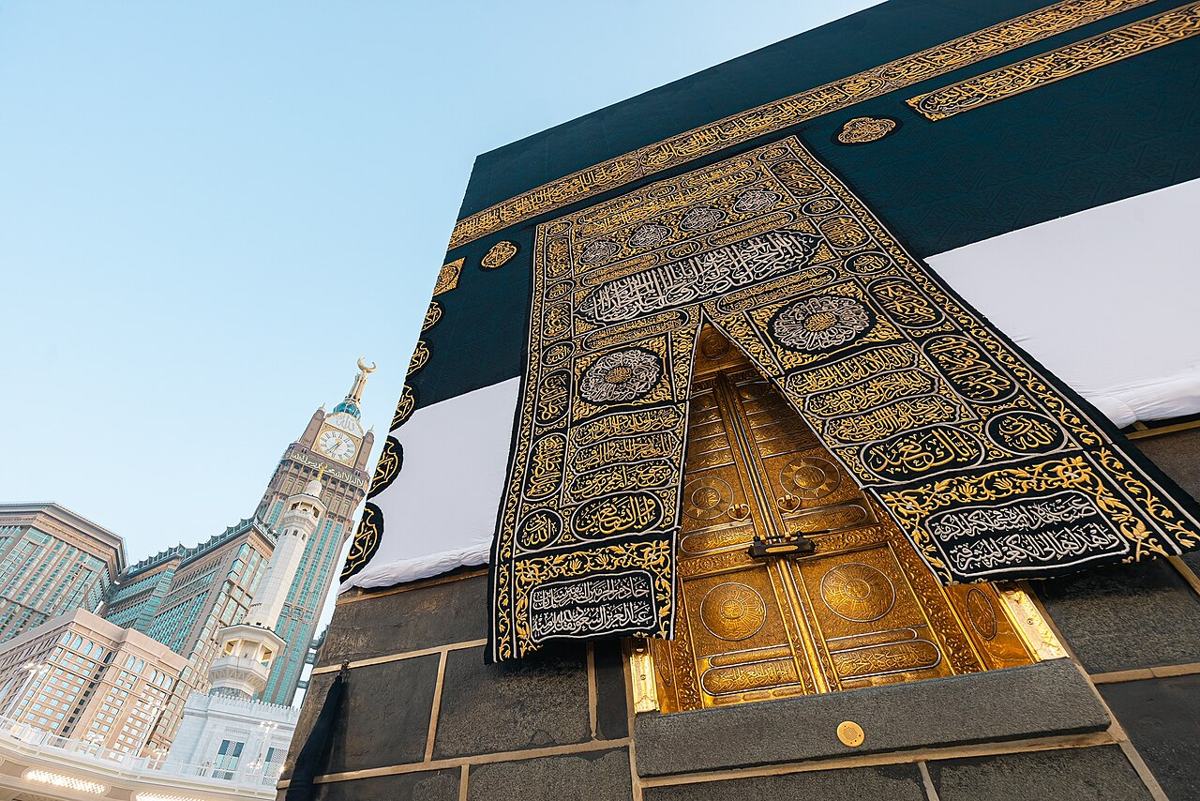
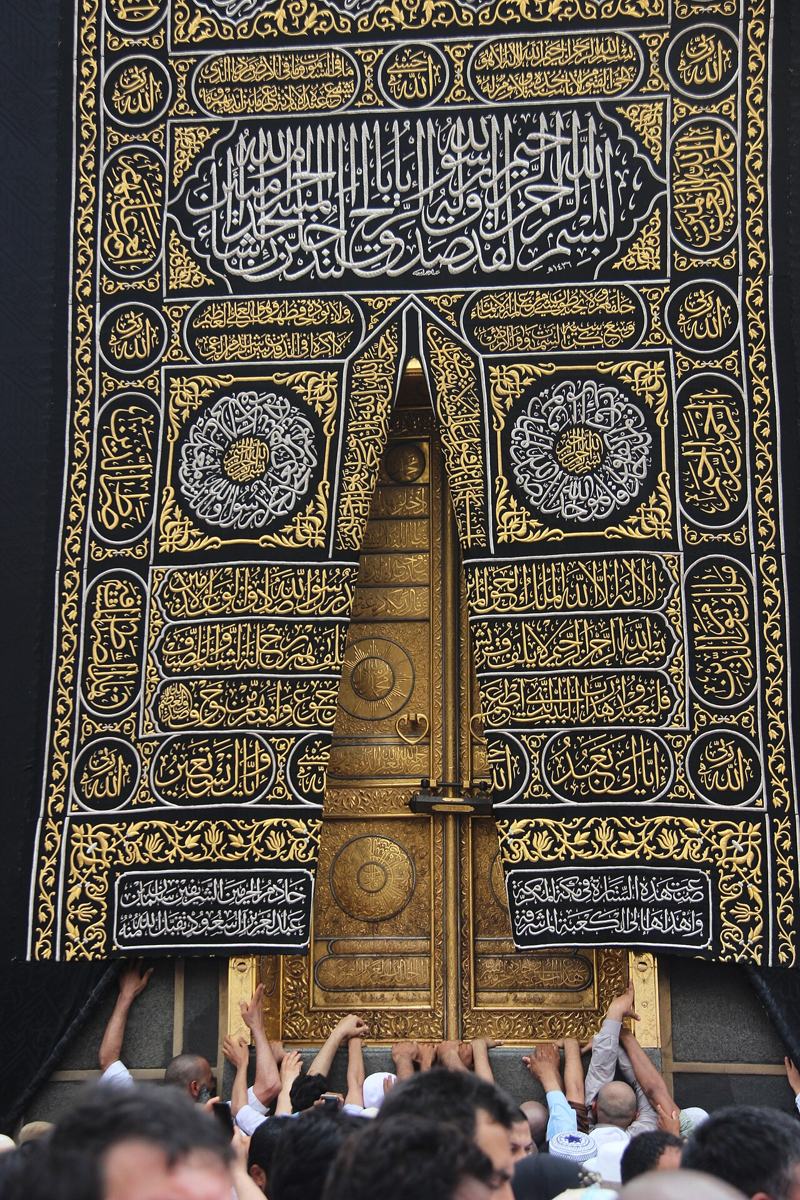
| The door | On the north-eastern wall, about two metres above the ground. |
| Multazam | The wall between the Black Stone and the door, a place where du'a is answered. |
| Mizab (the golden spout) | On the roof edge above the Hijr, draining rainwater. |
| Hijr Ismail | The semicircular area on the north-western side of the Ka'bah. Tawaf must go outside it: touching or entering it during tawaf voids the round. |
| Hatim | The low semicircular wall that encloses the Hijr Ismail. |
| Shadharwan | The sloping marble base along the foot of the walls. It is part of the Ka'bah: do not walk on it during tawaf. |
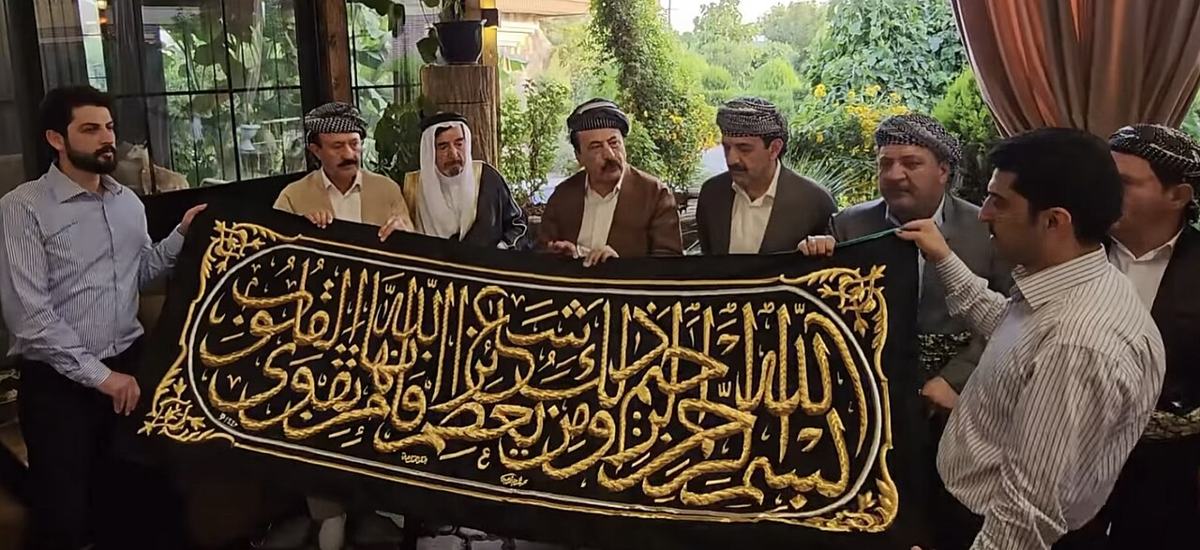
| Kiswah | The black silk cloth embroidered in gold with verses of the Qur'an, replaced every year. |
| Maqam Ibrahim | The stone Ibrahim stood on while building, now in a gold-and-glass case opposite the door. |

Masjid al-Haram
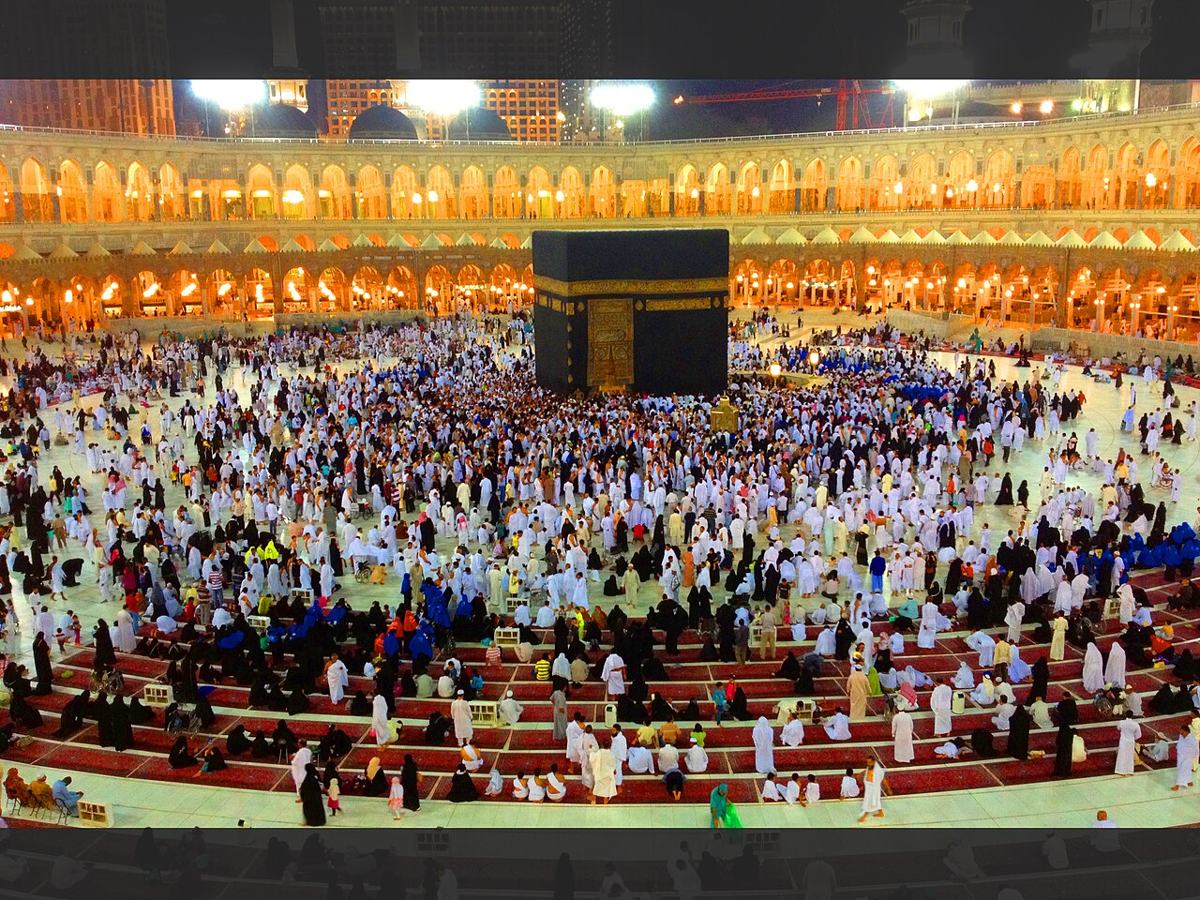
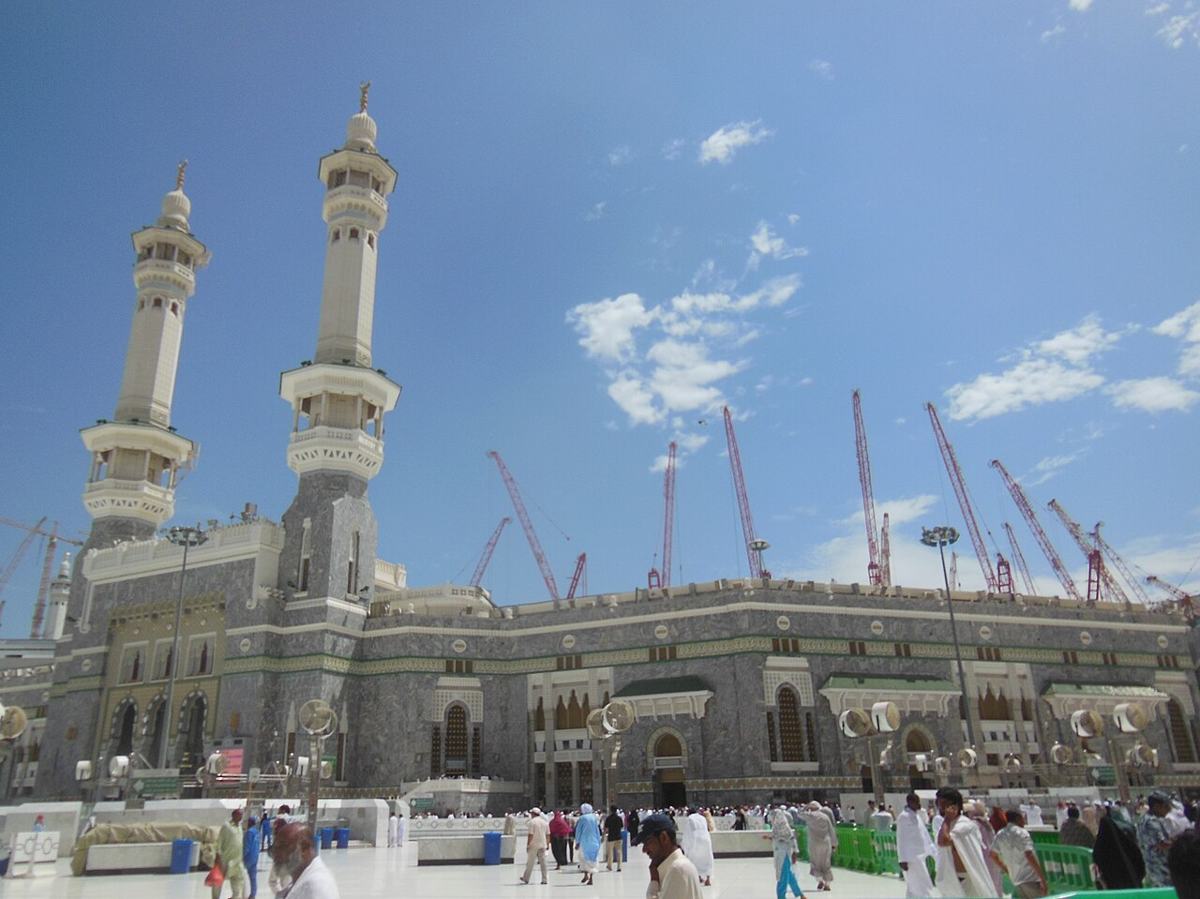
- Masjid al-Haram is the whole mosque: the Ka'bah, the mataf (the area for tawaf) and the prayer halls around it.
- From the time of Ibrahim until Qusay ibn Kilab, it was an open space around the House with no buildings.
- The Caliph 'Umar enlarged it in 17 AH, and 'Uthman in 26 AH. It has been expanded again and again ever since; today it holds well over a million worshippers, and the mas'a (the gallery for sa'i between Safa and Marwah) is part of the building.
Good deeds in Masjid al-Haram
- Do many righteous deeds, especially tawaf and prayer.
- Read the Qur'an.
- Remember Allah (dhikr).
- Send blessings (selawat) on the Prophet ﷺ.
- Avoid what is disliked and pointless.
- Make the intention of i'tikaf (staying in the mosque for worship) each time you enter.
The virtues of the Haram
The sacred precinct of Makkah (Tanah Haram), a wide area around the city, marked by boundary signs, has virtues that the course lists:
- It is the birthplace of the Prophet ﷺ.
- It is a place of honour, safety and peace.
- It is reported that 120 mercies descend on the Ka'bah each day: 60 for those performing tawaf, 40 for those praying and 20 for those looking at the House.
- A prayer in Masjid al-Haram is worth 100,000 prayers elsewhere. Many scholars hold that this multiplication covers the whole Haram, not only the mosque building, and that other good deeds there are multiplied too.
- There is no forbidden time for voluntary prayer in the Haram of Makkah, even at the times when voluntary prayer without a reason is forbidden elsewhere (Chapter 16).
- Makkah is protected from plague and from the Dajjal.
- It has many places where du'a is answered.
Fifteen places where du'a is answered
According to al-Hasan al-Basri, as quoted in the course, du'a is answered:
- Throughout tawaf around the Ka'bah
- At the Multazam
- Inside the Ka'bah
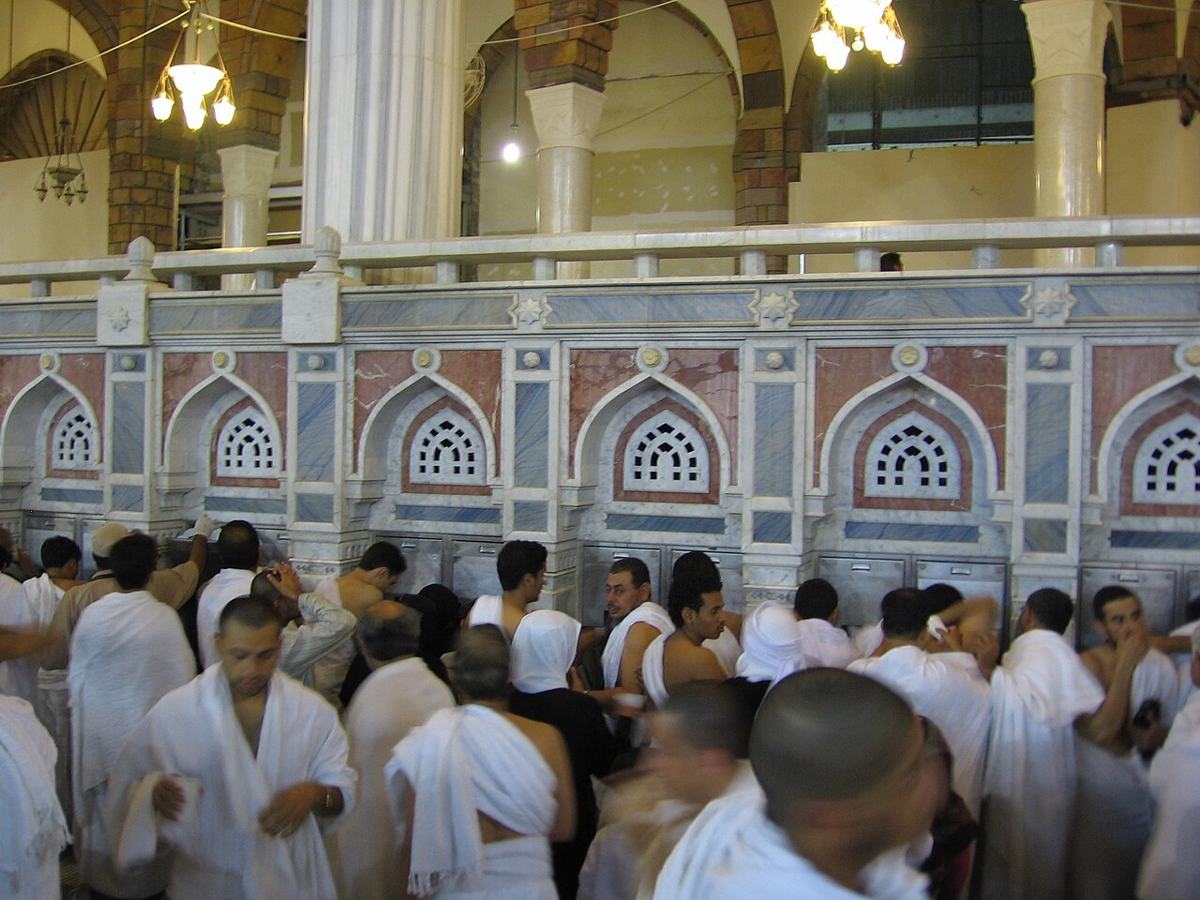
- At the well of Zamzam
- In the Hijr Ismail
- On Safa
- On Marwah
- In the Mas'a (the place of sa'i)
- Behind Maqam Ibrahim
- At Arafah, throughout the wuquf
- At Muzdalifah, throughout the night
- At Mina, on the Day of Sacrifice and the Days of Tashriq
- At the small Jamrah
- At the middle Jamrah
- At the large Jamrah
Zamzam
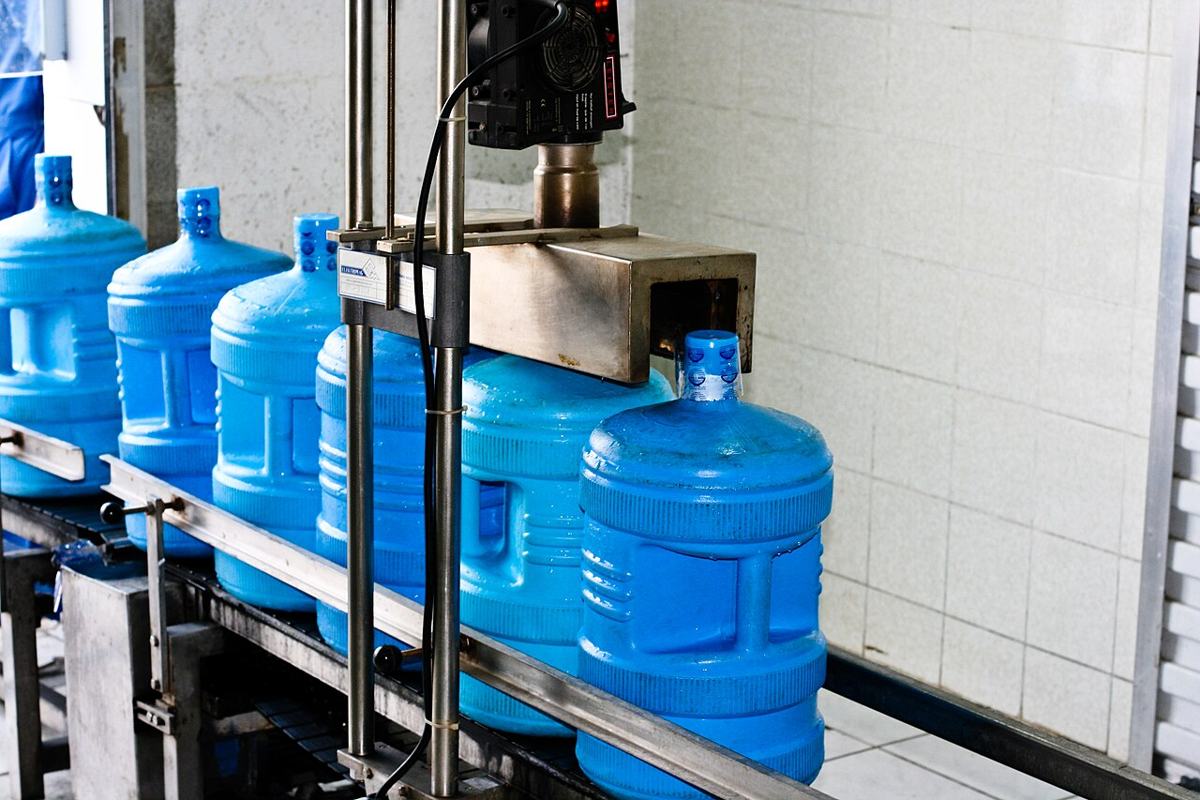
The well of Zamzam lies a few metres from the Ka'bah. Today the water is pumped to coolers and taps throughout both Holy Mosques, and pilgrims are usually allowed to take some home in sealed containers.
The etiquette of drinking Zamzam
- Face the qiblah.
- Say Bismillah.
- Drink with your right hand.
- Drink calmly, in three breaths.
- Make du'a, "Zamzam is for whatever it is drunk for".
- The Prophet ﷺ drank Zamzam both standing and sitting.
اللّٰهُمَّ إِنِّي أَسْأَلُكَ عِلْمًا نَافِعًا، وَرِزْقًا وَاسِعًا، وَشِفَاءً مِنْ كُلِّ دَاءٍ
Reading Allāhumma innī as'aluka ʿilman nāfiʿā, wa rizqan wāsiʿā, wa shifā'an min kulli dā'.
Meaning O Allah, I ask You for beneficial knowledge, abundant provision, and a cure for every illness.
The virtues of Zamzam
- It is a means of healing, but keep taking your prescribed medicines on schedule and follow your doctor's advice. Trusting Allah (tawakkal) includes using the means He has provided.
- It nourishes and strengthens the one who drinks it.
- It serves the purpose for which it is drunk.
- It will not dry up until the Last Day.
- It is the water that was used to wash the heart of the Prophet ﷺ.
- Its benefits have also been studied scientifically.
خَيْرُ مَاءٍ عَلَى وَجْهِ الْأَرْضِ مَاءُ زَمْزَمَ، فِيهِ طَعَامٌ مِنَ الطُّعْمِ، وَشِفَاءٌ مِنَ السُّقْمِ
Reading Khairu mā'in ʿalā wajhil-arḍi mā'u zamzam, fīhi ṭaʿāmun minaṭ-ṭuʿm, wa shifā'un minas-suqm.
Meaning The best water on the face of the earth is the water of Zamzam. In it is nourishing food and a cure for sickness.
Hadith reported by al-Tabarani
The sites of Hajj (al-masha'ir)
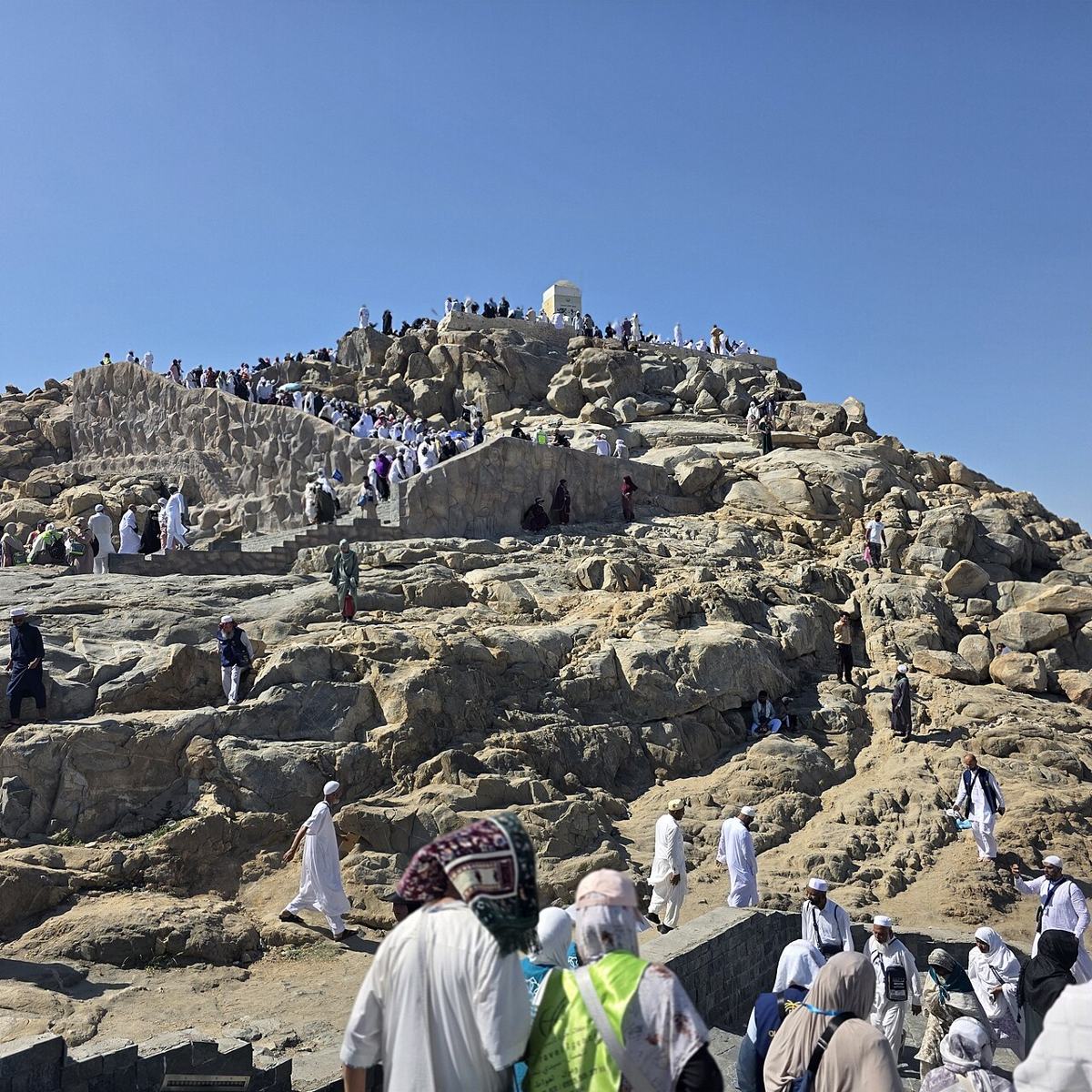
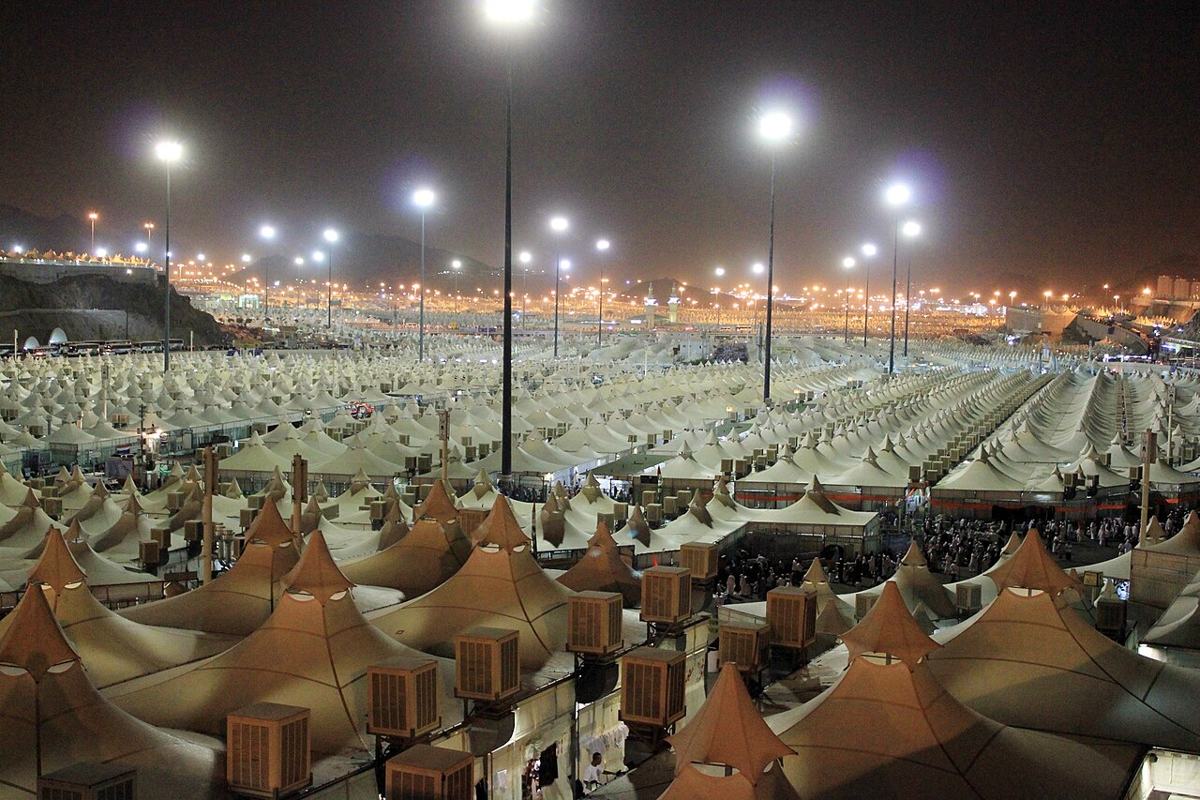
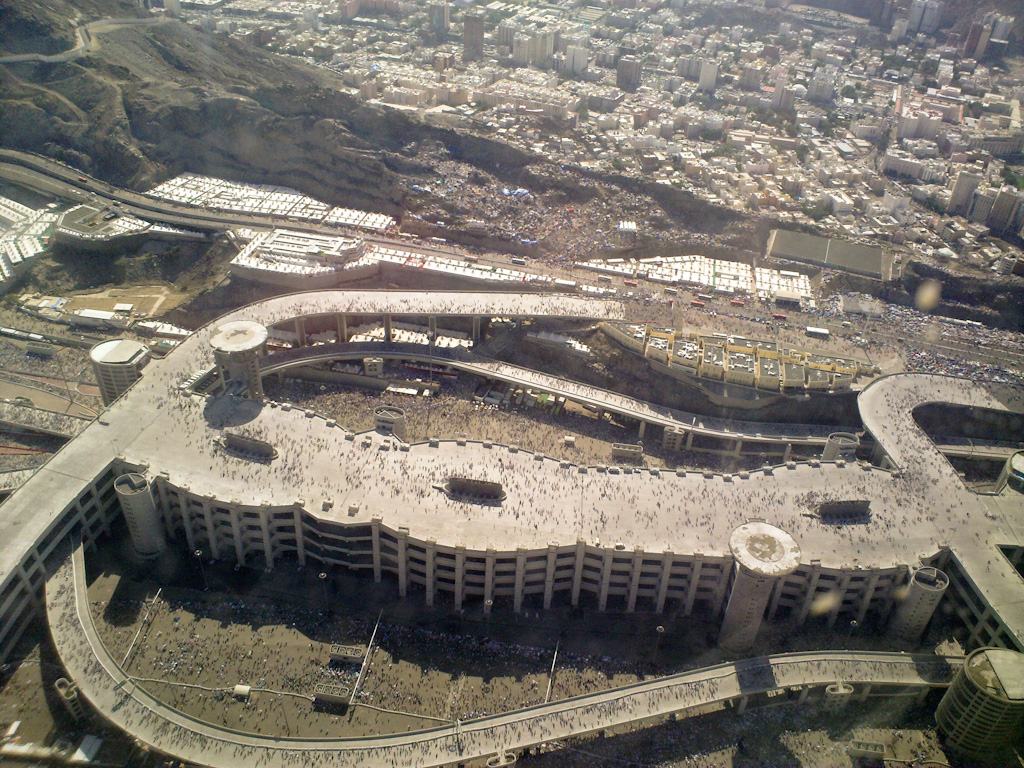
The masha'ir, "the symbols of Allah's religion", are the places where the main rites of Hajj take place: Arafah, Muzdalifah and Mina. Two of them, Muzdalifah and Mina, lie inside the Haram; Arafah lies just outside it.
| Site | What happens there | Geography (from the course) |
|---|---|---|
| Arafah | Wuquf on 9 Dhul Hijjah, the essential pillar of Hajj | A wide plain with the hill of Jabal Rahmah. About 21.9 km from Makkah by the original road. Its boundaries are marked by large signs. |
| Muzdalifah | The night of the 10th (mabit); collecting pebbles | Between Arafah and Mina, about 8 km from Arafah and about 6.9 km from Mina. |
| Mina | Stoning the Jamarat; the nights and days of Tashriq | About 7 km from Makkah. About 1.1 km wide, narrowing to about 500 m around the large Jamrah, and about 4.7 km long from the large Jamrah to Wadi Muhassir. There are hills on either side, one of them Mount Thubair. |
Other places you may visit in Makkah
Many groups organise a short tour (ziarah) of historical sites around Makkah. None of these visits is a rite of Hajj, and nothing there should be touched or taken as a source of blessing:
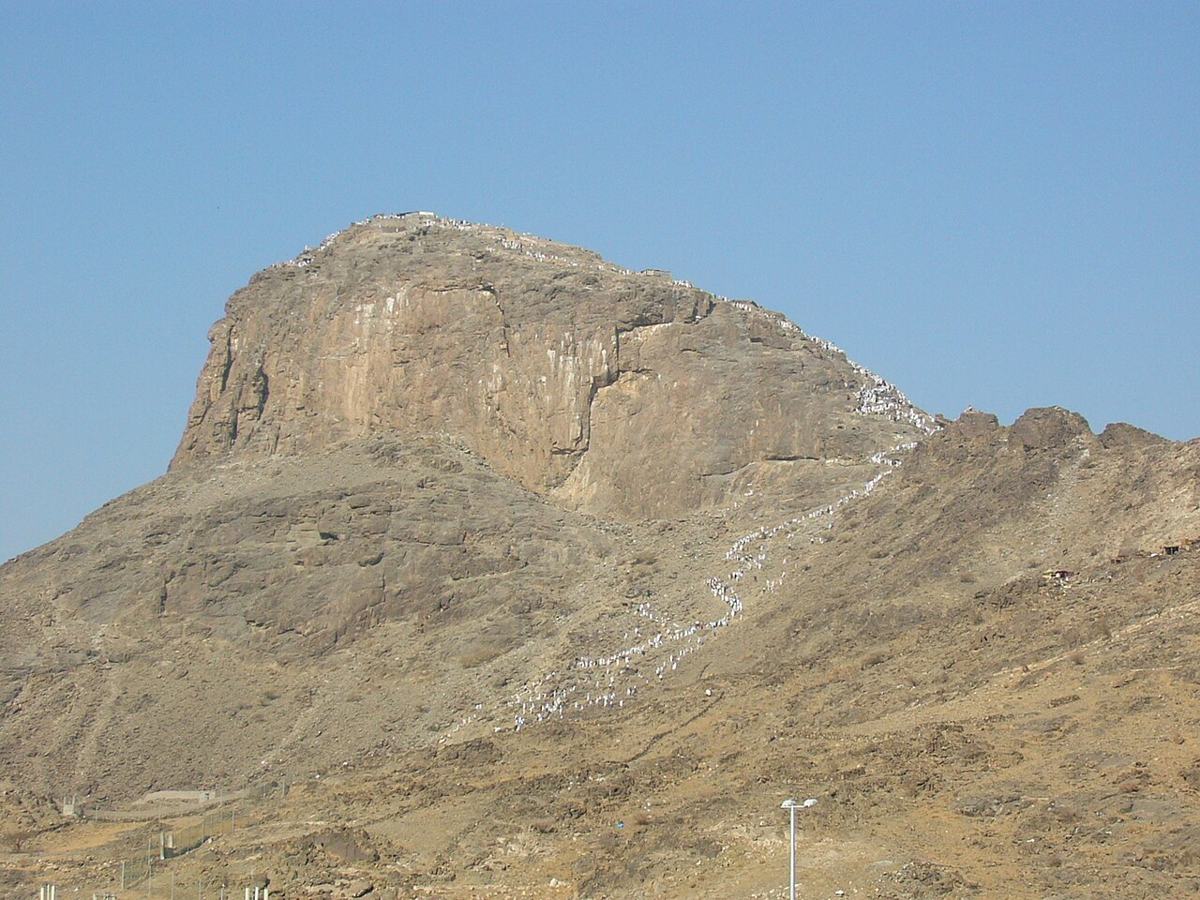
- Jabal al-Nur and the cave of Hira, where the first verses of the Qur'an were revealed.
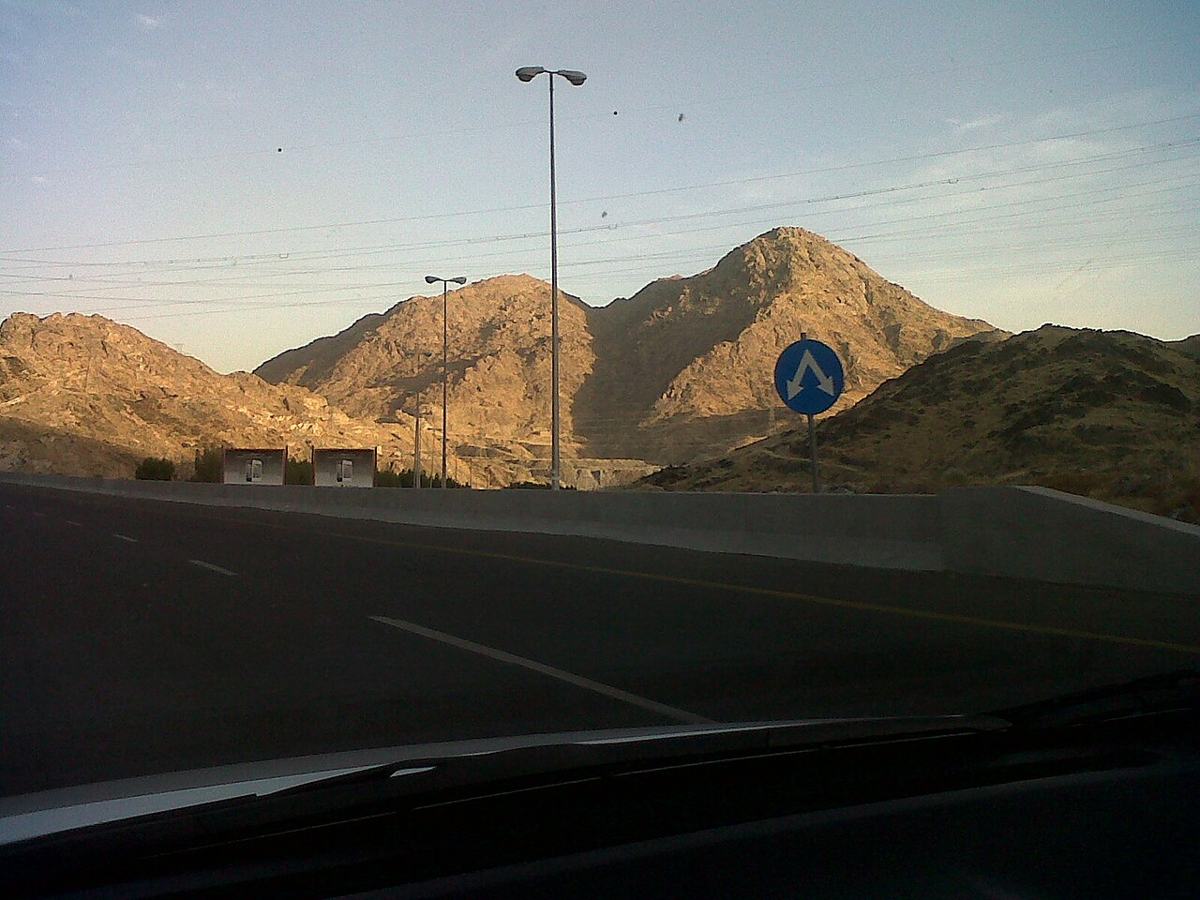
- Jabal Thawr, where the Prophet ﷺ and Abu Bakr hid during the Hijrah.
- Arafah, Muzdalifah and Mina outside the Hajj days, to see the sites before you need them.
- Masjid al-Ji'ranah and Masjid 'A'ishah at Tan'im, where people staying in Makkah go to enter ihram for Umrah.