
Chapter 1 / 19
Hajj and Umrah: Meaning, Obligation and Reward
What Hajj and Umrah are, who must perform them, how Hajj came to us from Prophet Ibrahim (peace be upon him) and the Farewell Pilgrimage, and what a mabrur, an accepted, Hajj looks like.
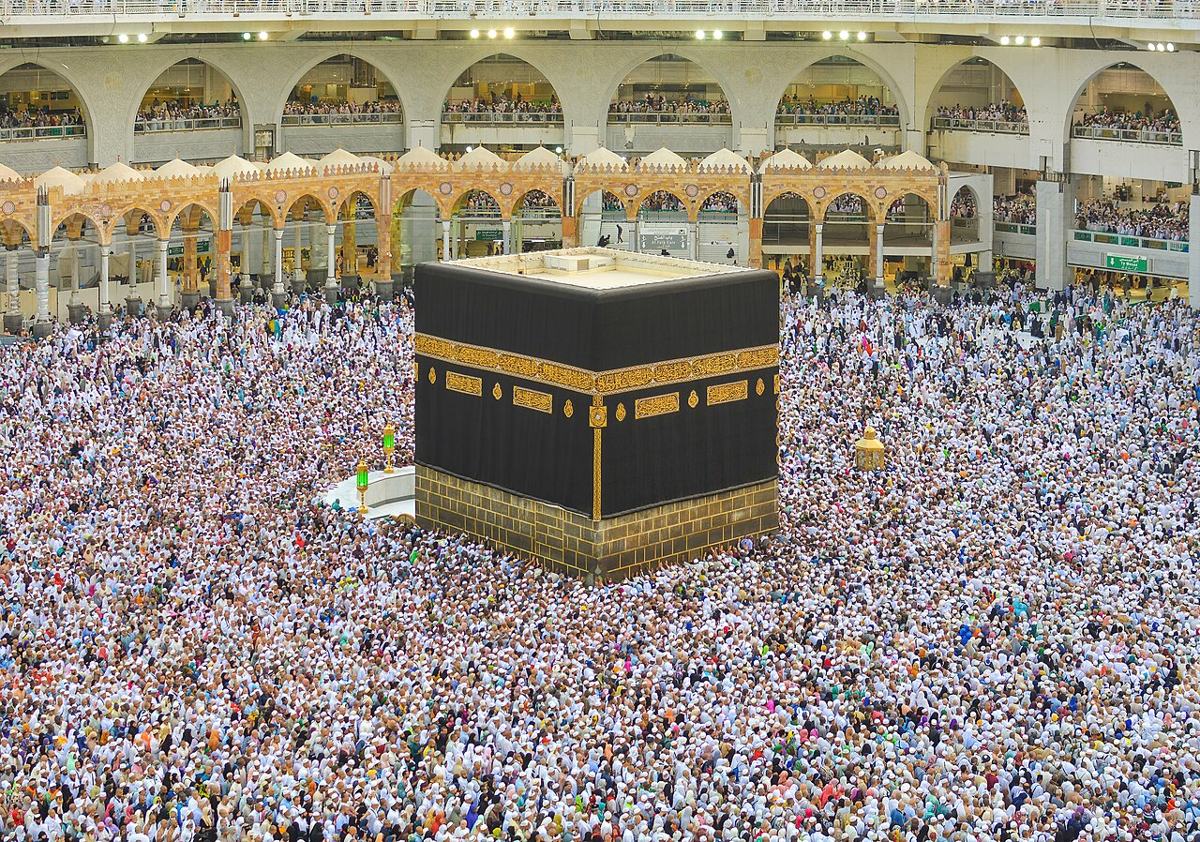
What Hajj and Umrah are
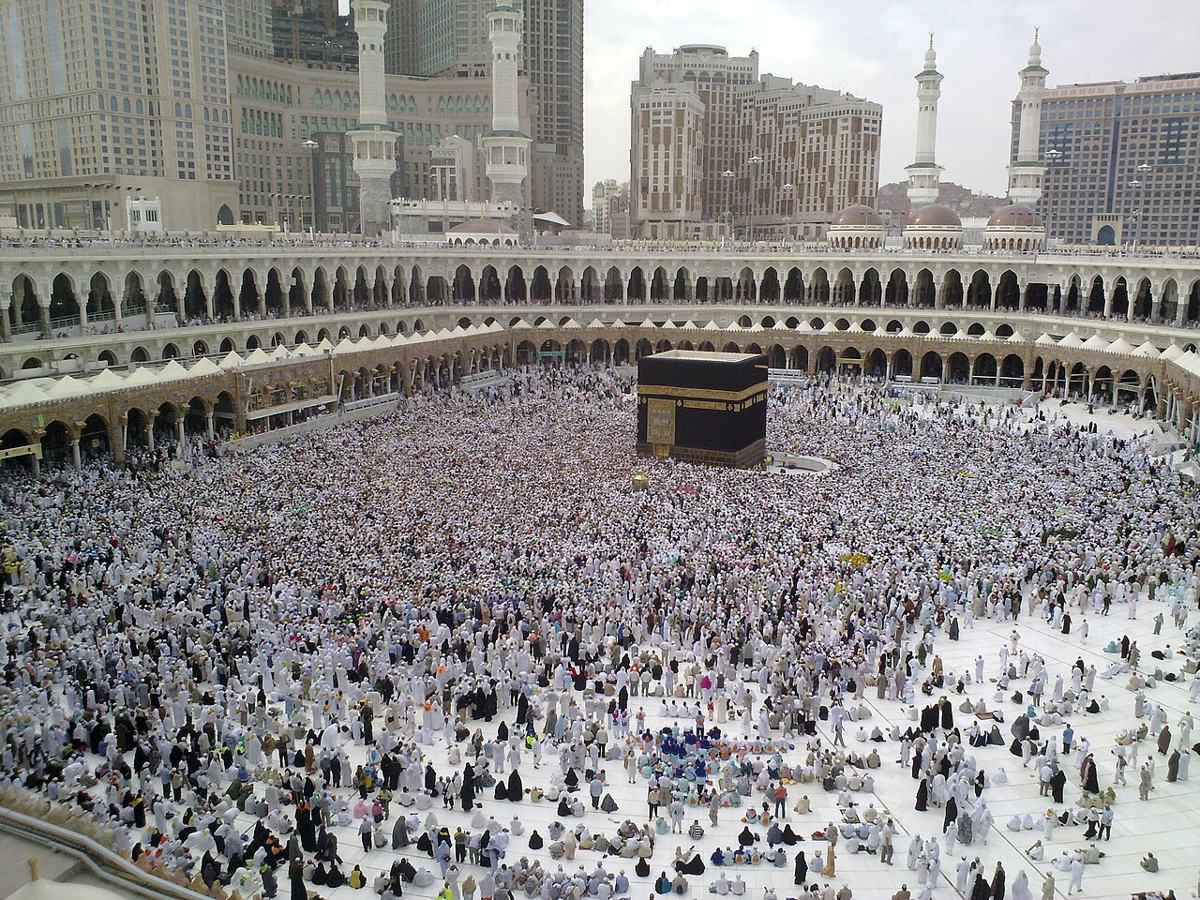
Hajj is travelling to the Ka'bah (the House of Allah, Baitullah) in Makkah during the months of Hajj to perform a set of acts of worship in a particular way and at particular times. Its central day is the 9th of Dhul Hijjah, the Day of Arafah, and it is the fifth pillar of Islam.
Umrah is visiting the Ka'bah to perform a smaller set of acts, ihram, tawaf, sa'i and cutting the hair, and, unlike Hajj, it can be performed at any time of the year. It is sometimes called the "lesser pilgrimage".
In the Shafi'i school followed in Malaysia, both are obligatory once in a lifetime for every Muslim who is able. Anything more than the first Hajj or first Umrah is a voluntary (sunat) act of worship.
وَلِلَّهِ عَلَى النَّاسِ حِجُّ الْبَيْتِ مَنِ اسْتَطَاعَ إِلَيْهِ سَبِيلًا ۚ وَمَن كَفَرَ فَإِنَّ اللَّهَ غَنِيٌّ عَنِ الْعَالَمِينَ
Reading Wa lillāhi ʿalan-nāsi ḥijjul-baiti manistaṭāʿa ilaihi sabīlā, wa man kafara fa innallāha ghaniyyun ʿanil-ʿālamīn.
Meaning Pilgrimage to the House is a duty owed to Allah by people who are able to make their way there. And whoever disbelieves, Allah has no need of anyone in all the worlds.
Surah Ali 'Imran 3:97
وَأَتِمُّوا الْحَجَّ وَالْعُمْرَةَ لِلَّهِ
Reading Wa atimmul-ḥajja wal-ʿumrata lillāh.
Meaning And complete the Hajj and the Umrah for Allah.
Surah al-Baqarah 2:196
The call of Ibrahim and the talbiah
When Prophet Ibrahim (peace be upon him) and his son Ismail had raised the foundations of the Ka'bah, Allah commanded Ibrahim to call mankind to pilgrimage (Surah al-Hajj 22:27). Every pilgrim who says the talbiah is answering that call: "Here I am, O Allah, here I am."
The course teaches the talbiah as a conversation. Allah calls people to His House; the pilgrim answers. Scholars mention that a pilgrim whose intention is sincere and whose provisions and money are halal is answered with welcome and good news, while one whose money is haram is told that his call is not accepted. The lesson is simple and serious: purify your intention and your money before you leave home.
لَبَّيْكَ اللّٰهُمَّ لَبَّيْكَ، لَبَّيْكَ لَا شَرِيكَ لَكَ لَبَّيْكَ، إِنَّ الْحَمْدَ وَالنِّعْمَةَ لَكَ وَالْمُلْكَ، لَا شَرِيكَ لَكَ
Reading Labbaik Allāhumma labbaik, labbaika lā sharīka laka labbaik, innal-ḥamda wan-niʿmata laka wal-mulk, lā sharīka lak.
Meaning Here I am, O Allah, here I am. Here I am, You have no partner, here I am. All praise, all blessings and all sovereignty belong to You. You have no partner.
A short history of Hajj in Islam
- Hajj was made obligatory in the 5th year after the Hijrah, as the course teaches.
- In 6 AH the Prophet ﷺ set out for Umrah with about 1,500 Companions but was stopped at Hudaybiyah, where the famous treaty was signed.
- In 7 AH they returned and performed the make-up Umrah ('Umrat al-Qada').
- In 8 AH, in Ramadan, Makkah was opened to the Muslims and the idols around the Ka'bah were removed.
- In 10 AH the Prophet ﷺ announced that he would perform Hajj. He left Madinah on the 25th of Dhul Qa'dah 10 AH with his wives, followed by 120,000 Companions. This Hajj is known as Hajj al-Islam, Hajj al-Akbar and the Farewell Pilgrimage (Hajj al-Wada'). It is the model every pilgrim follows, and its sermon at Arafah is one of the most important speeches in Islamic history.
Who must perform Hajj: the conditions of obligation
Hajj and Umrah become obligatory on a person who meets all of these conditions:
| Condition | What it means |
|---|---|
| Islam | It is not required of a non-Muslim. |
| Maturity (baligh) | It is not obligatory on a child. A child's Hajj is valid and rewarded, but he or she must perform Hajj again after reaching maturity. |
| Sound mind | It is not obligatory on someone who is not of sound mind. |
| Freedom | Historically, it was not obligatory on a slave. |
| Ability (istita'ah) | Having the means and the capacity to get there and back. |
Ability has two forms.
1. Able in person: the pilgrim can go themselves. This requires:
- The fare for the journey there and back.
- Provisions and expenses for the journey, and enough left for the family they support at home while they are away.
- Transport there and back.
- A journey that is reasonably safe, there and back.
- Physical health that allows the journey.
- Enough time to get there and complete the rites.
2. Able through someone else (badal haji), a person who has the money but can never go in person, because of an illness with no hope of recovery or great old age, must arrange for someone to perform Hajj on their behalf. The same applies to a person who died after Hajj had become obligatory on them: it is paid for from their estate. The person performing badal haji must already have performed their own obligatory Hajj.
Extra conditions for women. A woman needs her husband's permission (or her guardian's, if unmarried), and she must travel with her husband, a mahram, or, for the obligatory Hajj, according to the Shafi'i school, a group of trustworthy women. See Chapter 15 for the details.
The reward of Hajj
The course lists the virtues of Hajj:
- You gain the status of "guest of Allah" (dhuyuf al-Rahman).
- You gain a great reward.
- You are saved from dying as a Jew or a Christian, the warning given to one who was able to perform Hajj and did not.
- You receive the intercession of the Prophet's ﷺ prayer for forgiveness for pilgrims.
- You become clean like a newborn baby.
- It is among the best forms of jihad.
- An accepted Hajj has no reward except Paradise.
الْحَجُّ الْمَبْرُورُ لَيْسَ لَهُ جَزَاءٌ إِلَّا الْجَنَّةُ
Reading Al-ḥajjul-mabrūru laisa lahu jazā'un illal-jannah.
Meaning An accepted (mabrur) Hajj has no reward other than Paradise.
Hadith reported by al-Bukhari and Muslim
مَنْ حَجَّ لِلّٰهِ فَلَمْ يَرْفُثْ وَلَمْ يَفْسُقْ رَجَعَ كَيَوْمِ وَلَدَتْهُ أُمُّهُ
Reading Man ḥajja lillāhi fa lam yarfuth wa lam yafsuq rajaʿa ka yawmi waladat-hu ummuh.
Meaning Whoever performs Hajj for Allah, avoiding indecency and wrongdoing, returns like the day his mother gave birth to him.
Hadith reported by al-Bukhari and Muslim
Benefits in this world
- Muslims from all over the world meet one another.
- Trade and the economy benefit.
- It shows the equality of all Muslims.
Benefits for the Hereafter
- Training in devoting yourself to worship.
- Training in building a Muslim personality.
- Training to be ready to leave this world.
- The reward for looking at the Ka'bah.
- Training yourself to do every deed sincerely for Allah alone.
- Being praised by Allah before the angels.
- Attaining a mabrur Hajj.
What makes a Hajj mabrur
The course grades Hajj into three levels:
| Level | Description |
|---|---|
| Haji mabrur | The highest and most excellent Hajj: all its sins are forgiven, the pilgrim keeps up worship until the end of life, and Paradise is promised. |
| Haji diterima (maqbul) | A valid Hajj, with the pilgrim's sins forgiven. |
| Haji mardud | A Hajj that is not accepted, because of shortcomings in its conditions and pillars, or for other reasons. |
How do you aim for a mabrur Hajj? The course divides it into before, during and after.
Before you go
- Make your intention purely for Allah, not for a title, photographs or praise.
- Learn the rites properly (ilmu manasik) and bring enough money, from halal sources, after paying any zakat you owe.
- Make sure you are already performing the other pillars of Islam well, especially the five daily prayers.
During Hajj
- Perform every pillar (rukun) and obligation (wajib) correctly.
- Respect the prohibitions of ihram, and pay any dam (penalty) you incur.
- Avoid rafath (indecent talk), fusuq (sin) and jidal (arguing), Surah al-Baqarah 2:197.
After you return
- Stay away from sin and wrongdoing.
- Do more good deeds, so that your faith keeps growing.
- Keep improving your character and behaviour, steadily, for life.
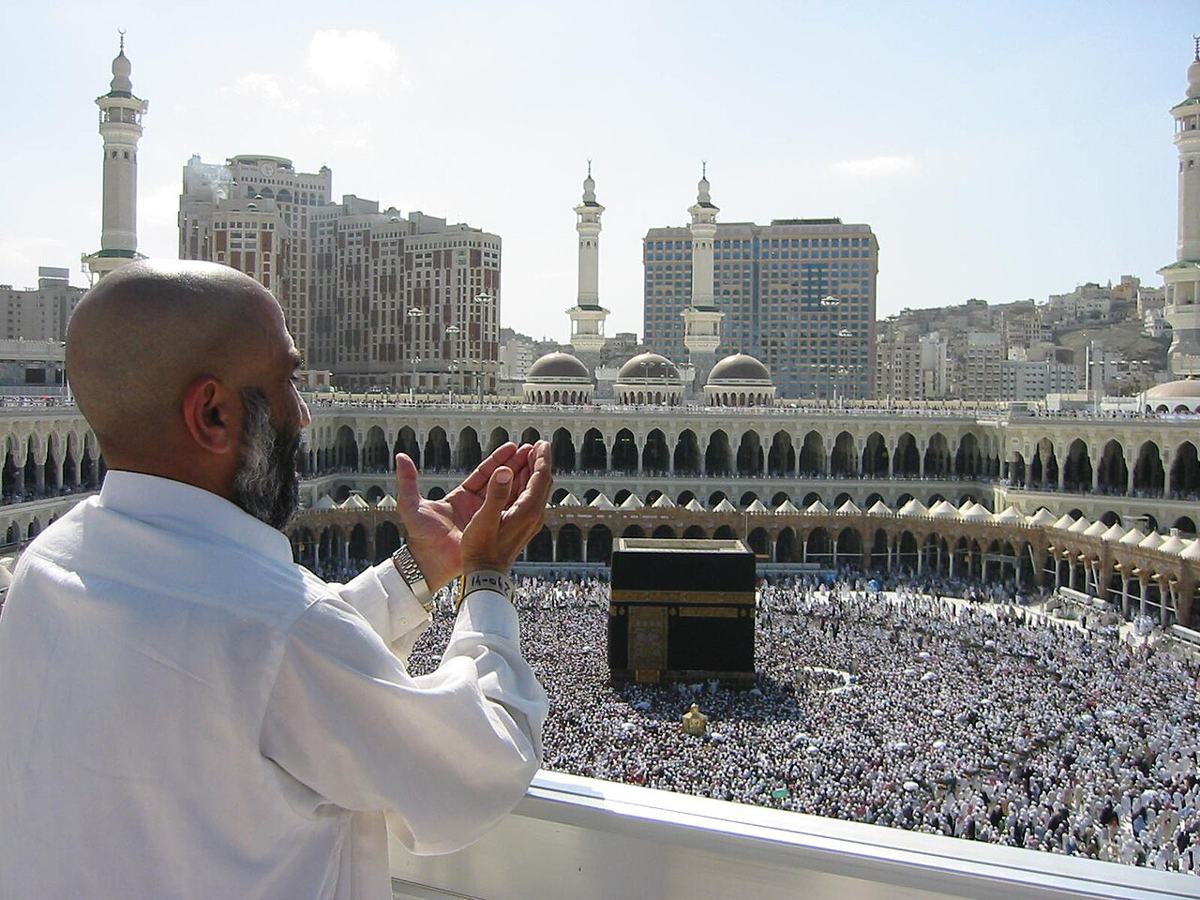
اللّٰهُمَّ اجْعَلْهُ حَجًّا مَبْرُورًا، وَسَعْيًا مَشْكُورًا، وَذَنْبًا مَغْفُورًا، وَعَمَلًا صَالِحًا مَقْبُولًا، وَتِجَارَةً لَنْ تَبُورَ
Reading Allāhummajʿalhu ḥajjan mabrūrā, wa saʿyan mashkūrā, wa dhanban maghfūrā, wa ʿamalan ṣāliḥan maqbūlā, wa tijāratan lan tabūr.
Meaning O Allah, make it an accepted Hajj, an effort that is appreciated, sins that are forgiven, righteous deeds that are accepted, and a trade that never fails.
How this guide is organised
The chapters follow the order in which you will need them:
- 1 · Meaning, obligation and reward, this chapter.
- 2 · Hajj at a glance, the whole journey in one picture.
- 3 · Preparing your heart and your affairs.
- 4 · The Holy Land, Makkah, the Ka'bah and the sites of Hajj.
- 5 · Pillars, obligations and the three ways of performing Hajj.
- 6–10 · The rites themselves: ihram, its prohibitions and dam, tawaf, sa'i and cutting the hair and tahallul.
- 11–13 · The days of Hajj: Arafah, Muzdalifah and Mina and the Jamarat.
- 14 · Umrah step by step.
- 15–17 · Rulings for women, purification and prayer, and health and safety.
- 18 · The farewell tawaf and visiting Madinah.
- 19 · Planning and practicalities.