Chapter 19 / 19
Planning and Practicalities
The practical side of the journey: registration and management, what to pack, the course's practical session (amali) and its key reminders, vows (nazar) in Hajj, unfinished voluntary Umrah, and keeping your Hajj mabrur after you return.
Management of Hajj
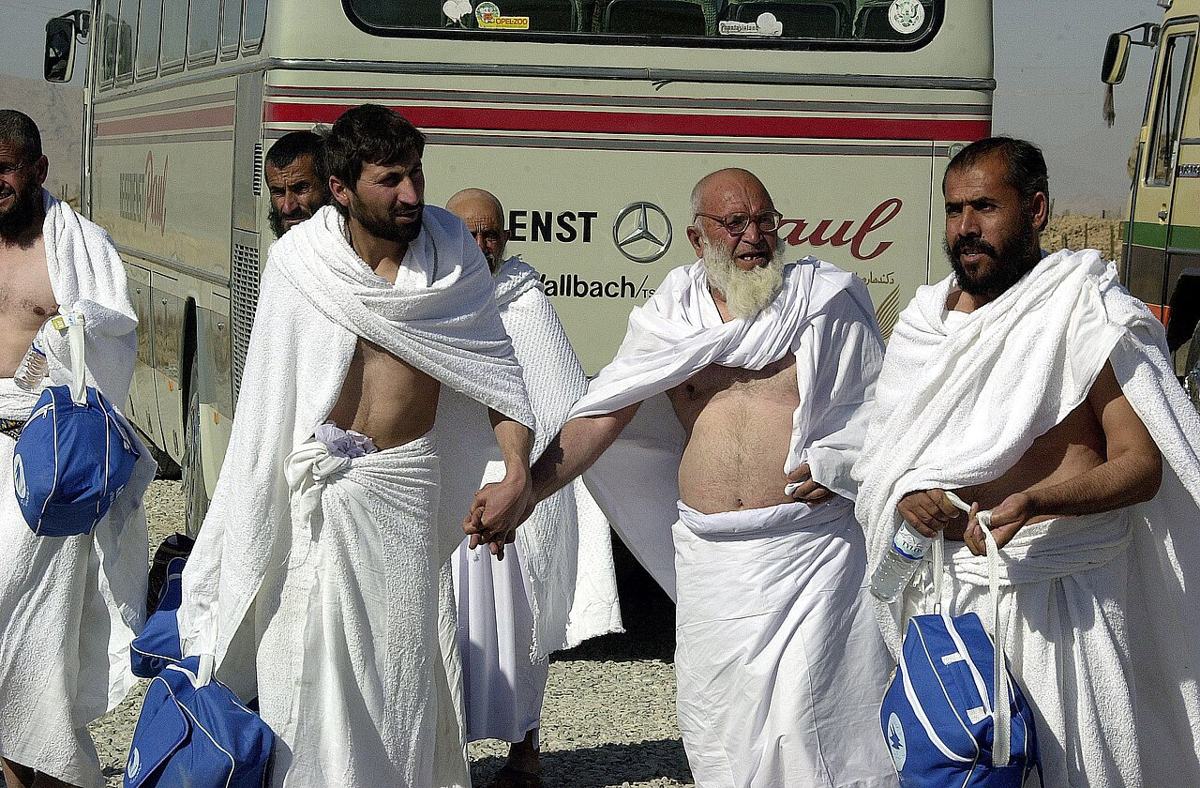
The basic Hajj course includes a session on Hajj management (Pengurusan Haji), given by your Hajj body's officers. For Malaysians this is Lembaga Tabung Haji; pilgrims from other countries go through their own national Hajj authority. In general the journey involves:
- Registering and waiting for your turn to be called for a season.
- Accepting the offer and paying the costs for your package or category.
- Health screening and the required vaccinations (Chapter 17).
- Attending the basic Hajj course at your mosque, and the practical session.
- Receiving your travel documents, visa, ID card, wristband and luggage tags, and your flight details.
- Departure from the Hajj complex on the given date, in ihram if you are flying straight to Jeddah (Chapter 6).
What to pack
Worship
- Two or three sets of ihram (men) or several sets of suitable clothing, socks and telekung (women).
- An ihram belt or pouch; sandals that leave the toes and heel uncovered.
- A small prayer mat, a pocket Qur'an, and a du'a booklet you understand.
- A spray bottle or small water bottle for wudu (Chapter 16).
- A small pouch for pebbles.
- Clean scissors or a disposable razor for cutting the hair.
Health
- All your medicines, with extra, and a doctor's letter.
- Unscented soap, shampoo, toothpaste, deodorant and wet wipes for the days in ihram.
- Plasters, unscented cream, a face mask, a small towel.
Practical
- An umbrella, a small torch, a power bank and charger, a small fan or spray.
- A copy of your passport and documents, and a list of emergency contacts.
- A small bag for the days in the masha'ir (Chapter 11).
The practical session (amali)
The last week of the course is a practical rehearsal of the rites. Its summary slide sets the pillars and obligations of Hajj and Umrah side by side:
| Hajj | Umrah | |
|---|---|---|
| Pillars | 1. Intention of ihram for Hajj · 2. Wuquf · 3. Tawaf · 4. Sa'i · 5. Shaving or cutting · 6. Order in most pillars | 1. Intention of ihram for Umrah · 2. Tawaf · 3. Sa'i · 4. Shaving or cutting · 5. Order in all pillars |
| Obligations | 1. Intention of ihram at the miqat · 2. Avoiding the prohibitions of ihram · 3. Mabit at Muzdalifah · 4. Stoning Jamrah al-Kubra on 10 Dhul Hijjah · 5. Mabit in Mina on the Days of Tashriq (11, 12, 13) · 6. Stoning all three Jamarat on the Days of Tashriq | 1. Intention of ihram at the miqat · 2. Avoiding the prohibitions of ihram |
The difference: the obligations of Umrah do not include numbers 3, 4, 5 and 6 of the obligations of Hajj.
Key reminders from the practical session
- Menstruation with interrupted bleeding (fatrah al-naqa'): for prayer, pray as soon as you are dry; for tawaf in Hajj, wait until you have been dry for 24 hours, then bathe and perform tawaf (Chapter 15).
- A voluntary Umrah must be finished. If you have begun a voluntary Umrah, you are still bound by the prohibitions of ihram until its tawaf and sa'i are done. If you must go home before then, perform the tahallul of ihsar, slaughter a goat and cut the hair, to release yourself. You do not need to come back to Makkah to complete a voluntary Umrah (or a voluntary Hajj); the tahallul of ihsar is enough.
- But an obligatory Umrah or Hajj (the first one) must be completed: after the tahallul of ihsar you must come back to Makkah to complete the pillars and acts that remain (Chapter 7).
- A voluntary tawaf is different: if you do not finish it, you are not bound by any prohibition of ihram and may stop without consequence; there is no tahallul of ihsar.
Vows (nazar) in Hajj
The course gives these points:
- A vow to perform the obligatory Hajj or obligatory Umrah is not valid (they are already obligatory).
- Someone who vowed to perform Hajj in a particular year but was prevented by the authorities does not have to perform it, nor make it up.
- A passing thought to do something is not a vow unless it is spoken and meets the conditions of a vow.
- Vowing is not encouraged: the Prophet ﷺ himself never made a vow.
- A vow may not be used to pressure the authorities into approving an application for Hajj; that would deny the rights of those who should be given priority.
- A vow may not be used by interested parties to promise pilgrims a place for Hajj.
Keeping your Hajj mabrur
The course's guidance for after Hajj (Chapter 1):
- Keep away from sin and wrongdoing.
- Increase your good deeds, to raise your faith and taqwa.
- Keep improving your character and conduct, continuously.
اللّٰهُمَّ اجْعَلْهُ حَجًّا مَبْرُورًا، وَسَعْيًا مَشْكُورًا، وَذَنْبًا مَغْفُورًا، وَعَمَلًا صَالِحًا مَقْبُولًا، وَتِجَارَةً لَنْ تَبُورَ
Reading Allāhummajʿalhu ḥajjan mabrūrā, wa saʿyan mashkūrā, wa dhanban maghfūrā, wa ʿamalan ṣāliḥan maqbūlā, wa tijāratan lan tabūr.
Meaning O Allah, make it an accepted Hajj, an effort that is appreciated, sins that are forgiven, righteous deeds that are accepted, and a trade that never fails.