Chapter 18 / 19
Tawaf al-Wada' and Visiting Madinah
The farewell tawaf: who must perform it, who is excused, what happens if it is missed, how to prepare, and what you may and may not do afterwards. Then Madinah: the virtues of the city and the Prophet's Mosque, the visit (ziarah) to the Prophet ﷺ and his two Companions, al-Baqi', Quba', Qiblatain, Uhud and the other historic places.
Tawaf al-Wada' and its ruling
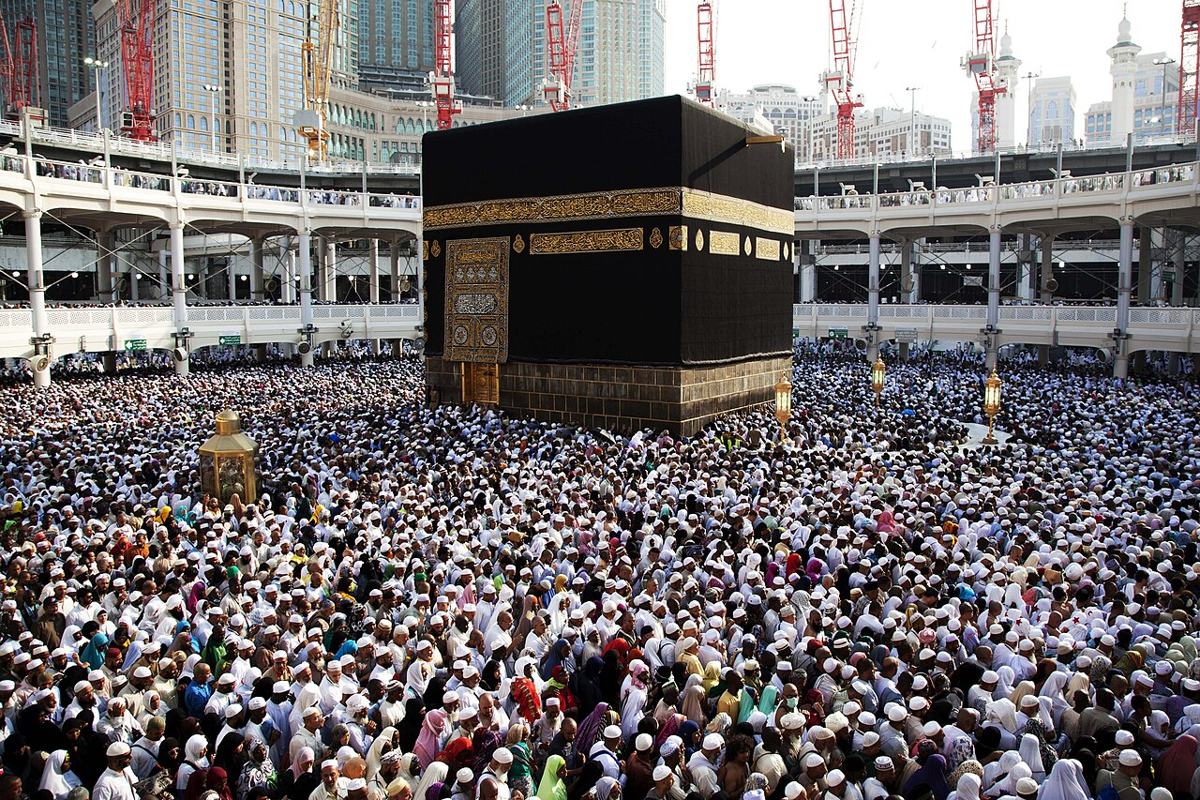
Tawaf al-Wada' is the farewell tawaf, performed to honour and respect Baitullah (the Ka'bah), by anyone about to leave Makkah for a distance of two marhalah (91 km) or more.
It is obligatory for:
- Anyone travelling away from Makkah for a distance that permits shortening the prayer, two marhalah.
- Anyone leaving Makkah to stay outside the Haram for four days or more, even if the distance is less than two marhalah, whether a resident of Makkah or not.
Anyone who leaves Tawaf al-Wada' without an excuse accepted by the shariah must pay a dam (in order and fixed in amount, tertib dan taqdir, Chapter 7).
If it is not performed
| Situation | Dam | Sin |
|---|---|---|
| Excused (see below) | No | No |
| Left through ignorance or forgetfulness | Yes | No |
| Left deliberately, without a valid excuse | Yes | Yes |
| Left deliberately, knowing it was obligatory, then turned back before reaching two marhalah and performed it | No, turning back removes the dam | Yes, the sin remains |
| Someone who has not yet completed any of the pillars | Not required yet | No |
Excuses from Tawaf al-Wada'
The scholars agree that Tawaf al-Wada' is part of the shariah, and the National Hajj Council (Muzakarah Haji) holds to the view of the majority, including the Shafi'i school, that it is obligatory. Those excused, who owe no dam and commit no sin if they leave it, include:
- A woman with menstruation or post-natal bleeding, or with istihadah within the days of her period.
- A person with urinary incontinence (salasul baul) or similar.
- A person with wounds, pus or blood that could soil the mosque.
- A person who has no water or dust to purify themselves from major impurity.
- A person who fears for their life, honour or property.
- A person forced to leave without tawaf, an emergency or genuine urgency.
- A person who fears being wronged.
- A person who fears being left behind by their travelling companions, for example, pilgrims told only at the last moment that they are leaving Makkah, with no time for Tawaf al-Wada' before the bus departs. This only applies when it was not deliberate.
- A person fleeing a creditor whom they genuinely cannot pay.
- A person who must be led or carried because of illness or old age and cannot even sit in a pushed wheelchair.
- A patient under close, scheduled treatment in a medical centre, for example a pilgrim whose mind comes and goes and needs scheduled care by medical staff.
- Workers who go in and out of Makkah very often serving pilgrims or on Hajj business, such as postal staff taking luggage out of Makkah every day, drivers and so on: the opinion used is that Tawaf al-Wada' falls away for them.
Resolution of the Muzakarah Haji, 29th session, Hajj season 1434H / 2013.
Preparing for Tawaf al-Wada'
- Get your departure details from your group's office (Pejabat Maktab), whether you are flying home or going to Madinah.
- Get everything ready. If you want to buy anything, buy it before Tawaf al-Wada'.
- Bring your luggage down to the lobby to be loaded onto the bus by the operator, according to the schedule from your office.
- Take wudu and go to Tawaf al-Wada' about four or five hours before you leave Makkah, following your office's schedule and instructions.
- You do not wear ihram for it, and you do not go out to a miqat.
The intention is required:
Meaning "O Allah, I intend to circle Your Sacred House seven times as the farewell tawaf (Tawaf al-Wada'); make it easy for me and accept it from me, for the sake of Allah the Most High."
Performing it
- It can only be performed after the pillar tawaf (of Umrah or of Hajj) has been completed.
- Afterwards, leave Makkah promptly, except for things to do with prayer or the journey.
After Tawaf al-Wada'
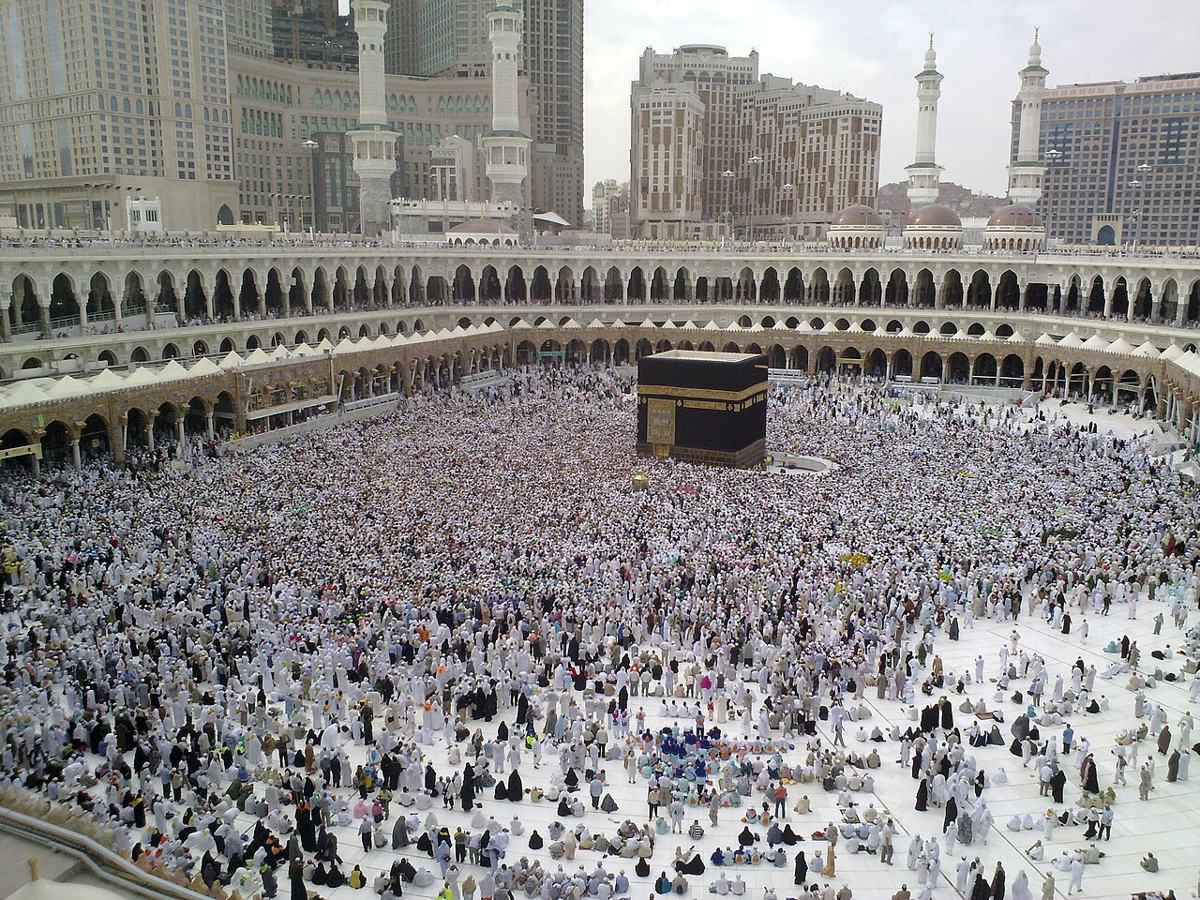
You may
In Masjid al-Haram:
- pray the two rak'ahs of tawaf;
- kiss the Black Stone (if you can);
- touch the Ka'bah, the Hijr Ismail or Maqam Ibrahim;
- drink Zamzam;
- make du'a;
- pray, if the iqamah has already been called, for example if the crowd keeps you inside, or it is called just as you finish.
At your building:
- eat and drink in your room, only as much as you need;
- use the toilet in your building;
- do what has no direct connection with the journey but must be done out of need or a particular or general interest, such as searching for a lost husband, wife, family member, friend or belongings, or visiting someone who is ill (emergencies only);
- wait for the bus (by custom, within about four or five hours after Tawaf al-Wada');
- bathe and change your clothes;
- take photographs or give charity while waiting for the bus.
You may not
- rest, relax or sleep in your room;
- pay a debt that could be paid later;
- give charity in Masjid al-Haram or on the way back to your building, if you go looking for people to give to (giving in passing, without searching, does not cancel it);
- pray voluntary prayers such as the prayer of need (hajat) or repentance (taubat), pray them before Tawaf al-Wada';
- buy things not connected with the journey: prayer beads, perfume, rings, scarves, bird food and so on, even if they cost one riyal;
- linger in Masjid al-Haram so that other pilgrims are kept waiting for you;
- take photographs, or ask someone to take them, in Masjid al-Haram or on the way back to your building, take your photographs earlier, before Tawaf al-Wada' or the day before.
If someone else buys things for you
- If the purchase was made before you performed Tawaf al-Wada', your Tawaf al-Wada' is not cancelled.
- If the purchase was made after your Tawaf al-Wada' but after you had already left for your destination, it is not cancelled.
- If the purchase was made after your Tawaf al-Wada' while you were still at your building, your Tawaf al-Wada' is cancelled and must be repeated.
Madinah
Why we visit Madinah
The course explains the purpose of the visit:
- to understand the importance of visiting Madinah, to bring the Prophet's ﷺ life and struggle and that of his Companions to life, and to build love for the Prophet ﷺ and his Companions;
- as a sign of deep gratitude for the hardship and sacrifice of the Prophet ﷺ and his Companions in spreading Islam from Madinah, so that we can enjoy the blessing of Islam and faith;
- to practise the shariah he brought, and to grow in taqwa and faith in Allah SWT.
The ruling of visiting Madinah is sunnah. It is not part of Hajj or Umrah.
The virtues of Madinah
صَلَاةٌ فِي مَسْجِدِي هٰذَا خَيْرٌ مِنْ أَلْفِ صَلَاةٍ فِيمَا سِوَاهُ إِلَّا الْمَسْجِدَ الْحَرَامَ
Reading Ṣalātun fī masjidī hādhā khairun min alfi ṣalātin fīmā siwāhu illal-masjidal-ḥarām.
Meaning A prayer in this mosque of mine is better than a thousand prayers in any other mosque, except Masjid al-Haram.
Reported by al-Bukhari and Muslim
The majority of scholars hold that all the buildings added after the Prophet's ﷺ time are included in "my mosque", so a prayer anywhere inside them earns the thousand-fold reward. This does not include the courtyard: there is no prayer greeting the mosque and no intention of i'tikaf in the courtyard of Masjid Nabawi.
A warning against wrongdoing in Madinah: "Madinah is a sanctuary, between the mountains of 'Eir and Thawr. Whoever commits wrongdoing in it, or shelters a wrongdoer, upon him is the curse of Allah, the angels and all people, and none of his good deeds, obligatory or voluntary, will be accepted from him on the Day of Resurrection."
Dying in Madinah: "Whoever is able to die in Madinah, let him do so, for I will intercede for those who die in Madinah."
Patience in Madinah: "Whoever of my nation is patient with the hardships and difficulties of Madinah, I will be an intercessor or a witness for him on the Day of Resurrection."
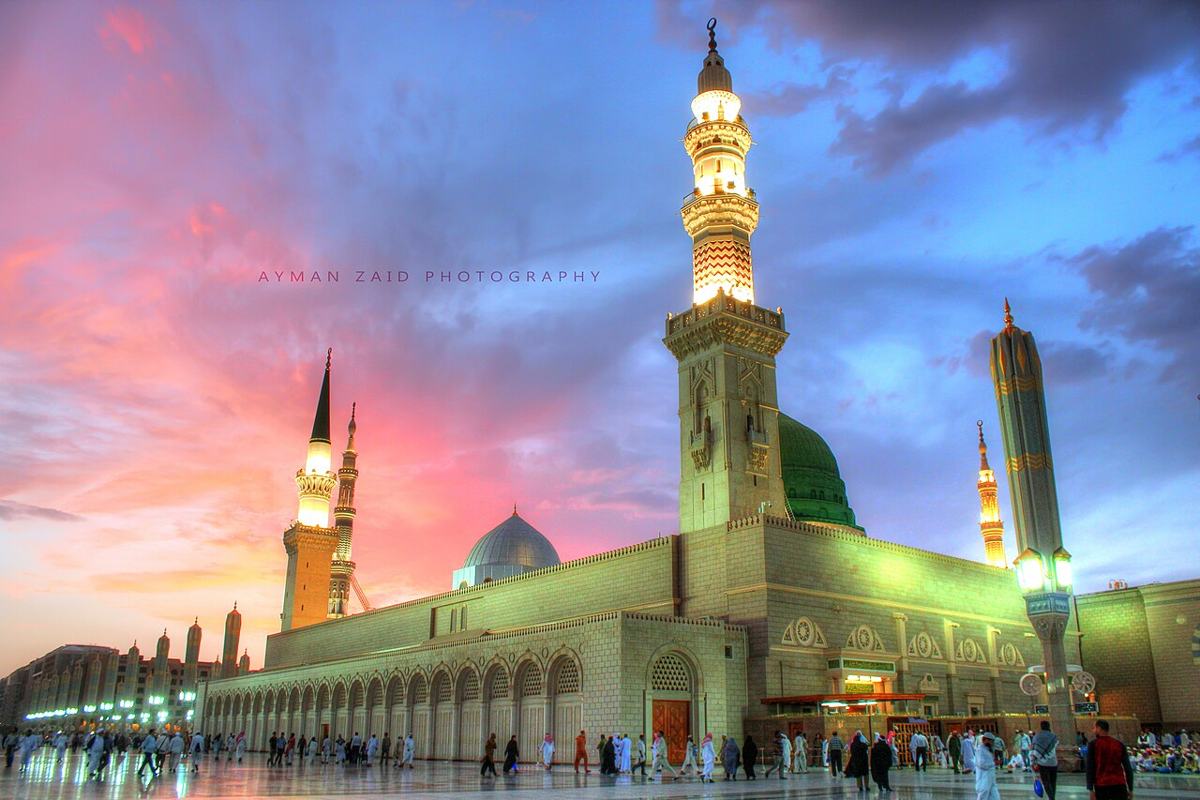
Arriving in Madinah: your prayers
Pilgrims staying eight days in Madinah are not travellers there. On arrival, do not combine or shorten your prayers; and before you leave for Makkah, do not combine or shorten at your hotel, only once the bus has set off (Chapter 16).
Visiting Masjid Nabawi
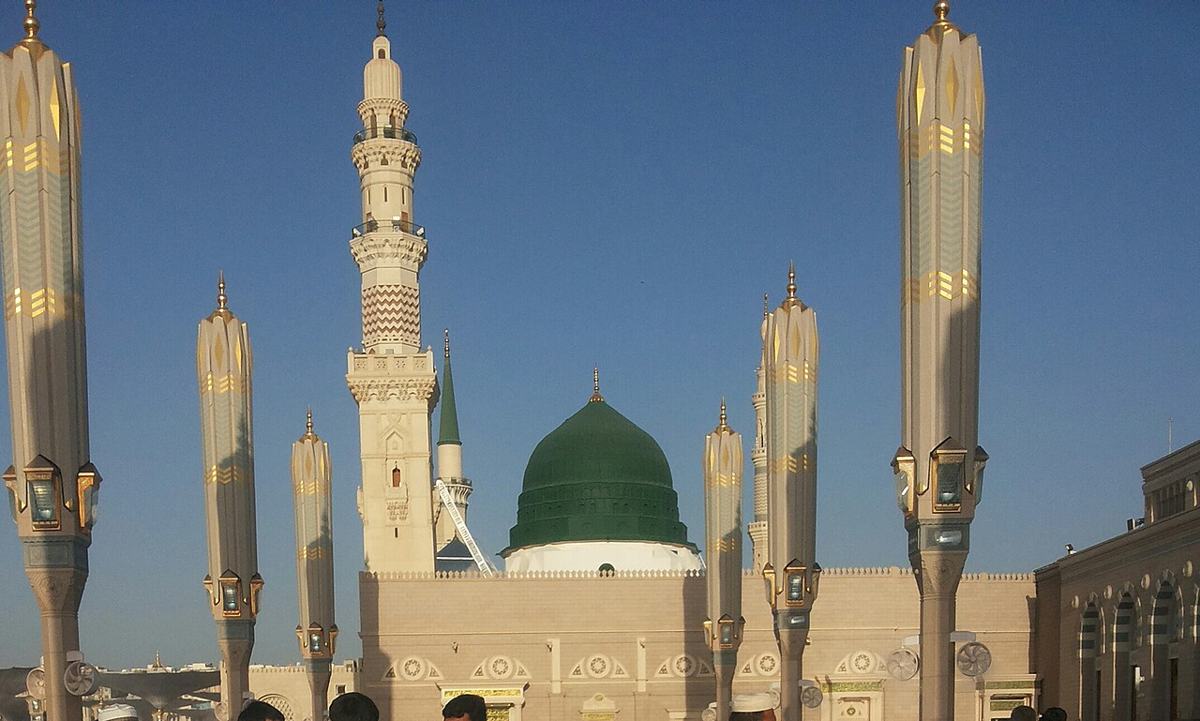
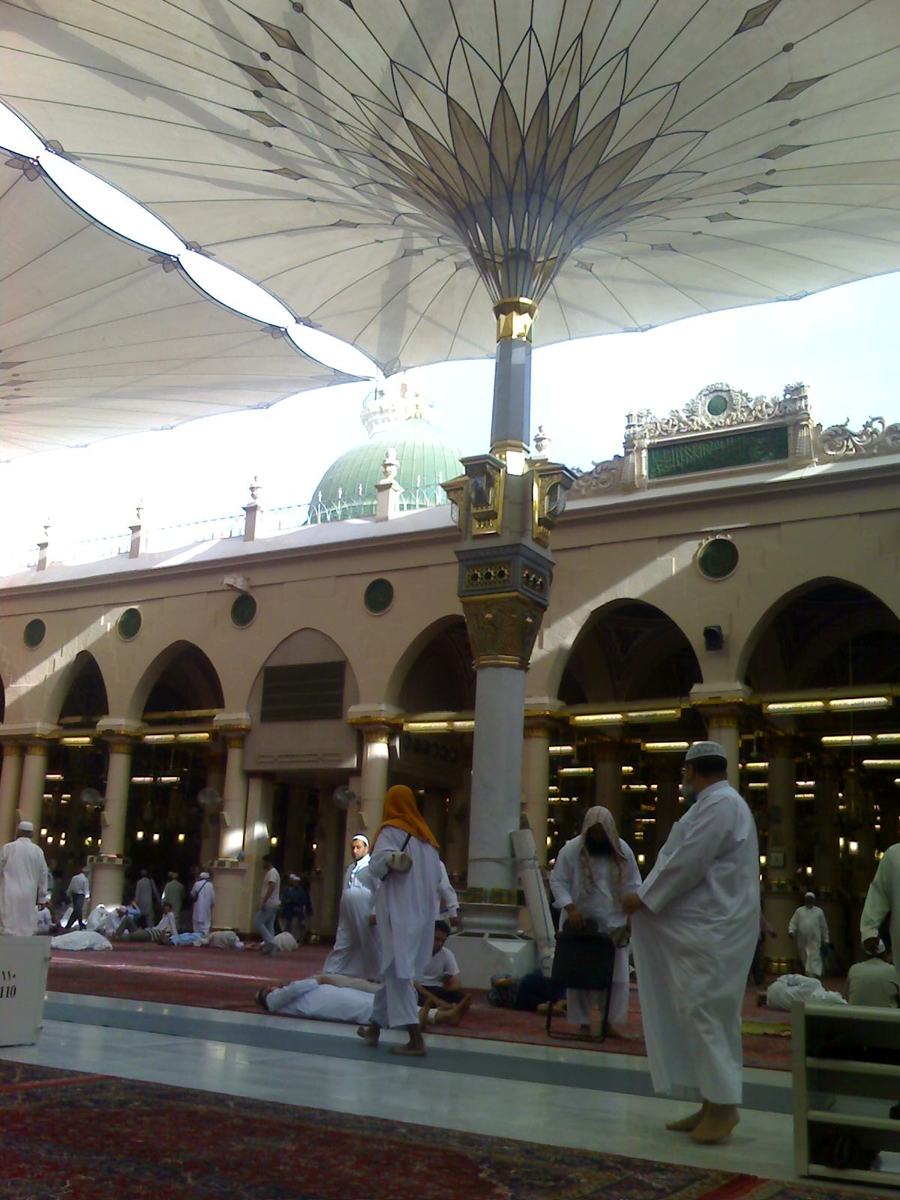
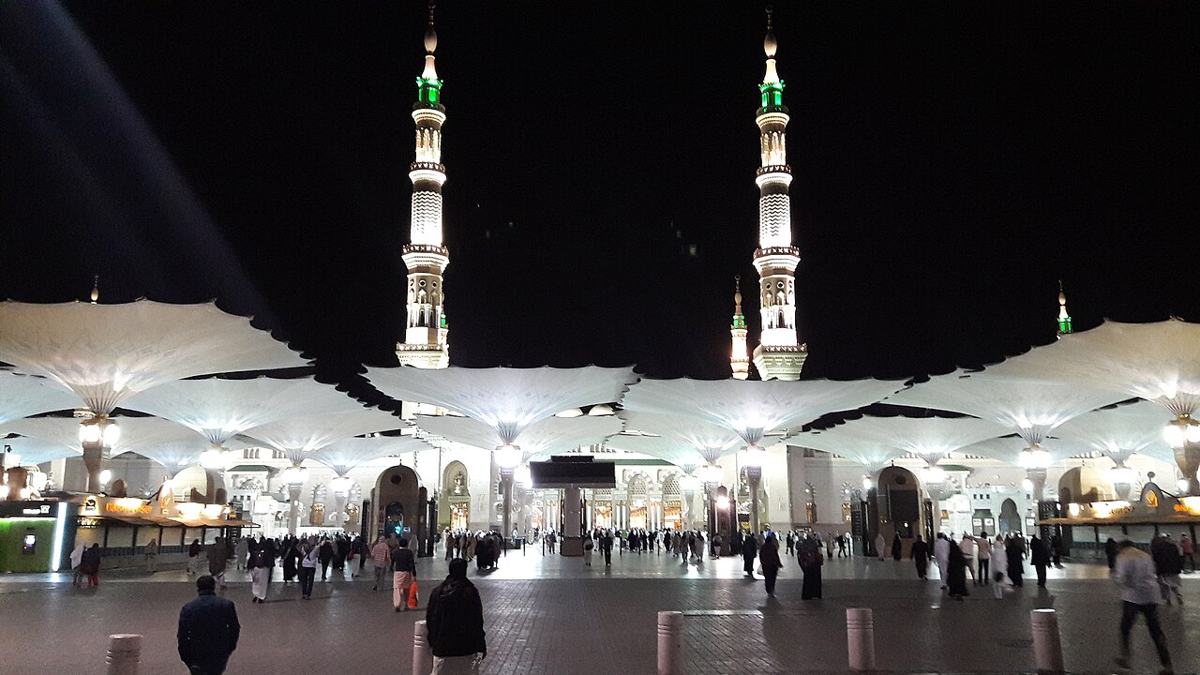
The visit to Masjid Nabawi includes the Raudhah, and greeting the Prophet ﷺ and his two Companions at their graves. Guides for visitors (muzawwir) will lead pilgrims in their visit.
مَا بَيْنَ بَيْتِي وَمِنْبَرِي رَوْضَةٌ مِنْ رِيَاضِ الْجَنَّةِ
Reading Mā baina baitī wa minbarī rauḍatun min riyāḍil-jannah.
Meaning What is between my house and my pulpit is a garden from the gardens of Paradise.
Reported by al-Bukhari and Muslim
- Men usually enter through Bab al-Salam, pray in the Raudhah if they can, and then pass the graves, giving salam to the Prophet ﷺ, then to Abu Bakr and then to 'Umar, before leaving through Bab al-Baqi'.
- Women have their own entrance and route, and visit at set times. The course showed the women's visiting times of its day; today entry to the Raudhah is by booked permit (through the official Nusuk app), for men and women alike. Follow the current arrangements and your group's guidance.
السَّلَامُ عَلَيْكَ يَا رَسُولَ اللّٰهِ
Reading As-salāmu ʿalaika yā Rasūlallāh.
Meaning Peace be upon you, O Messenger of Allah.
السَّلَامُ عَلَيْكَ يَا أَبَا بَكْرٍ، السَّلَامُ عَلَيْكَ يَا عُمَرُ
Reading As-salāmu ʿalaika yā Abā Bakr. As-salāmu ʿalaika yā ʿUmar.
Meaning Peace be upon you, O Abu Bakr. Peace be upon you, O 'Umar.
Historic places in Madinah
The course lists these visits: Masjid Nabawi, the grave of the Prophet ﷺ, the Raudhah, al-Baqi', Masjid Quba', Masjid Qiblatain, the graves of the martyrs of Uhud, the Seven Mosques and other mosques, as well as Jabal al-Rumah and the date market.
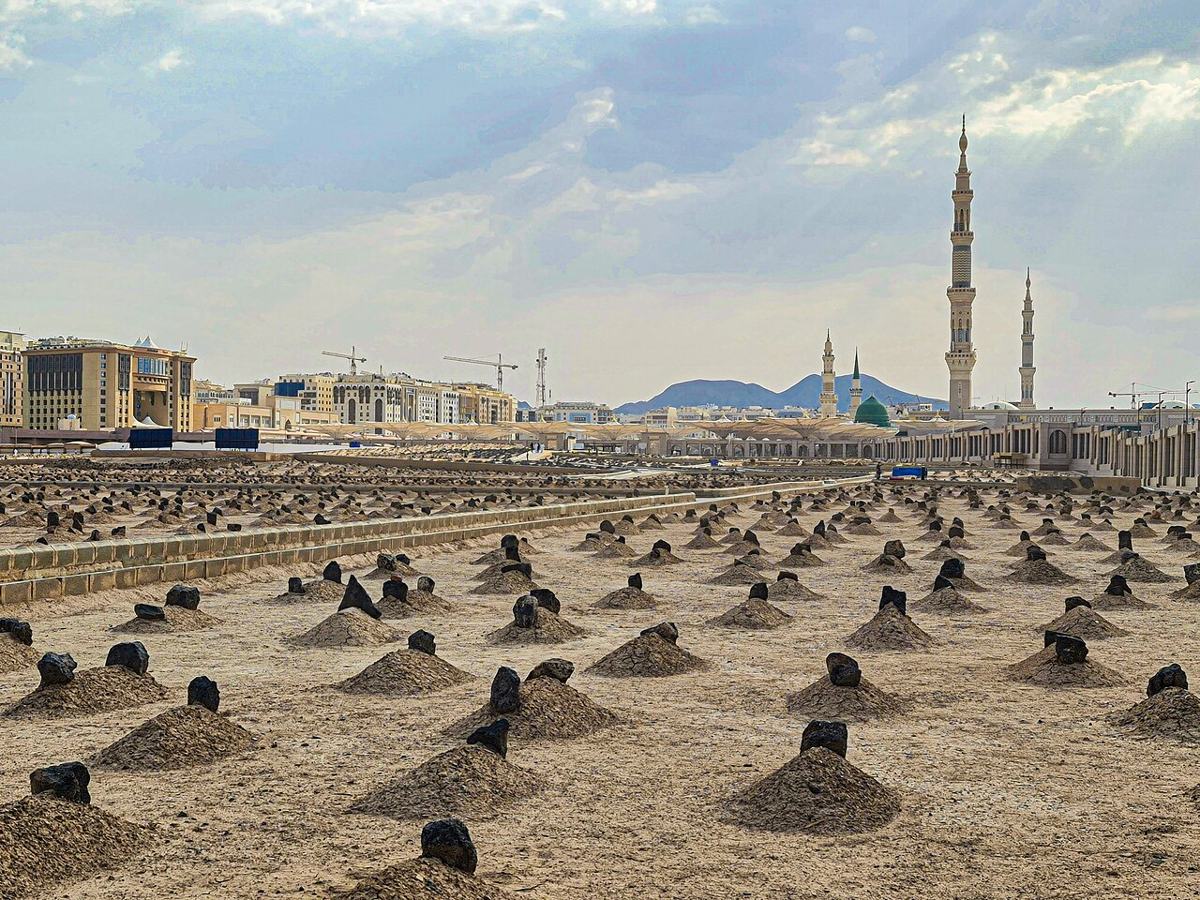
Al-Baqi'
The cemetery beside Masjid Nabawi where many of the Prophet's ﷺ family and Companions are buried.
السَّلَامُ عَلَيْكُمْ أَهْلَ الدِّيَارِ مِنَ الْمُؤْمِنِينَ وَالْمُسْلِمِينَ، وَإِنَّا إِنْ شَاءَ اللّٰهُ بِكُمْ لَلَاحِقُونَ، نَسْأَلُ اللّٰهَ لَنَا وَلَكُمُ الْعَافِيَةَ
Reading As-salāmu ʿalaikum ahlad-diyāri minal-mu'minīna wal-muslimīn, wa innā in shā'allāhu bikum la-lāḥiqūn, nas'alullāha lanā wa lakumul-ʿāfiyah.
Meaning Peace be upon you, people of these dwellings, believers and Muslims. We will, if Allah wills, join you. We ask Allah for well-being for us and for you.
Reported by Muslim
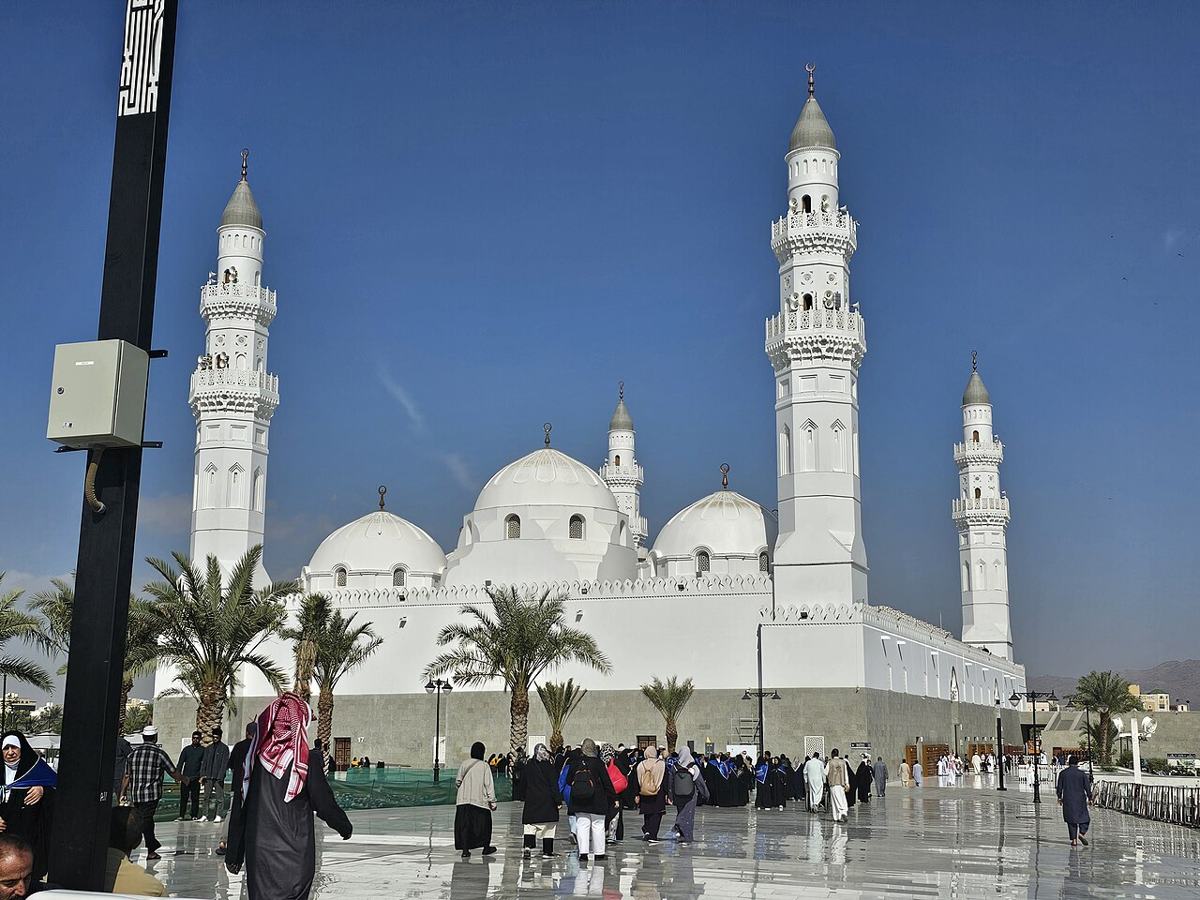
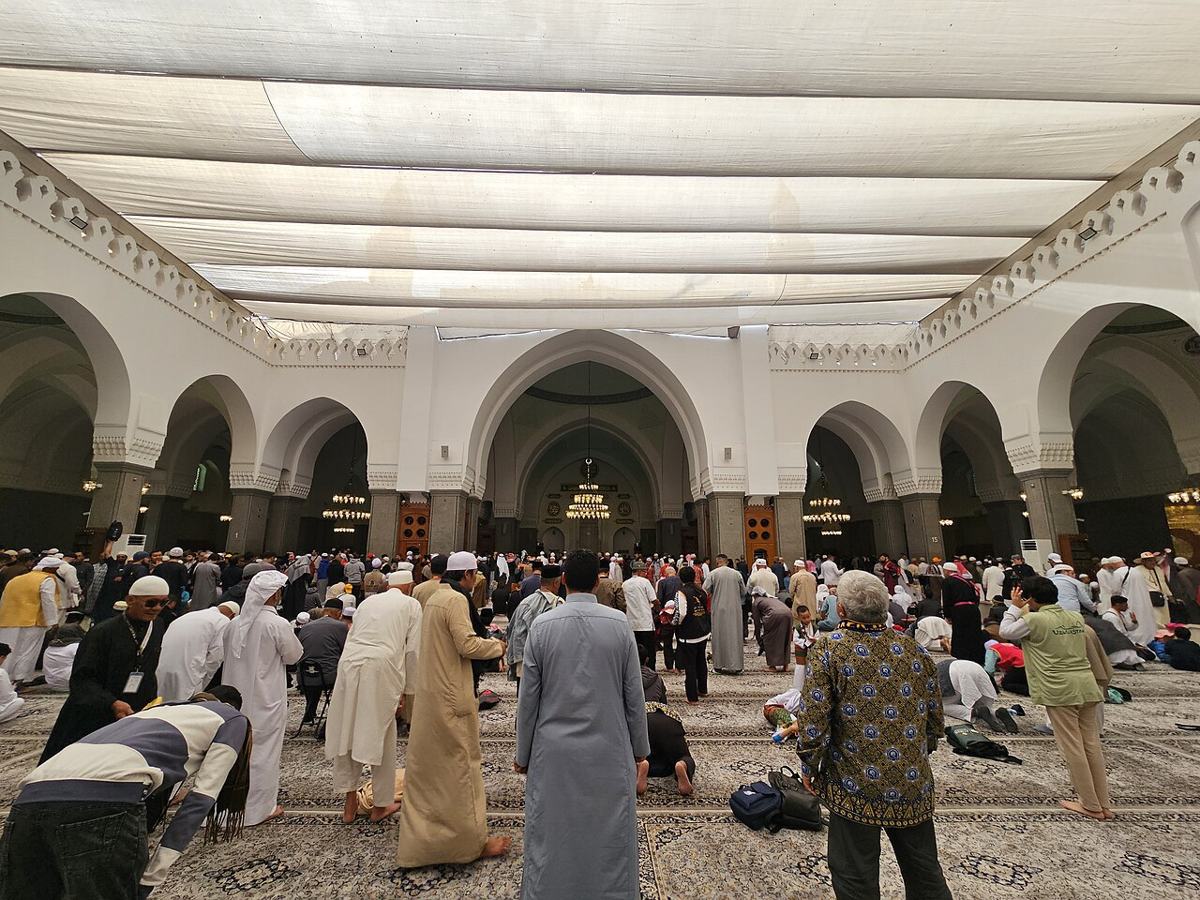
Masjid Quba'
- In the village of Quba', about 3 km south of Madinah; it now covers about 5,035 m².
- The first mosque built in the history of Islam, as Allah says: "A mosque founded on taqwa from the first day is more worthy for you to stand in" (Surah al-Tawbah 9:108).
- Imam al-Bukhari reports from Ibn 'Umar that the Prophet ﷺ used to go to Quba' every Saturday, riding or walking, and sometimes on Mondays and Thursdays.
- The Prophet ﷺ said: "Whoever purifies himself in his house and then comes to Masjid Quba' and prays in it will have a reward like that of an Umrah" (reported by Ibn Majah).
Its history: on Monday, 8 Rabi' al-Awwal (23 September 622 CE), the Prophet ﷺ reached Quba' on his Hijrah from Makkah, and stayed four days with Banu 'Amr ibn 'Awf in the house of Kulthum ibn al-Hidm. On the first day he began building the mosque, the first mosque of this Ummah, and carried bricks and sand with the Companions. Al-Shamus bint al-Nu'man described seeing him carrying bricks on his back until he was bent, covered in dust; when a Companion asked to take his load, he refused and told him to carry another like it (reported by al-Tabarani). He then led the Companions in congregational prayer there, facing Masjid al-Aqsa, the qiblah at that time.
Masjid Qiblatain
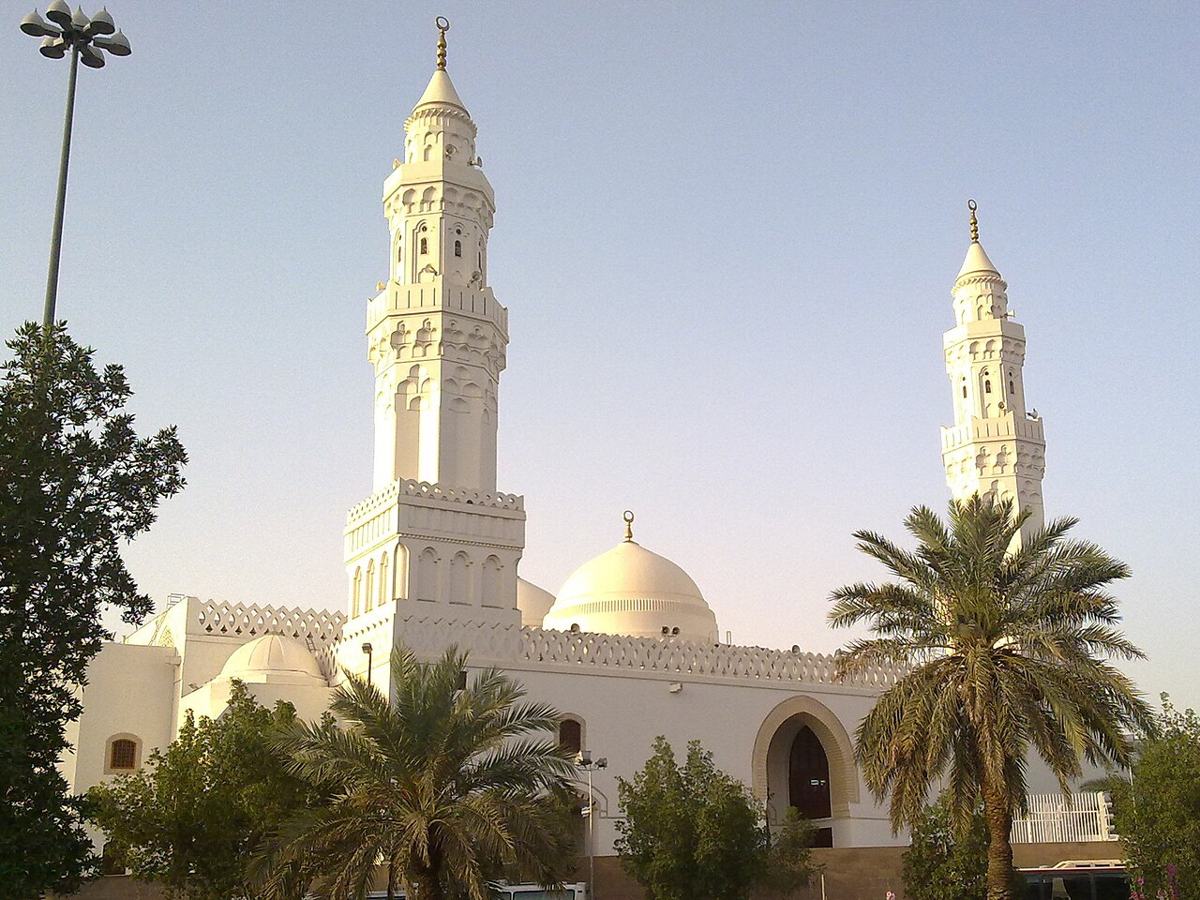
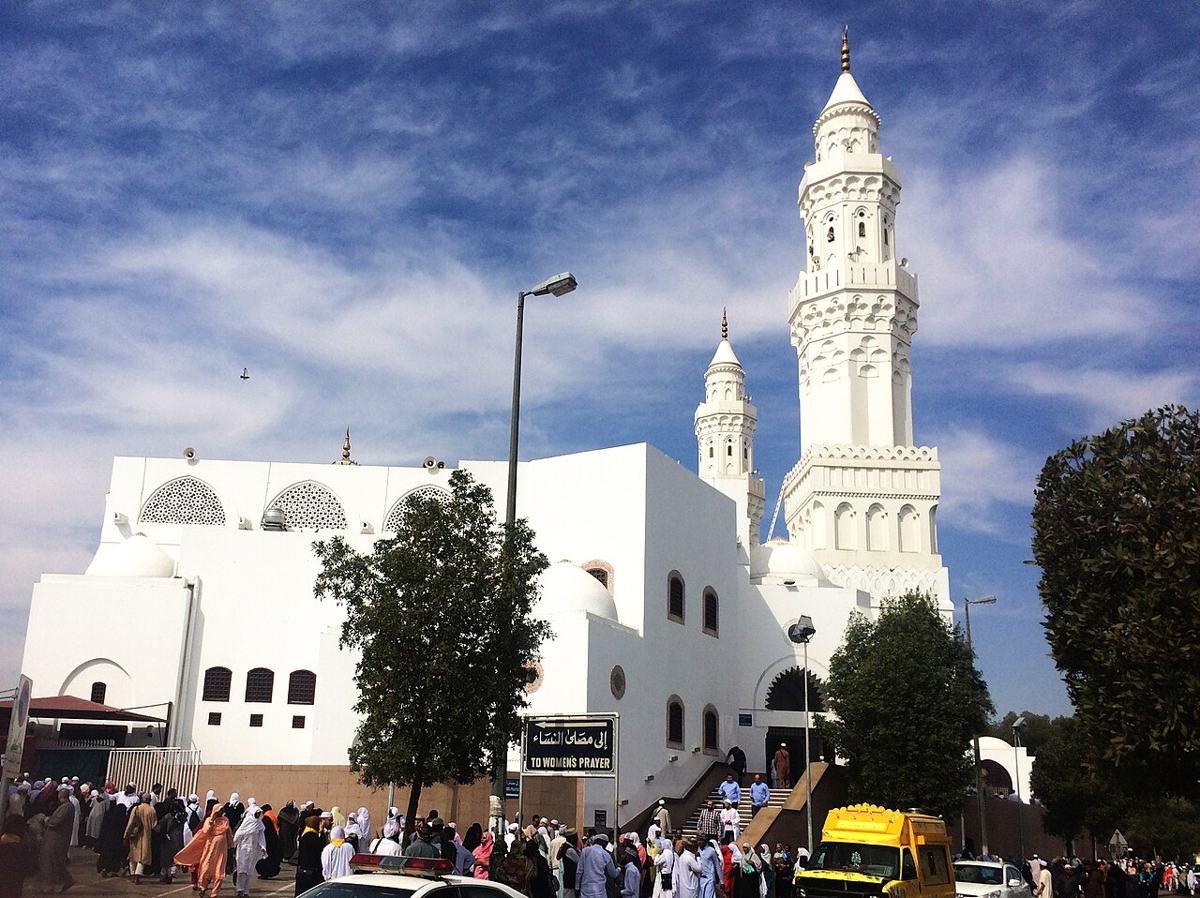
The "Mosque of the Two Qiblahs", where the command came to change the qiblah from Masjid al-Aqsa to the Ka'bah.
The Seven Mosques
A group of small mosques at the site of the Battle of the Trench (al-Khandaq).
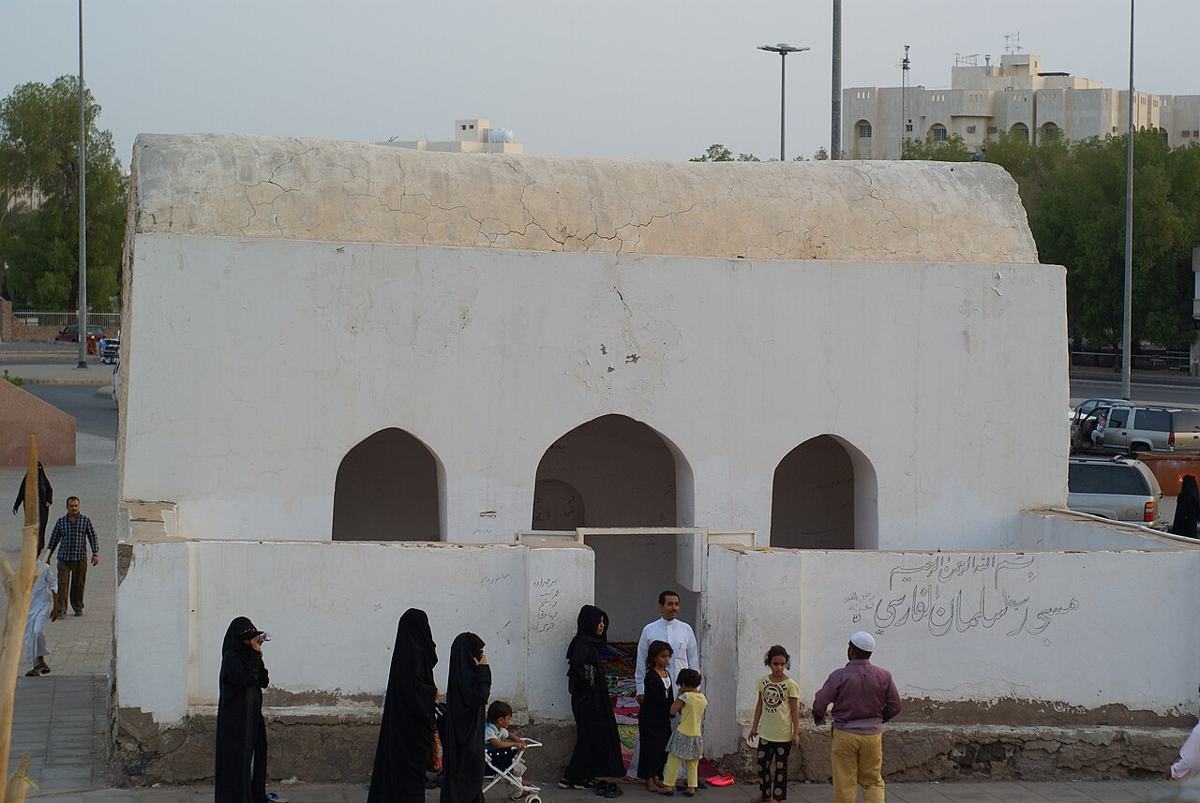
Uhud, the martyrs' cemetery and Jabal al-Rumah
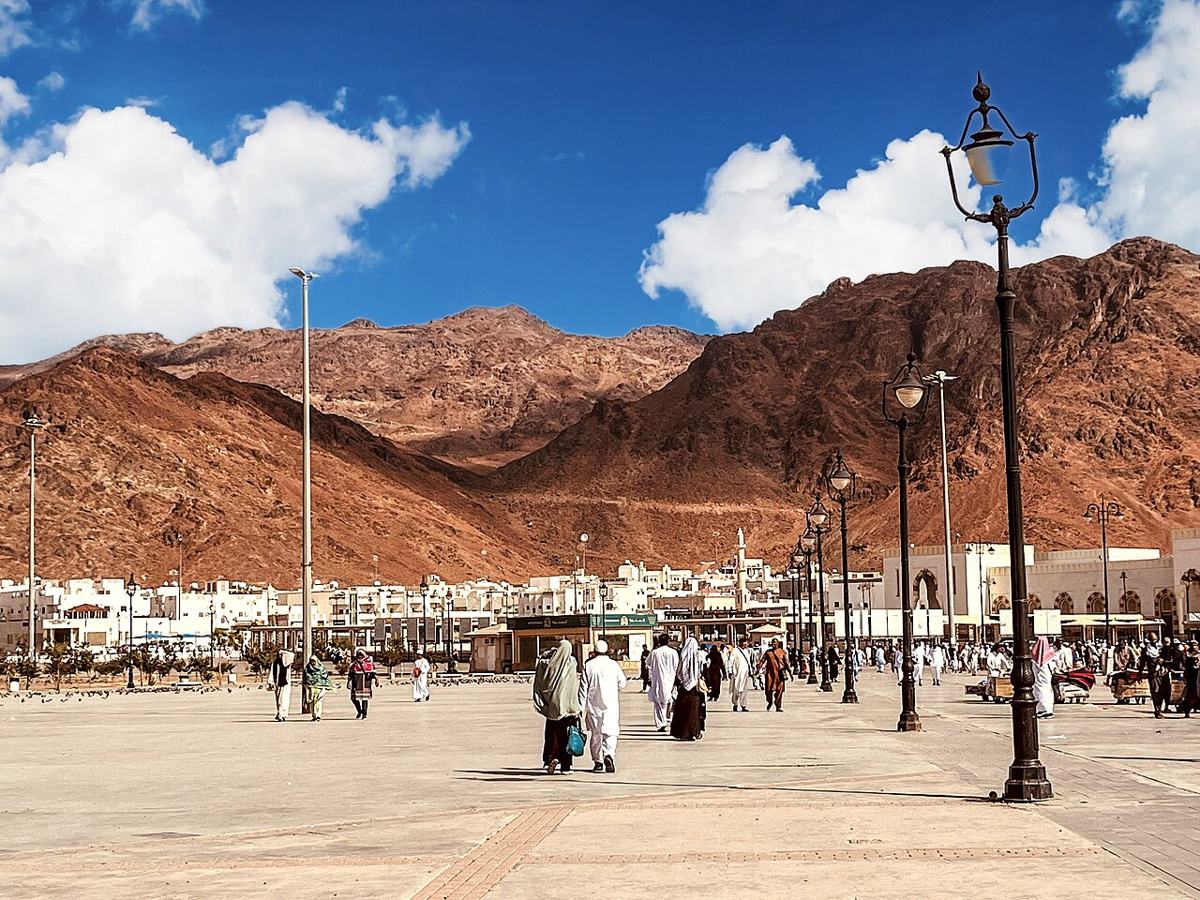
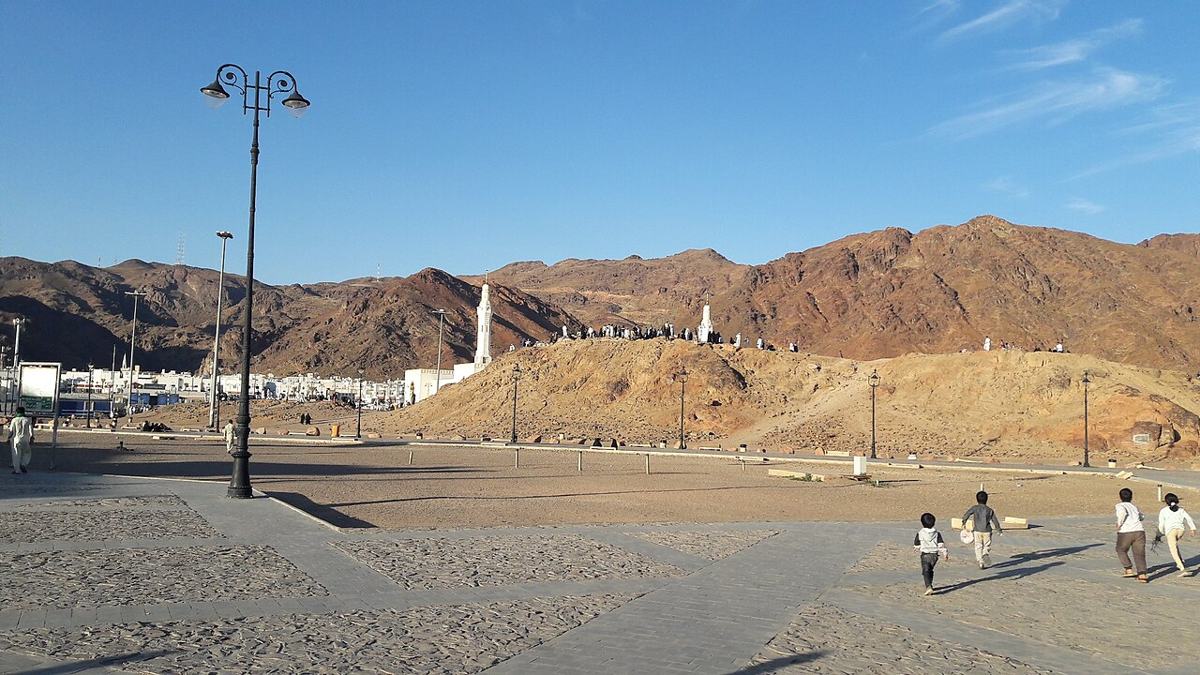
Mount Uhud, north of Madinah, where the Battle of Uhud was fought, and the graves of the martyrs of Uhud, among them Hamzah ibn 'Abd al-Muttalib. Facing it is Jabal al-Rumah, the small hill of the archers.
The date market
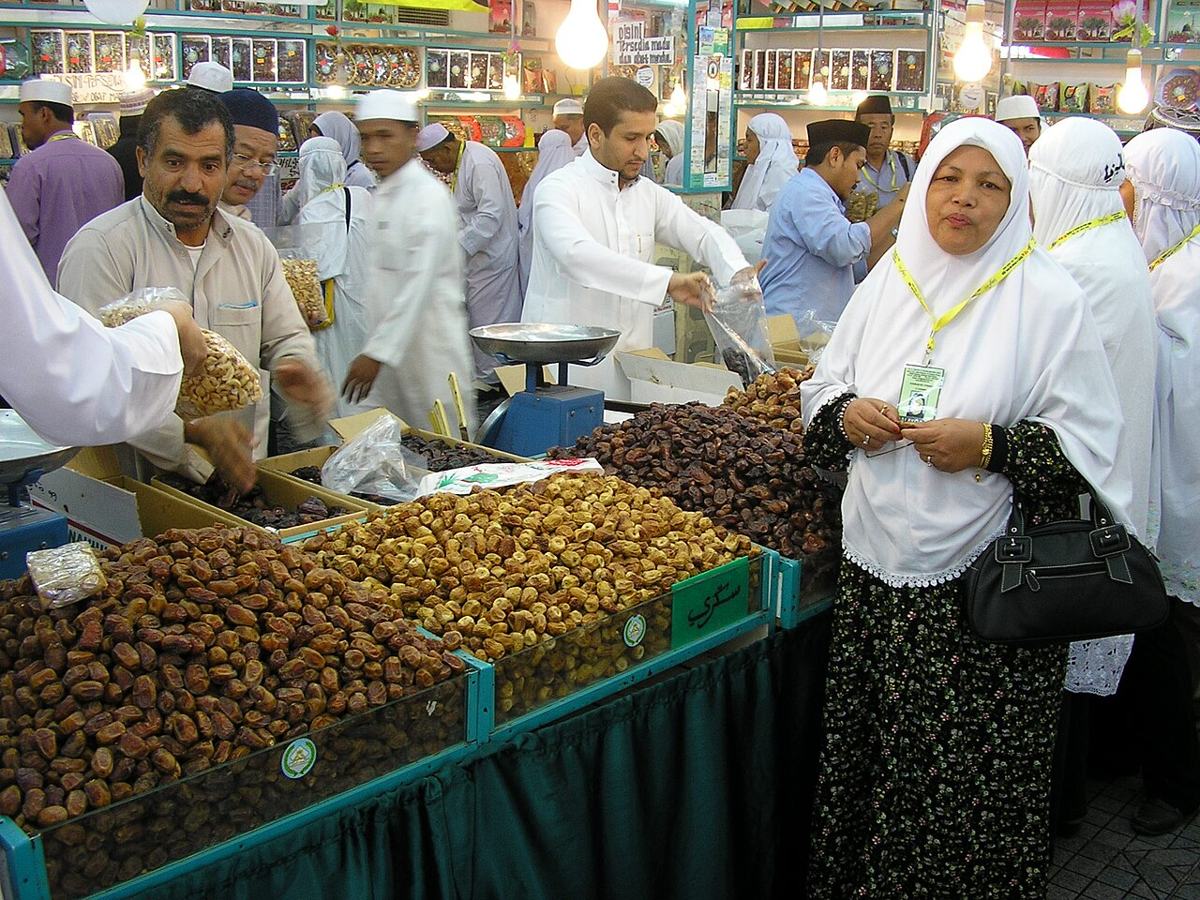
Madinah's dates are famous. The date market is a favourite last stop before going home.