
Chapter 9 / 19
Sa'i: Walking between Safa and Marwah
Walking seven times between the hills of Safa and Marwah in the footsteps of Hajar: its conditions, how to count the laps, the sunnahs and du'a, the green lights, and the details to watch on the upper and lower floors.
What sa'i is
Sa'i is walking back and forth between the hills of Safa and Marwah seven times, according to its conditions. It is a pillar of both Hajj and Umrah. It recalls the search of Hajar, who ran between these two hills looking for water for her son Ismail until Allah brought forth the spring of Zamzam (Chapter 4).
إِنَّ الصَّفَا وَالْمَرْوَةَ مِن شَعَائِرِ اللَّهِ ۖ فَمَنْ حَجَّ الْبَيْتَ أَوِ اعْتَمَرَ فَلَا جُنَاحَ عَلَيْهِ أَن يَطَّوَّفَ بِهِمَا
Reading Innaṣ-ṣafā wal-marwata min shaʿā'irillāh, faman ḥajjal-baita awiʿtamara falā junāḥa ʿalaihi an yaṭṭawwafa bihimā.
Meaning Safa and Marwah are among the symbols of Allah. So whoever performs Hajj or Umrah to the House, there is no blame on them for walking between them.
Surah al-Baqarah 2:158
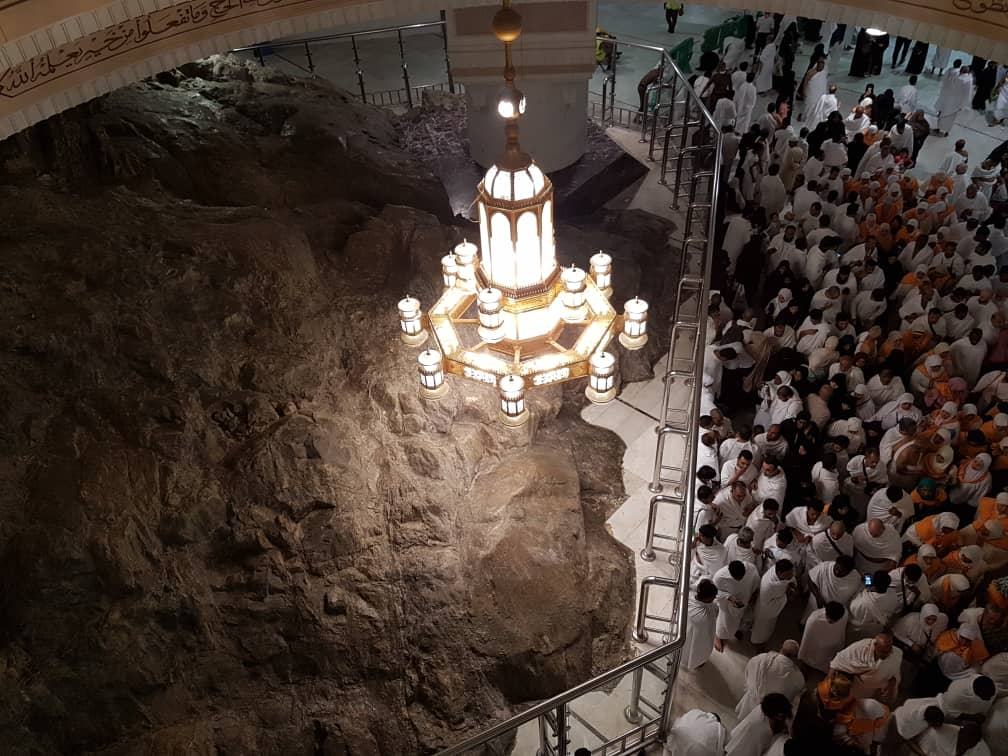
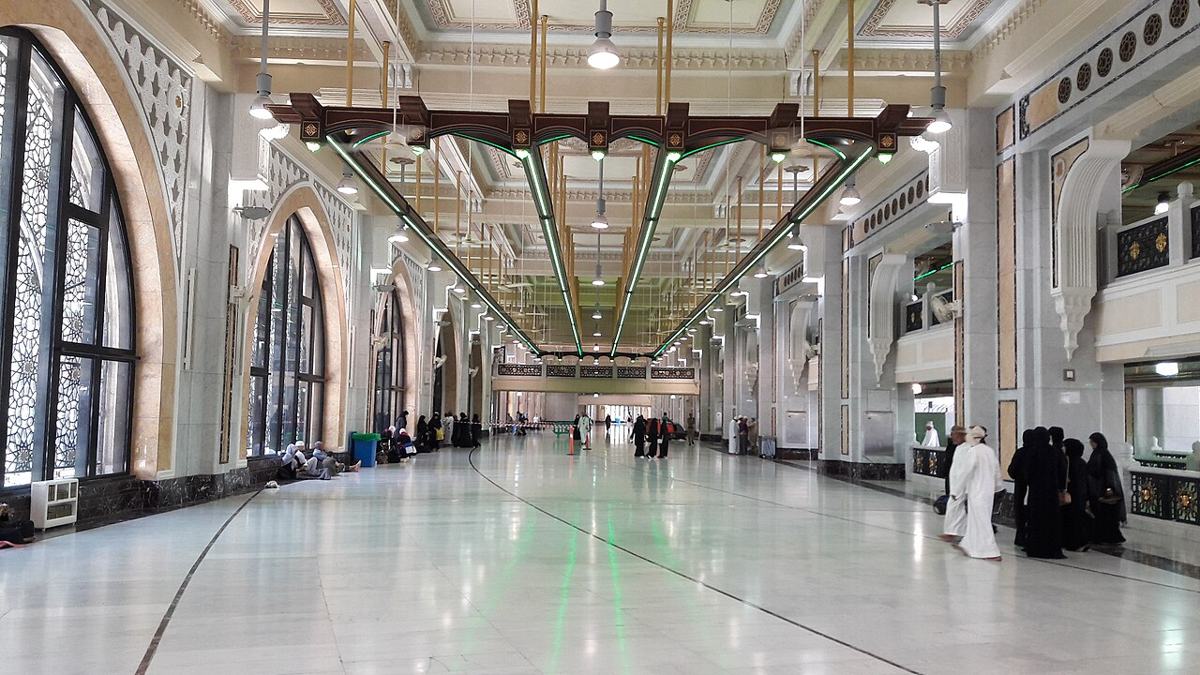
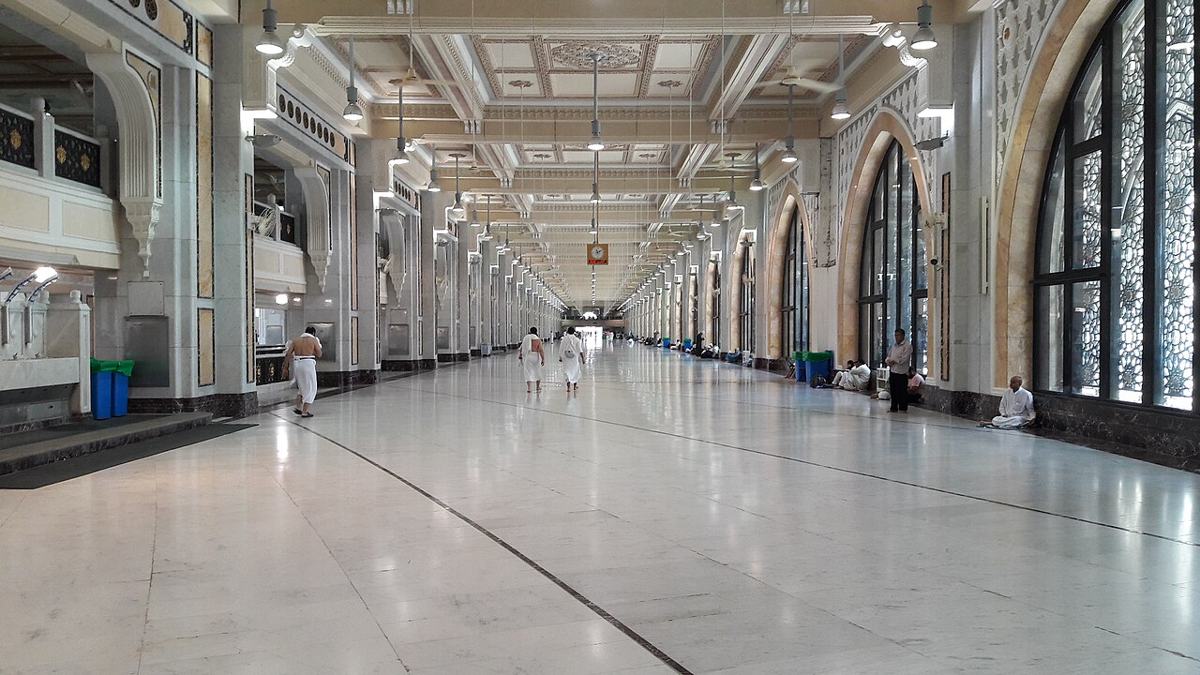
Today both hills and the path between them, the Mas'a, about 420 metres long, are inside Masjid al-Haram, in a long, air-conditioned gallery on several floors. The original rock of each hill is still visible behind glass at either end.
The conditions of a valid sa'i
- It must come after a valid tawaf: the tawaf of Umrah, Tawaf al-Ifadah, or (for Ifrad and Qiran) Tawaf al-Qudum.
- Start at Safa and finish at Marwah.
- Seven laps, with certainty. Safa to Marwah is one; Marwah back to Safa is two. So you finish the seventh lap at Marwah.
- Cover the whole distance: reach the end of the walkway at the foot of each hill (there are signs). You do not have to climb up the hill itself.
- Stay within the Mas'a (the established route, batn al-wadi).
- Keep the intention of sa'i: do not turn it into a walk for another purpose.
The sunnahs of sa'i
- Being in a state of wudu.
- Performing it straight after tawaf.
- Going to the Mas'a through the Safa gate (Bab al-Safa).
- Men climb a little onto Safa and Marwah.
- On Safa and Marwah, face the Ka'bah (the qiblah), say takbir, and make du'a with raised hands.
- Performing the laps continuously (muwalat).
- Men walk briskly or jog lightly (ramal) in the stretch between the green lights. Women walk normally.
- Men keep the right shoulder uncovered (idtiba') throughout.
- Du'a and dhikr throughout.
- Walking, if able.
Sa'i, step by step
- After the two rak'ahs of tawaf, du'a at the Multazam and drinking Zamzam, go to Safa.
- As you approach Safa, recite the verse "Inna-s-Safa wal-Marwata min sha'a'irillah…" and say "Abda'u bima bada'allahu bih", "I begin with what Allah began with."
- Climb a little (men), face the Ka'bah, raise your hands, and say Allahu Akbar three times and the dhikr below. Make du'a for whatever you wish. The Prophet ﷺ repeated this three times, making du'a in between.
- Walk towards Marwah. Between the green lights, men walk briskly.
- Reach Marwah, that is lap one. Face the Ka'bah and repeat the dhikr and du'a as on Safa.
- Walk back to Safa: lap two.
- Continue until you finish lap seven at Marwah.
- Then shave or cut your hair (for Umrah, or for Hajj if it is due), see Chapter 10.
اللّٰهُ أَكْبَرُ، اللّٰهُ أَكْبَرُ، اللّٰهُ أَكْبَرُ. لَا إِلٰهَ إِلَّا اللّٰهُ وَحْدَهُ لَا شَرِيكَ لَهُ، لَهُ الْمُلْكُ وَلَهُ الْحَمْدُ، وَهُوَ عَلَى كُلِّ شَيْءٍ قَدِيرٌ. لَا إِلٰهَ إِلَّا اللّٰهُ وَحْدَهُ، أَنْجَزَ وَعْدَهُ، وَنَصَرَ عَبْدَهُ، وَهَزَمَ الْأَحْزَابَ وَحْدَهُ
Reading Allāhu akbar (×3). Lā ilāha illallāhu waḥdahū lā sharīka lah, lahul-mulku wa lahul-ḥamd, wa huwa ʿalā kulli shai'in qadīr. Lā ilāha illallāhu waḥdah, anjaza waʿdah, wa naṣara ʿabdah, wa hazamal-aḥzāba waḥdah.
Meaning Allah is the Greatest (three times). There is no god but Allah alone, without partner; His is the dominion and His is the praise, and He has power over all things. There is no god but Allah alone; He fulfilled His promise, gave victory to His servant, and defeated the confederates alone.
From the description of the Prophet's Hajj in Sahih Muslim
رَبِّ اغْفِرْ وَارْحَمْ، إِنَّكَ أَنْتَ الْأَعَزُّ الْأَكْرَمُ
Reading Rabbighfir warḥam, innaka antal-aʿazzul-akram.
Meaning My Lord, forgive and have mercy. Truly You are the Most Mighty, the Most Generous.
Reported from Ibn Mas'ud and Ibn 'Umar
Points to watch
- Wheelchair lanes: the special lanes for wheelchairs turn around before the foot of each hill. Turning at the end of these lanes counts as reaching the hill, you do not need to go up onto the raised area.
- Stopping for Zamzam: if you stop to drink Zamzam during sa'i, step back a little from the point where you stopped before you carry on, so that no part of the distance is skipped.
- The lower floor: on the lower ground (basement) level, the end of the walkway at Marwah is very close to the glass wall. Make sure you actually reach the end at both Safa and Marwah.
- Not a mosque area for i'tikaf: the Mas'a is not counted as part of the mosque for the prayer of greeting the mosque or the intention of i'tikaf. A woman in her period may be in the Mas'a.
- There is no voluntary sa'i. Sa'i is only ever performed as part of Hajj or Umrah, after a tawaf.
- Beware of unofficial "barbers" at Marwah who cut pilgrims' hair and then demand high fees.
If you lose count or are interrupted
- If you are unsure whether you have completed five or six laps, take the lower number and continue.
- If the iqamah for an obligatory prayer is called, pray with the congregation, then continue from where you stopped.
- If you are exhausted, you may rest and then continue, continuity is a sunnah, not a condition.