
Tree and Plant
Trees and plants of Malaysia's rainforests, mountains, mangroves and gardens, from giant rafflesia flowers and pitcher plants to orchids, timber trees and herbs used in Malay cooking. Many grow nowhere else in the world. See them in national parks, botanical gardens and FRIM, stay on the trails, never pick or dig up wild plants, and buy herbal products only from licensed sellers.
Search and filter every mosque, attraction, dish, hospital and stay in the guide. (40)
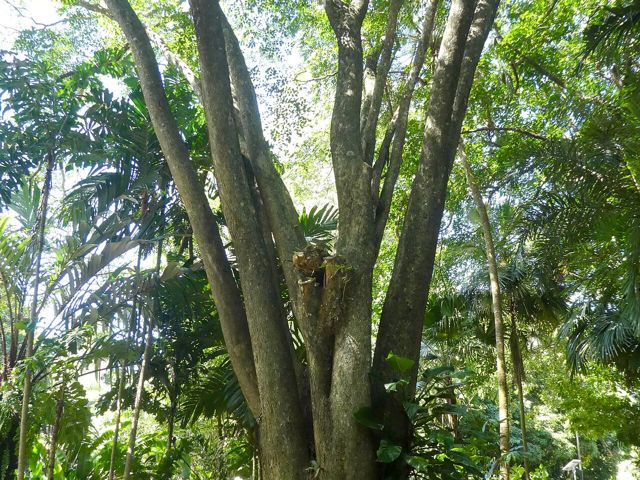 Angsana
A large shade tree often planted along Malaysian roads, with fragrant yellow flowers that bloom for just a day and then fall. Its timber is reddish and valued for furniture.
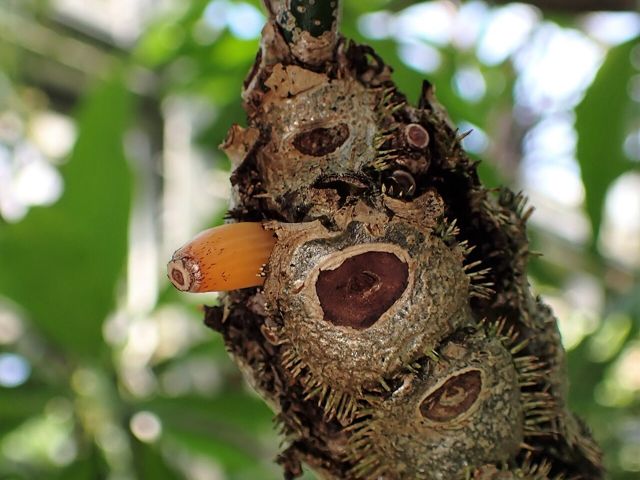 Ant Plant
A strange tree-living plant with a swollen, spiny base full of tunnels where ants live and feed it with their waste. It grows on tree trunks and branches across Malaysian forests.
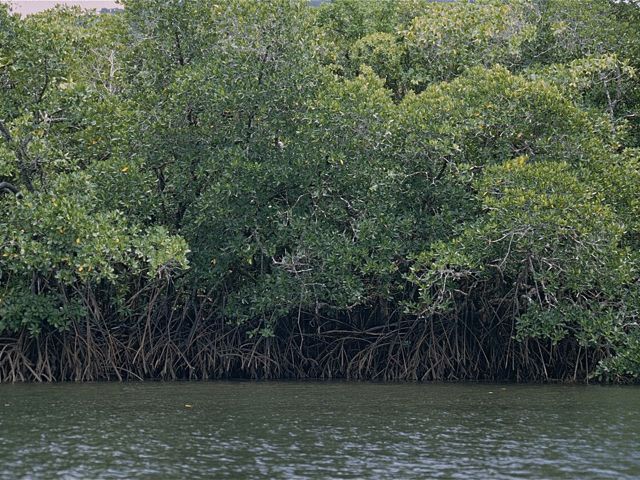 Bakau (Mangrove) Perak
The mangrove trees that stand on stilt roots in tidal mud, protecting the coast and serving as nurseries for fish and prawns.
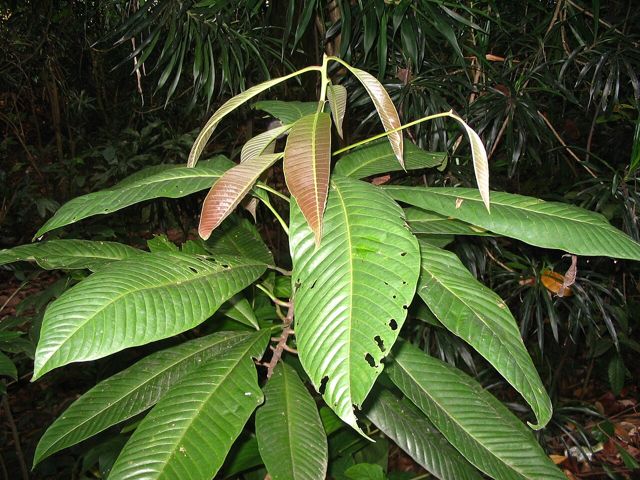 Belian (Bornean Ironwood) Sarawak
A famously hard and long-lasting timber tree of Sabah and Sarawak that resists rot and termites, traditionally used for house posts and roof shingles in longhouses.
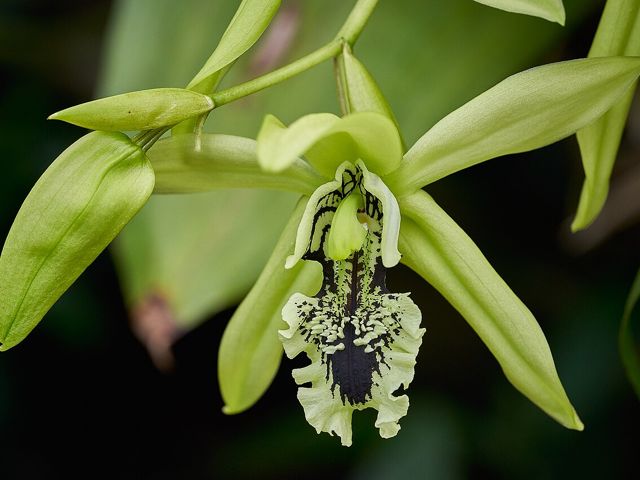 Borneo Black Orchid
A scented orchid of Borneo's lowland forests with green petals and a dark, frilly lip that looks almost black. Its flowers last only a few days.
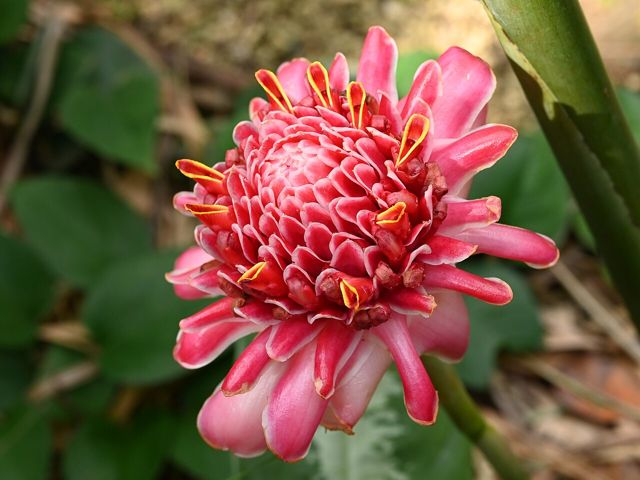 Bunga Kantan (Torch Ginger)
A tall ginger plant with striking pink flower torches. The buds give a fresh, sour fragrance to laksa, asam pedas and rice salad (nasi ulam).
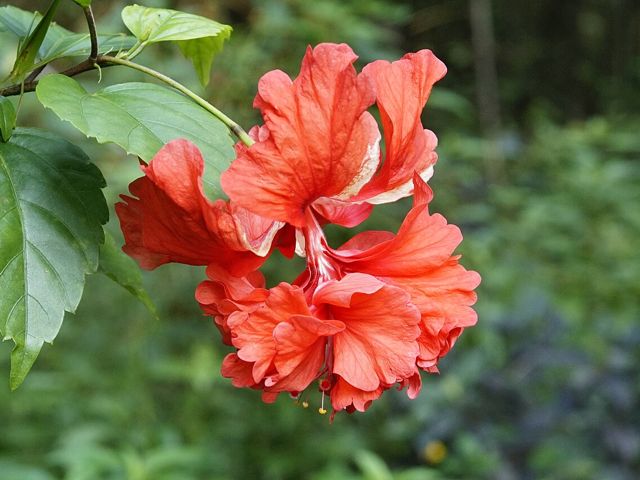 Bunga Raya (Hibiscus)
The red hibiscus, Malaysia's national flower since 1960. Its five petals stand for the five principles of the national ideology (Rukun Negara).
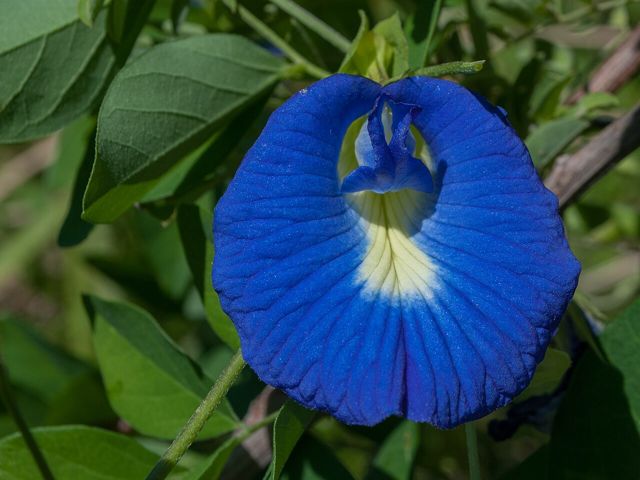 Bunga Telang (Butterfly Pea)
A climbing vine with deep blue flowers. Its petals colour rice, kuih and drinks natural blue, as in nasi kerabu from Kelantan, and turn purple with lime juice.
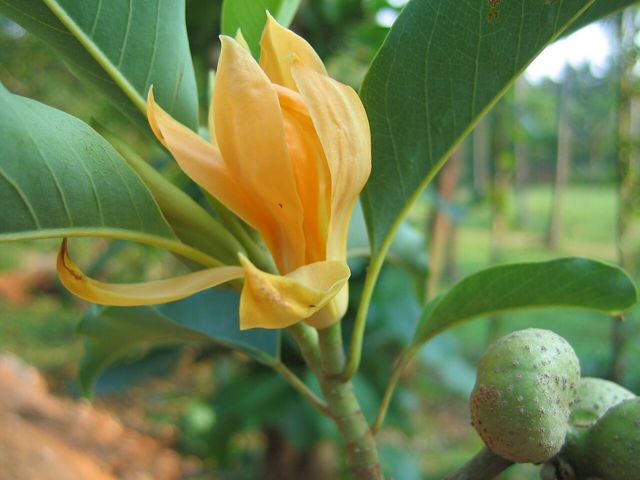 Cempaka
A tree with golden-orange, strongly perfumed flowers that are used in Malay perfumery and as a fragrance for the home. It is also planted in gardens and parks.
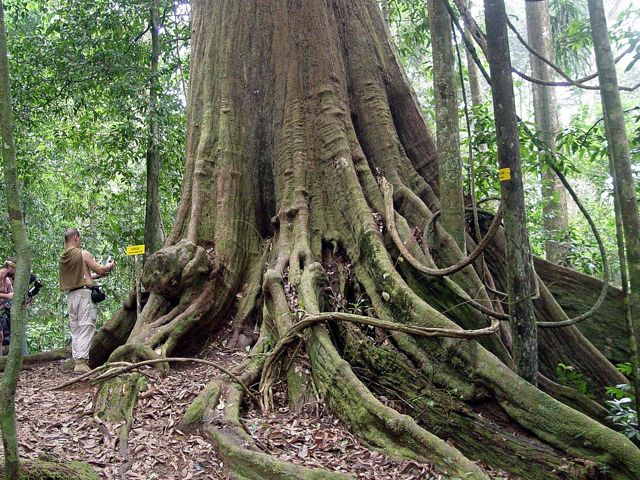 Cengal Selangor
A very hard and durable timber tree of the Peninsula's lowland forests, prized for traditional Malay houses and boats. Big old trees are now rare and protected.
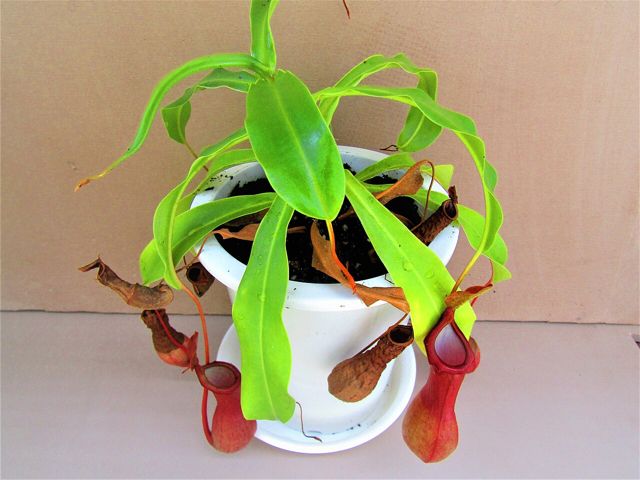 Common Swamp Pitcher Plant
The most widespread pitcher plant in Malaysia, climbing in open scrub, heath and wet ground. Its cups trap insects, which the plant digests.
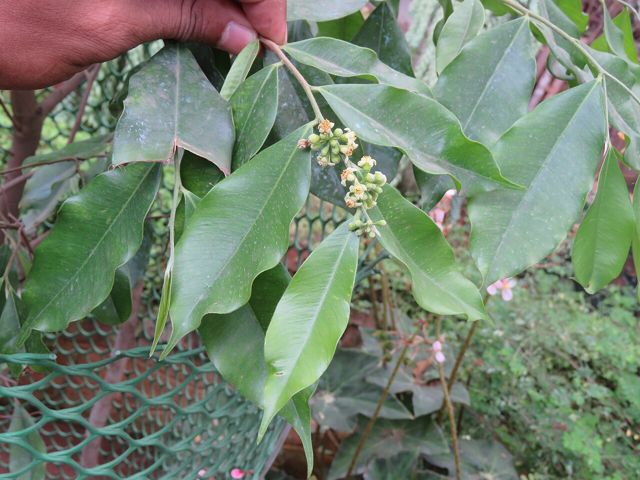 Gaharu (Agarwood)
A forest tree whose wood forms a dark, scented resin when it is infected. The resin is the base of oud perfume and incense, so wild trees have been heavily harvested and are protected.
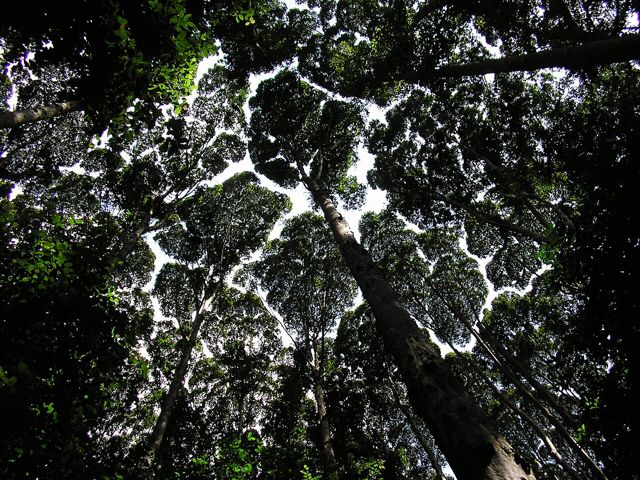 Kapur (Borneo Camphor) Selangor
A giant forest tree whose crowns stop short of touching their neighbours, leaving winding gaps of sky called crown shyness. It gives camphor and fine timber. See tall stands at FRIM.
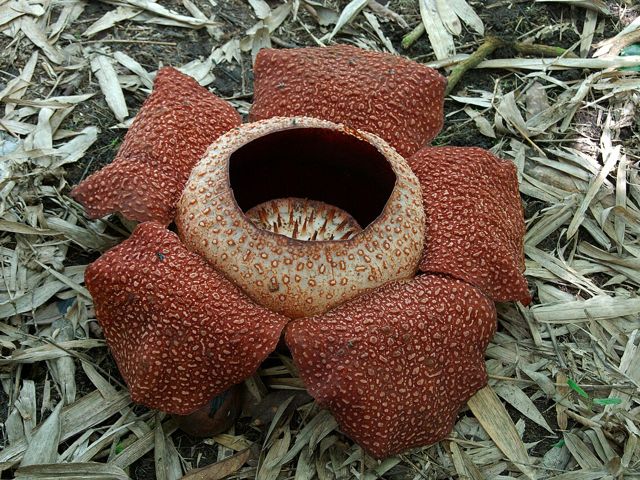 Keith's Rafflesia Sabah
One of the largest flowers in the world, up to about 80 centimetres across, with no leaves, stem or roots of its own. It grows on a forest vine and blooms for only a few days.
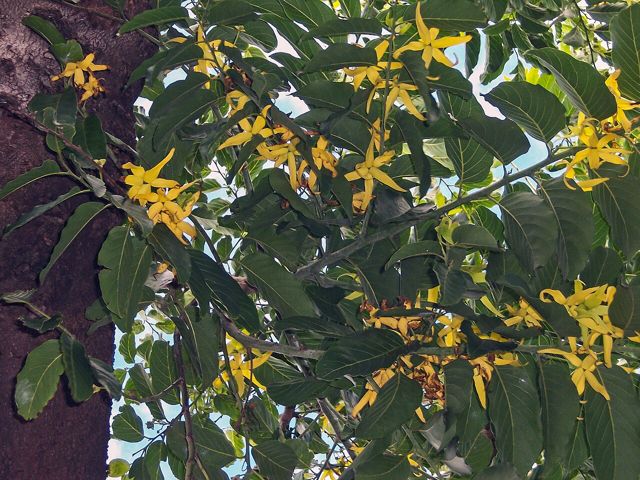 Kenanga (Ylang-ylang)
A tall tree with drooping, greenish-yellow flowers of a very sweet fragrance, the source of ylang-ylang perfume oil. It is a traditional garden tree in Malay villages.
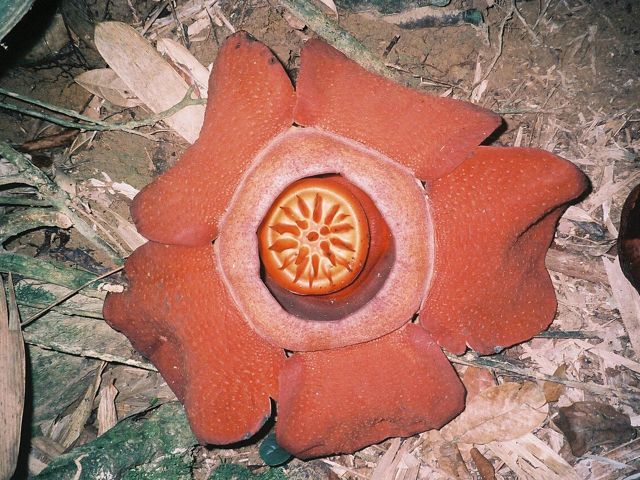 Kerr's Rafflesia Perak
The rafflesia of the Malay Peninsula, a giant parasitic flower that smells like rotting meat to attract flies. Each bloom lasts only days.
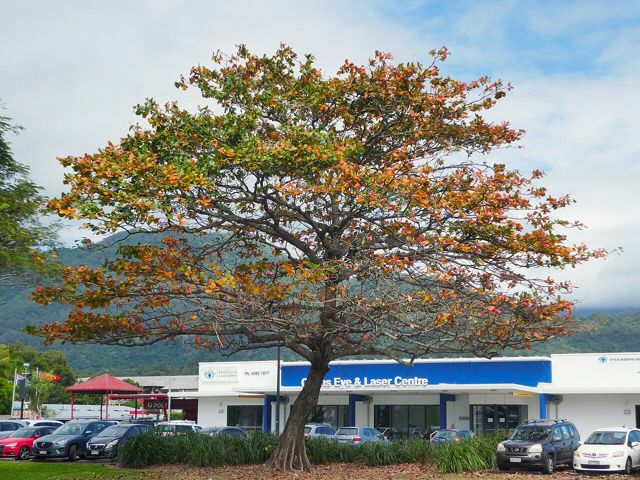 Ketapang (Sea Almond)
A shady coastal tree with big leaves that turn red before they fall, growing in layered tiers. Its fruits float and drift along the coast, and the nut inside is edible.
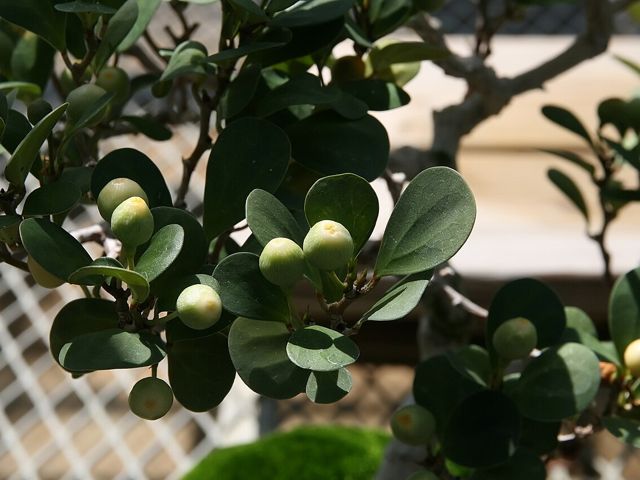 Mas Cotek (Mistletoe Fig)
A small shrub with rounded leaves and tiny round figs, sometimes growing on trees. Its leaves are traditionally dried and brewed as a herbal tea, and it is a popular garden plant…
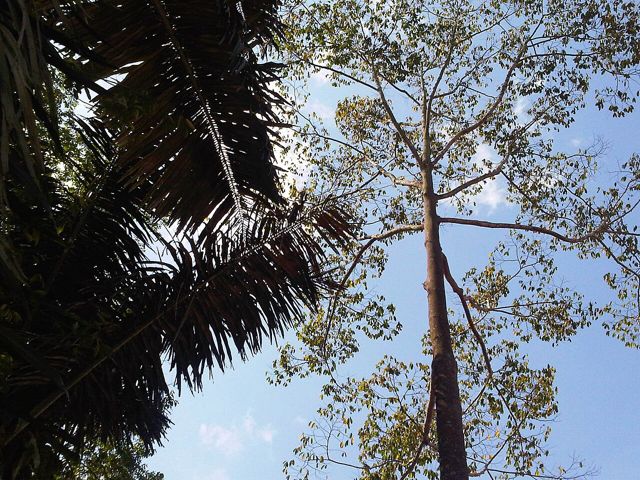 Meranti Selangor
The name of a group of tall rainforest trees that give light and dark red timber used for furniture and building. They flower together only every few years, in mass flowering seasons.
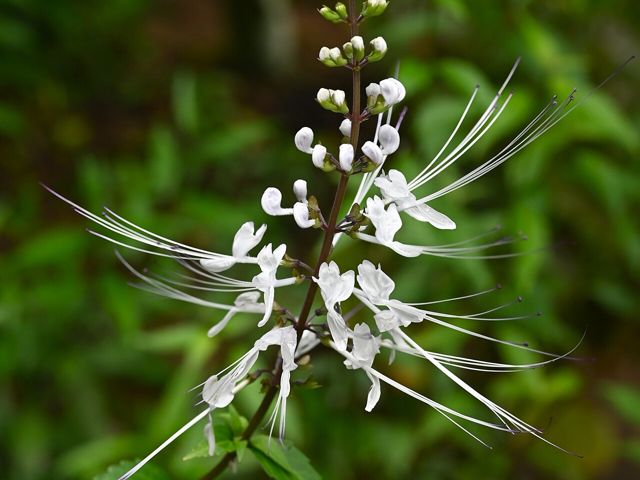 Misai Kucing (Cat's Whiskers)
A herb with pale flowers whose long stamens look like a cat's whiskers. Its leaves are traditionally brewed as a Malay herbal tea, and it is easy to grow in a garden.
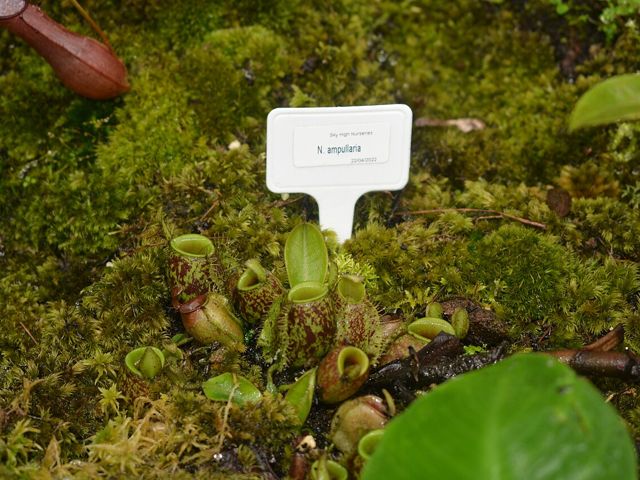 Monkey Cup
A pitcher plant whose round cups sit in clusters on the ground and, unlike most pitcher plants, collect fallen leaves. It grows in peat swamps and open forest across Malaysia.
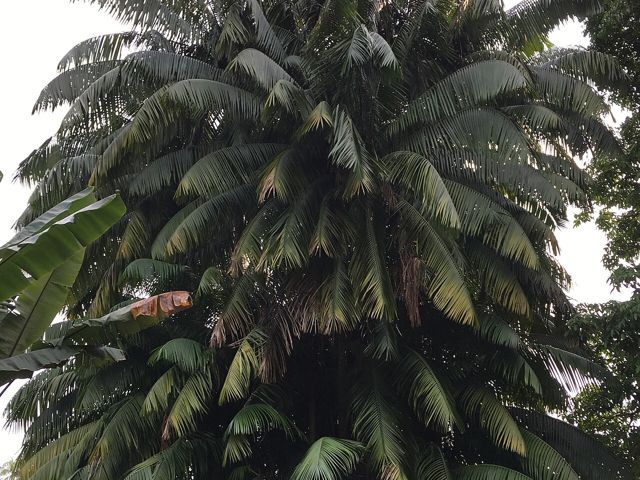 Nibung Palm
A thorny clustered palm of coastal swamps and river banks whose trunks are very strong. Fishermen use them for the poles of traditional fish traps and jetties.
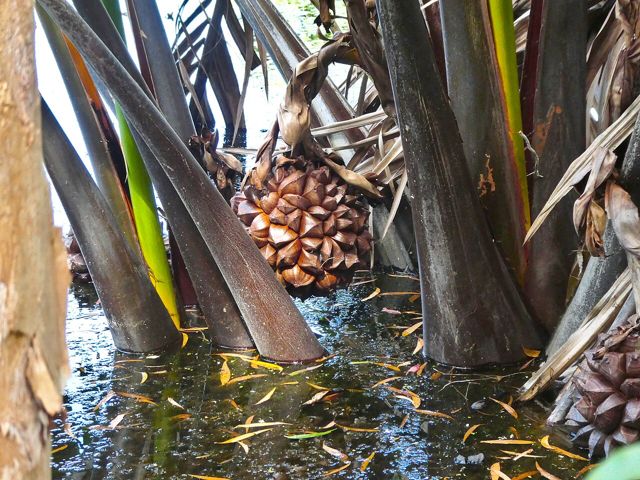 Nipah Palm Selangor
A palm of muddy river mouths and mangroves whose fronds rise straight from the mud. Its leaves are woven into roofs and mats and its young seeds are eaten as attap chee.
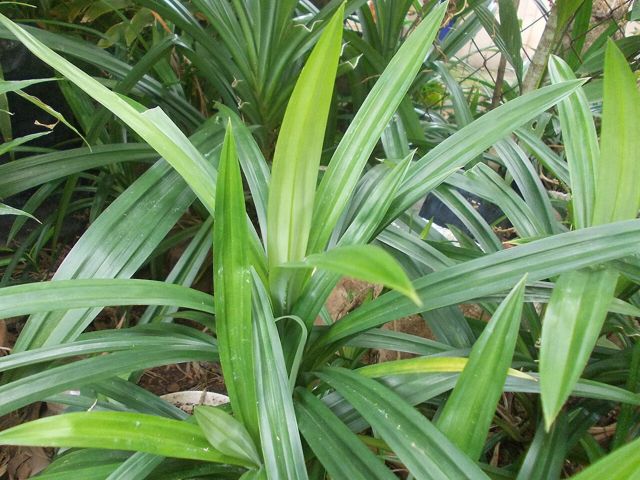 Pandan
A fragrant plant with long, narrow leaves that give a sweet aroma to rice, kuih and desserts such as pandan chiffon. The leaves are tied in a knot and boiled with rice.
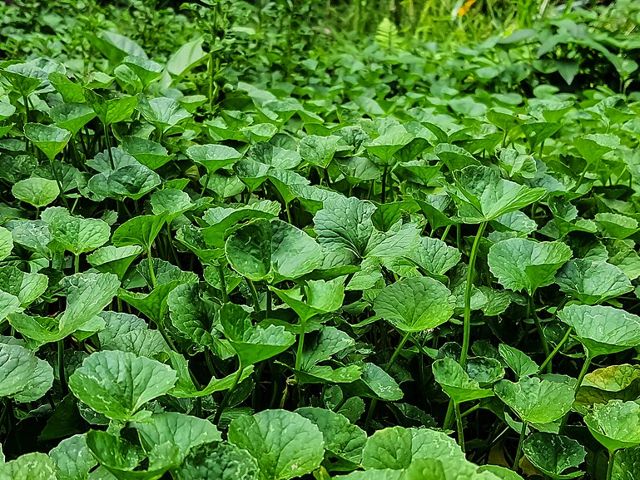 Pegaga (Asiatic Pennywort)
A creeping plant with round leaves that spreads over damp ground. The leaves are eaten fresh as ulam, in salads, or as juice, and are a traditional herb in Malay cooking.
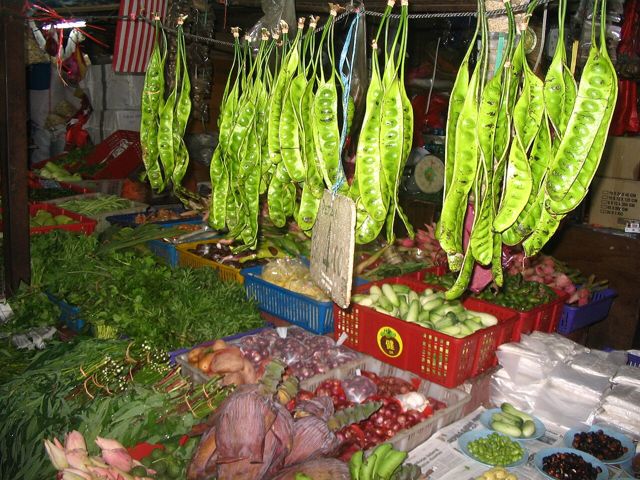 Petai (Stink Bean)
A tall tree whose long green pods hold bean-like seeds with a strong smell, a favourite in sambal and stir-fries. Pods are sold in bunches at markets.
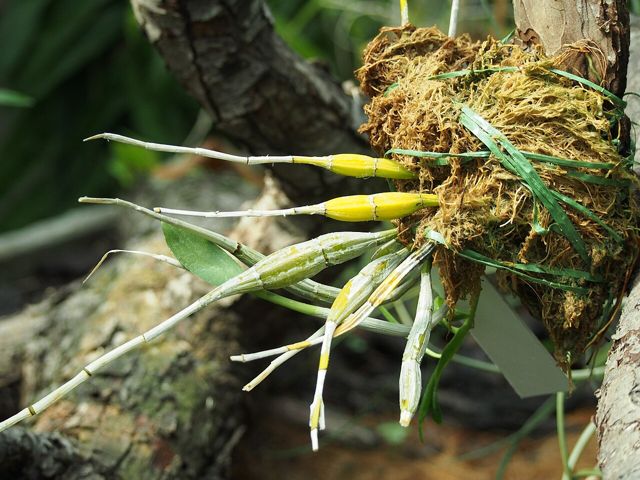 Pigeon Orchid
A common tree-living orchid whose white flowers all open together about nine days after a sudden cool spell, for only about a day. It is seen on tree trunks and old branches across Malaysia.
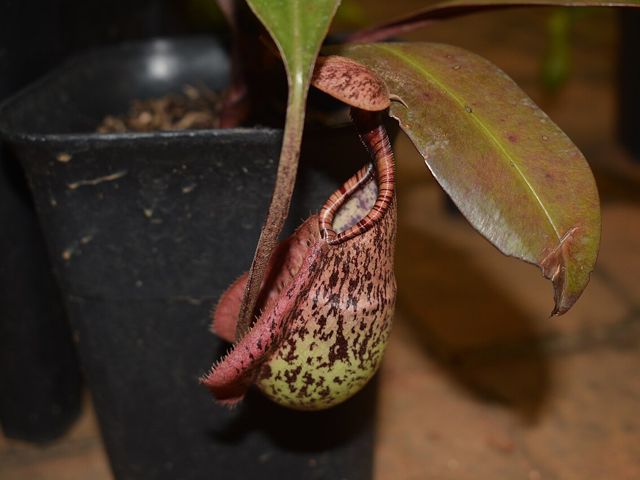 Raffles' Pitcher Plant Sarawak
A pitcher plant of sandy heath forests and coasts, with speckled cups that catch insects. Look for it on the trails of Bako National Park in Sarawak.
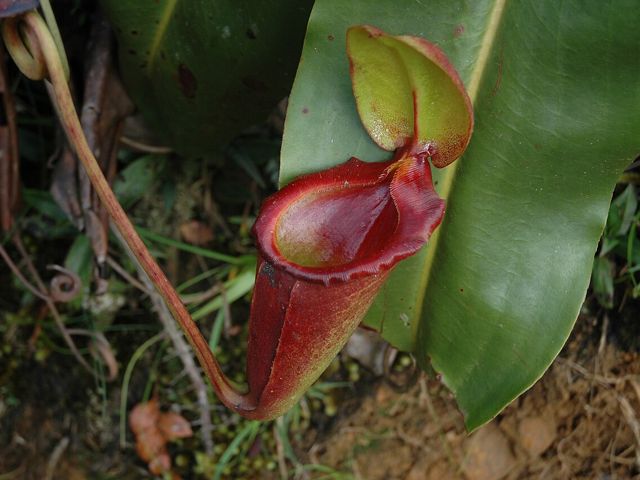 Rajah Pitcher Plant Sabah
The giant pitcher plant of Mount Kinabalu, with huge cups that can hold litres of liquid and sometimes trap small animals. It grows only in the mountains of Sabah.
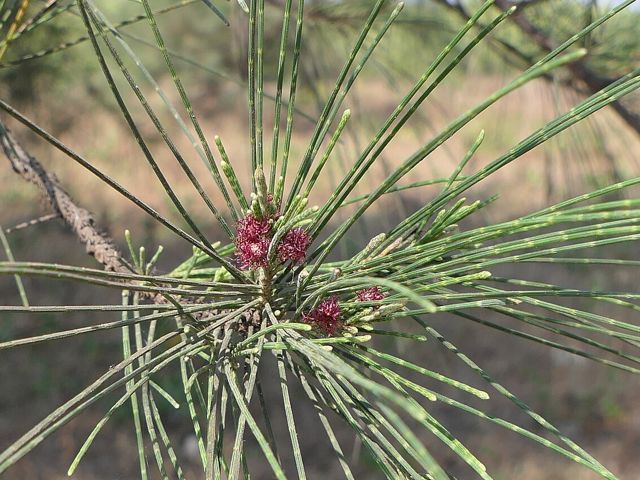 Rhu (Beach She-oak)
A tall, feathery tree that looks a bit like a pine and grows on sandy beaches, where it breaks the wind and holds the sand.
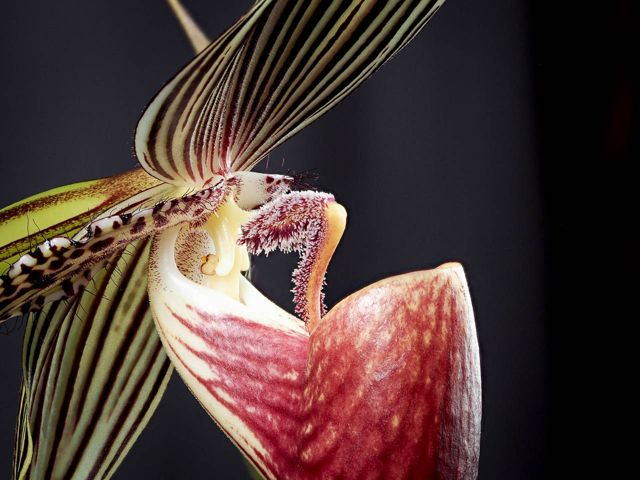 Rothschild's Slipper Orchid Sabah
One of the most prized orchids of Borneo, with striped petals and a pouch-shaped lip, growing wild only on the slopes of Mount Kinabalu.
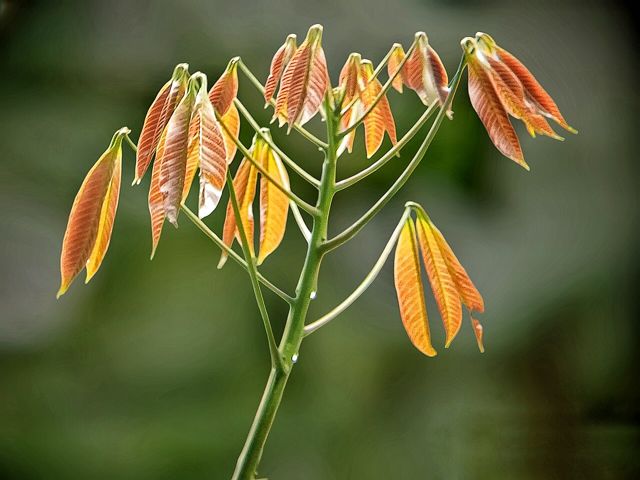 Rubber Tree
The tree that shaped Malaysia's modern history. Planted from the 1870s, it made Malaya one of the world's largest rubber producers.
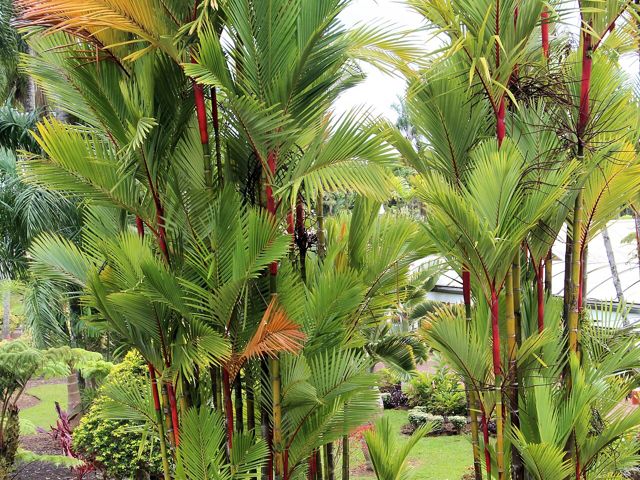 Sealing Wax Palm (Pinang Raja)
A clustering palm with bright red stems and leaf bases, native to the swamps of the Malay Peninsula and nearby islands. It is one of the most popular ornamental palms in the world.
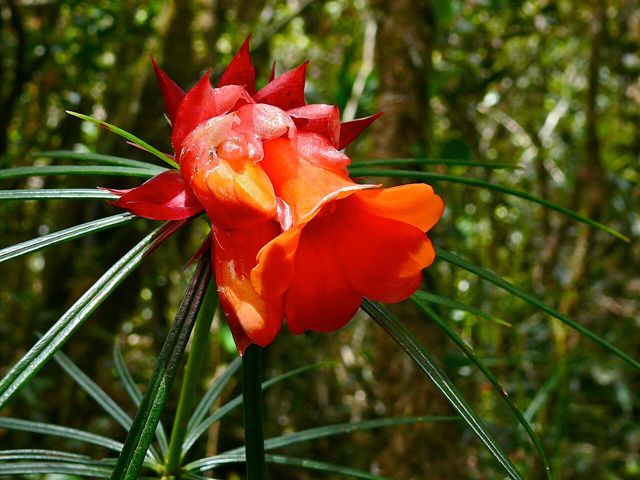 Slender-leaved Rhododendron Sabah
A mountain shrub with long, narrow leaves and bright orange-red flowers, growing on the high slopes of Mount Kinabalu and other highlands of Borneo.
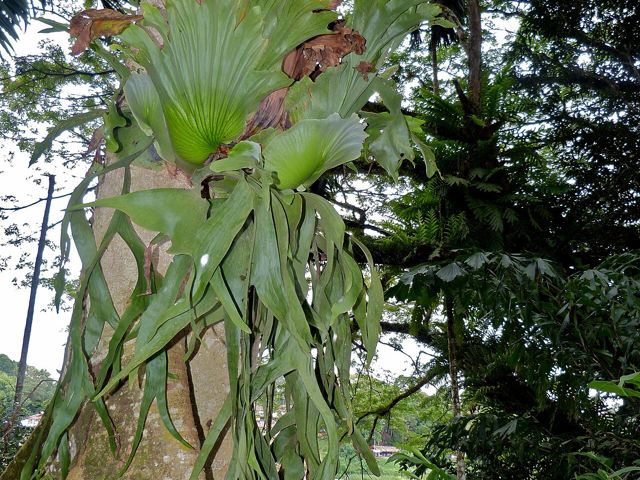 Staghorn Fern
A fern that grows on tree trunks, with round green leaves that clasp the tree and antler-shaped fronds that grow outward. It is common in parks and gardens and on old roadside trees.
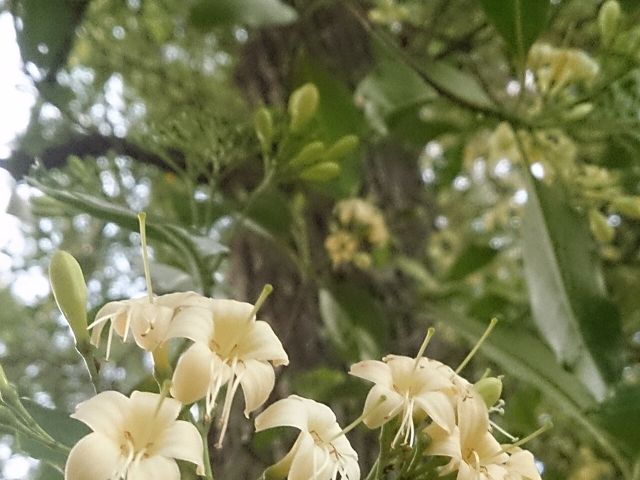 Tembusu
A large, spreading tree with creamy, sweet-smelling flowers and extremely hard wood. It is often planted in parks and on the grounds of old buildings.
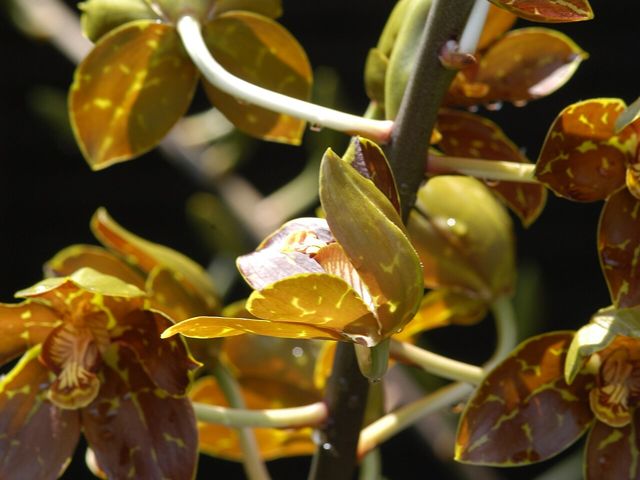 Tiger Orchid
The largest orchid in the world, forming huge clumps of tall stems that can weigh more than a tonne, with yellow flowers marked in brown. It grows on trees and in gardens across Malaysia.
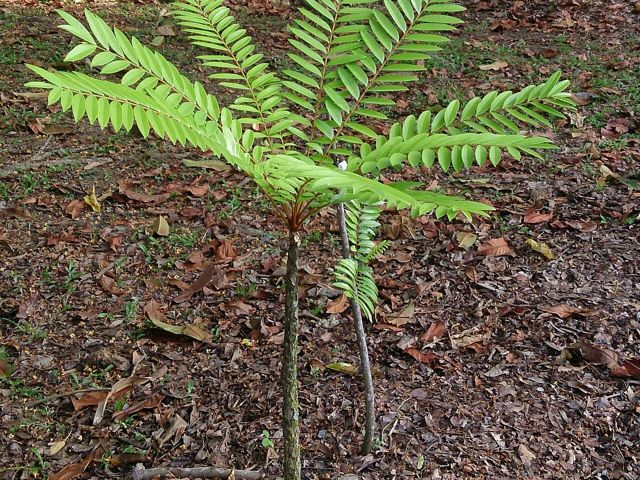 Tongkat Ali
A slender forest shrub or small tree whose roots are traditionally used in Malay herbal drinks. Wild plants are protected, so buy only from licensed growers and brands.
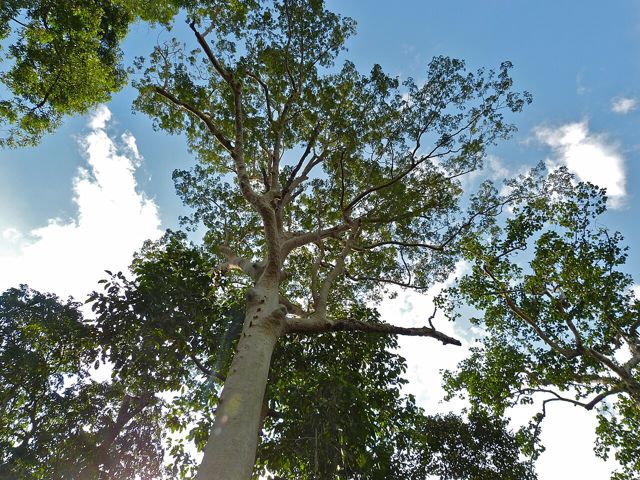 Tualang (Mengaris) Pahang
One of the tallest tropical trees in the world, with a smooth pale trunk that rises straight above the forest canopy to more than 70 metres. Wild honey bees nest in its branches.
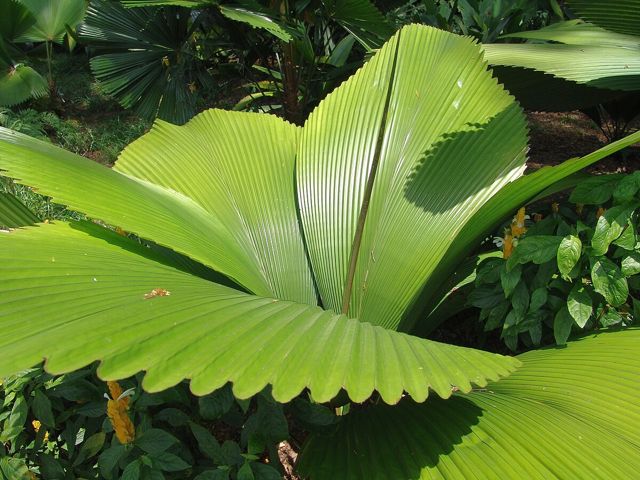 Umbrella Palm (Daun Payung) Pahang
A stemless palm of the Peninsula's lowland forests, with huge, pleated, diamond-shaped leaves up to about two metres long. The leaves were used as umbrellas and roofing.
Explore
- Johor (109)
- Kuala Lumpur (165)
- Sabah (123)
- Penang (80)
- Pahang (122)
- Terengganu (96)
- Sarawak (65)
- Melaka (59)
- Kelantan (64)
- Kedah (97)
- Perlis (19)
- Nationwide (50)
- Selangor (200)
- Perak (118)
- Negeri Sembilan (66)
- Putrajaya (21)
- Labuan (7)
Halal Muslim Travel in Malaysia,
Made Easy
Mosques, halal food and family attractions across all 14 states, with prayer times, Qibla direction and ready-made itineraries.
✅ Check if a restaurant or product is halal-certified · 🕌 Mosques & prayer times near me · 🕋 Step-by-step Hajj & Umrah guide
Browse by category
Every destination in the guide, grouped by what you're looking for.
Browse by state
From Kuala Lumpur to Sarawak, pick a region to see what's there.
Featured destinations
A few highlights to start planning with.
🍽️ Halal Dining Directory
Where to eat, filterable by state, food streets, night markets and dining venues, each with a distance and directions link. Plus the dish guide, for when you don't know what to order.
🧳 Build your itinerary
Start from a ready-made 1-week to 1-month plan, or save places as you browse and arrange your own.
Plan a trip →Explore Malaysia
Search and filter every mosque, attraction, dish, hospital and stay in the guide.
Plan your trip
Start from a ready-made route, or build your own from places you've saved.
Prayer times, Qibla & Islamic dates
Prayer times are calculated with JAKIM's angles (Fajr 20°, Isha 18°) for any city or your exact location in Malaysia, and can differ by a few minutes from JAKIM's official e-Solat timetable.
🕐 Prayer times
🧭 Qibla direction
🕌 Mosques near you
Tap “Use my location” to see the closest mosques and get directions.
📅 Islamic dates
Map
Every mapped destination, coloured by category. Pin positions are approximate at state level.
🛂 Malaysia Digital Arrival Card (MDAC)
Foreign visitors must submit this free online arrival form before entering Malaysia. Fill one in for every traveller, children included.
1. Open the official form
Use only the Malaysian Immigration Department website.
Open the official MDAC form ↗2. Fill it in
Passport, flight and accommodation details. Submit it within the 3 days before you arrive.
3. Keep your QR code
Save or screenshot the confirmation and QR code, and show it with your passport at immigration.

Scan with your phone to open the official form
imigresen-online.imi.gov.my/mdac
Good to know
- It is free. The only official address is imigresen-online.imi.gov.my, beware look-alike websites that charge a fee.
- Carrying more than USD 10,000 (or equivalent) in cash? It must be declared to Customs.
- Some airports have QR-code eGates; you still need your passport. Rules and exemptions (for example Malaysian citizens) can change, confirm on the official page.
- Visas are separate: check whether your nationality needs one before you travel.
✅ Halal Check
Search Malaysia's official halal certificate directory (JAKIM MYeHALAL), restaurants, food & drink products, slaughterhouses and more.
Unofficial search of JAKIM's public directory, a listing is not a guarantee. Look for the halal certificate displayed at the premises, and confirm on the official portal ↗, especially for entries marked revoked or expired. Names are as registered with JAKIM (often in Malay).
Travel information
Getting around, essential apps, and everything to know before you go.